
The best booster cables for car emergencies need to do more than look thick in a storage bag. A dependable set should transfer enough current to crank the disabled vehicle, provide sufficient length to position the donor vehicle safely, grip battery terminals securely, and remain flexible enough to handle when temperatures drop. Cable gauge, conductor material, clamp construction, insulation, and length all affect how effectively a set performs when you actually need it.
My first recommendation is the Energizer 6 Gauge 16-Foot Jumper Cables. I like this set for ordinary passenger cars because the 16-foot length is easier to store than an oversized commercial cable while still providing useful positioning flexibility. It is an established design with insulated clamps, flexible cable construction, and a storage bag, making it a practical emergency-kit choice for sedans, crossovers, and many everyday SUVs.
For buyers who want thicker wire and more reach, the CARTMAN 4 Gauge 20-Foot Jumper Cables are my second choice. The combination of 4-gauge conductors and a 20-foot cable length is a particularly useful balance for general automotive use. You gain enough reach for awkward parking situations while retaining substantially more current-carrying capability than thin 8- or 10-gauge emergency cables.
I would also strongly consider the EPAuto 4 Gauge 20-Foot 500A Booster Jumper Cables if you want a straightforward kit with heavy-duty cables, copper-plated clamps, safety gloves, and a travel bag. For most drivers, I consider 4 gauge and roughly 20 feet a very sensible starting point because it works across a broad range of cars, SUVs, vans, and light trucks without becoming as bulky as 1- or 2-gauge commercial cables.
Best Booster Cables for Car: Heavy-Duty Roadside Picks
| Image | Product Name | Check Price |
|---|---|---|
Best Choice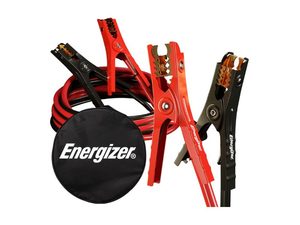 | Energizer 6 Gauge 16-Foot Jumper Cables – Best Overall | Check Price |
Second Best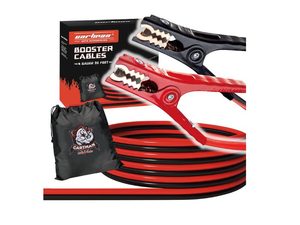 | CARTMAN 4 Gauge 20-Foot Jumper Cables | Check Price |
Third Choice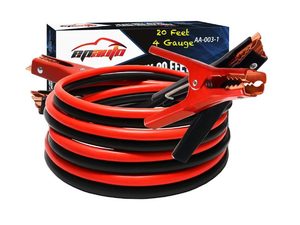 | EPAuto 4 Gauge 20-Foot 500A Booster Jumper Cables | Check Price |
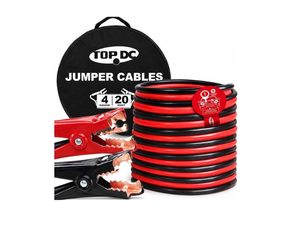 | TOPDC 4 Gauge 20-Foot Heavy Duty Jumper Cables | Check Price |
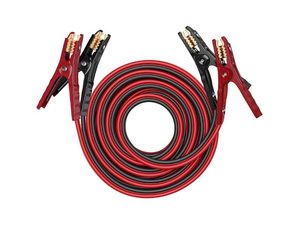 | THIKPO G420 4 Gauge 20-Foot Jumper Cables | Check Price |
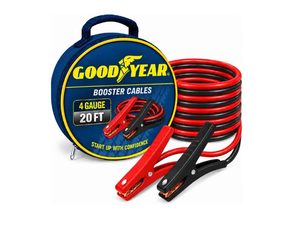 | Goodyear Heavy Duty 4 Gauge 20-Foot Booster Cables | Check Price |
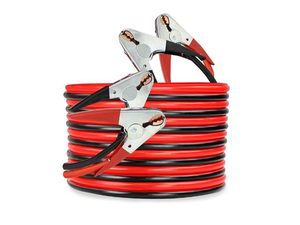 | ABN 2 Gauge 25-Foot 600A Jumper Cables | Check Price |
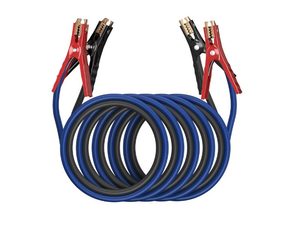 | EXTRESPO 4 Gauge 20-Foot 600A Jumper Cables | Check Price |
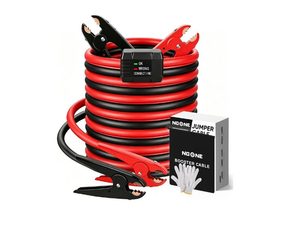 | NOONE 2 Gauge 20-Foot Jumper Cables | Check Price |
Not every vehicle needs the thickest jumper cable available. A compact gasoline car can often be started successfully with a quality 6-gauge set, while a large V8, diesel pickup, commercial van, or vehicle in severe winter conditions benefits from lower-gauge cable with less electrical resistance.
I ranked these ten products with established buyer history as a major factor, but I also considered whether each cable set is genuinely useful for automotive jump-starting. The list includes convenient passenger-car cables, versatile 4-gauge sets, extra-long 2-gauge cables, and models with reverse-polarity warning systems for drivers who want additional connection guidance.
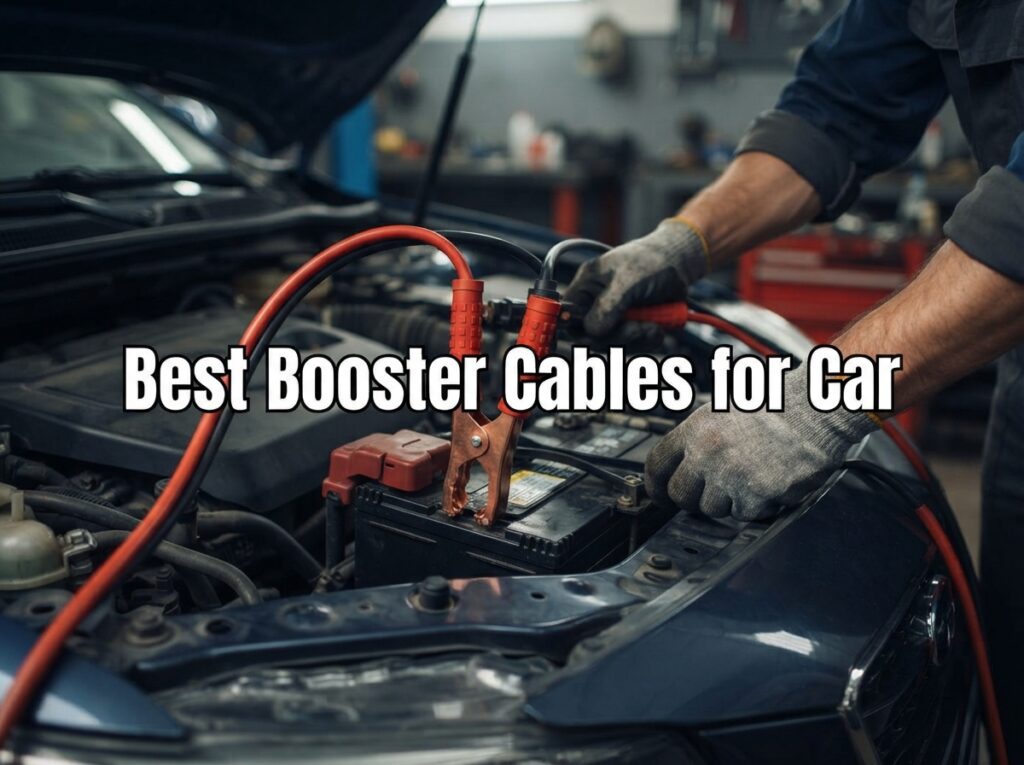
1. Energizer 6 Gauge 16-Foot Jumper Cables – Best Overall
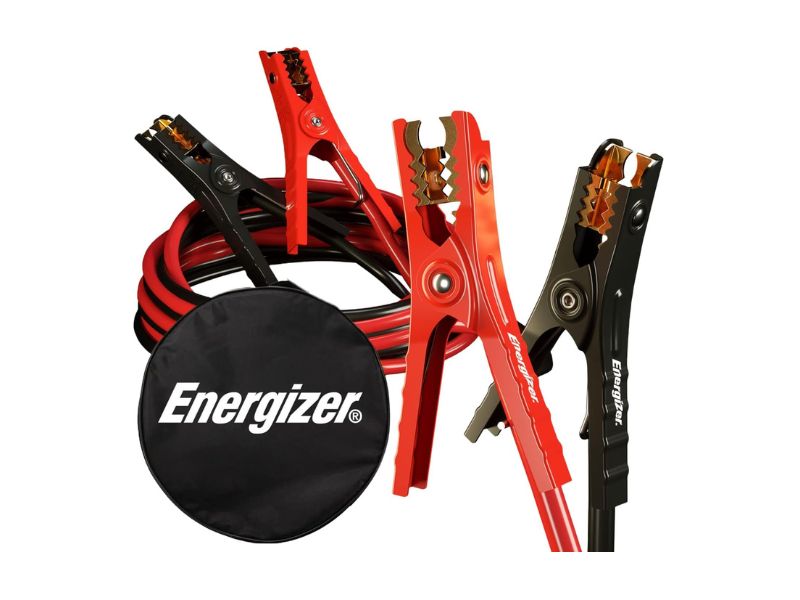
Key Features
- 6-gauge booster cable
- 16-foot cable length
- Designed for common passenger vehicles
- Heavy-duty insulated clamps
- Flexible cable jacket
- Tangle-resistant construction
- Carrying bag included
- Suitable for roadside emergency storage
The Energizer 16-foot set earns my first position because it matches what many normal car owners actually need. It is long enough to connect vehicles in common nose-to-nose or side-by-side situations but compact enough to store permanently in a trunk without taking up excessive space.
A 6-gauge conductor is not the heaviest option in this guide. That is intentional. If you drive a typical compact car, midsize sedan, crossover, or moderate-size gasoline SUV, you may gain little from carrying a huge 25- or 30-foot commercial cable that weighs several times as much.
Cable resistance is determined by more than gauge alone. Length also matters. Every additional foot introduces resistance, so a moderately thick 16-foot cable can be a very practical combination for normal passenger vehicles.
The clamps are insulated, which gives you more protected gripping area while positioning them around a crowded engine compartment. Strong clamp pressure matters because a poor connection can create resistance even when the cable itself is adequate.
The cable jacket is also intended to remain manageable in different weather conditions. That matters more than it may seem. Cheap PVC cables can become stiff in low temperatures, making them difficult to uncoil and difficult to route around engine compartments precisely when cold weather has increased the likelihood of a weak battery.
The included storage bag is another small but useful feature. Jumper cables become messy quickly when they are simply thrown into a trunk. A dedicated bag protects the clamps from surrounding cargo and reduces tangles.
This is not the cable set I would choose for frequent heavy diesel jump-starting. For that use, I would move toward 1-, 2-, or high-quality 4-gauge cable.
For an everyday passenger vehicle, however, the Energizer provides the best overall balance of size, reach, portability, and emergency usefulness.
What I Like
- Manageable size for normal cars.
- 16-foot length is easier to store than commercial cables.
- 6-gauge construction is substantially better than very thin emergency sets.
- Insulated clamps provide secure handling.
- Flexible design is useful in colder weather.
- Storage bag keeps the trunk organized.
- Suitable for drivers who want a dependable set without excessive bulk.
What I Do Not Like
- Not my first choice for large diesel engines.
- Shorter than 20-, 25-, and 30-foot sets.
- Heavy-duty truck owners should consider thicker 2- or 1-gauge cable.
Verdict
The Energizer 16-foot 6-gauge set is my best overall booster cable for normal passenger cars. It offers a sensible compromise between electrical capability, reach, weight, and storage size.
2. CARTMAN 4 Gauge 20-Foot Jumper Cables – Best 4-Gauge Pick
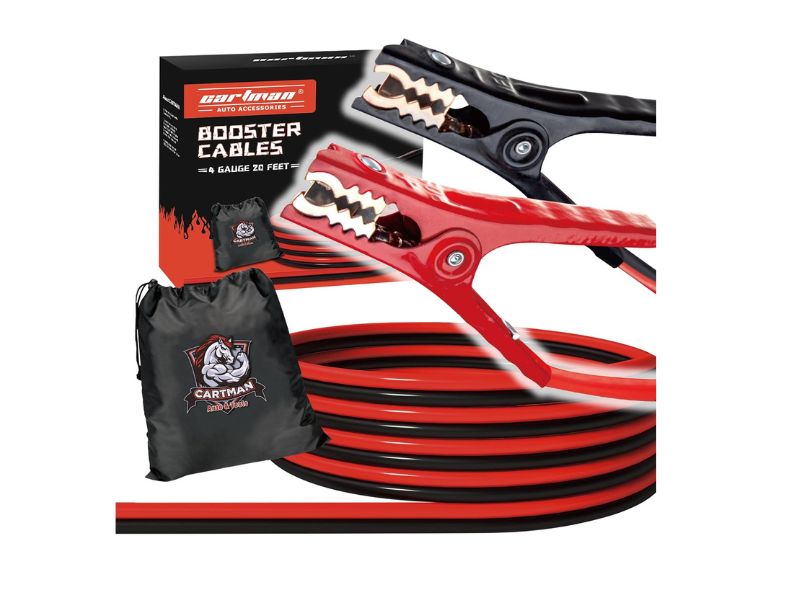
Key Features
- 4-gauge construction
- 20-foot cable length
- Copper-clad aluminum conductor construction
- Insulated heavy-duty clamps
- Fits common top- and side-post applications
- Flexible cable jacket
- Carrying bag included
- Good fit for cars, SUVs, and pickups
The CARTMAN 4-gauge 20-foot cable is my favorite step-up option for drivers who want more current-carrying capacity and additional reach.
The 20-foot length is especially valuable during real roadside emergencies. Dead vehicles do not always stop in convenient positions. A car may be nose-in against a garage wall, trapped between other vehicles, parked at the edge of a narrow driveway, or positioned so that the battery compartments cannot easily be placed next to each other.
Extra cable length reduces the amount of vehicle maneuvering needed.
The tradeoff is resistance. Longer cable needs sufficiently heavy conductors to compensate for the increased distance, and this is where the 4-gauge construction makes sense.
CARTMAN uses a copper-clad aluminum conductor rather than the much more expensive full-copper construction found in premium commercial jumper cables. CCA is lighter and less expensive than equivalent pure copper, but it is also less conductive. That makes honest gauge, clamp quality, and cable length especially important.
For normal automotive emergency use, a quality 4-gauge CCA cable can still work very well.
The 20-foot length makes this one of the most versatile options for a family that owns several vehicle types. You could carry it in a midsize sedan but still have a useful cable when helping an SUV or pickup.
I also prefer a properly insulated clamp when cables are intended for inexperienced or occasional users. Battery areas can contain exposed metal, brackets, bodywork, and other conductive surfaces. Insulated handles help reduce accidental hand contact with the conductive jaw structure.
One downside is physical bulk. A 20-foot 4-gauge set is noticeably larger than the first Energizer cable and requires a bit more patience when returning it to its storage bag.
That is a reasonable tradeoff if reach and current capacity are higher priorities.
What I Like
- Excellent 4-gauge/20-foot combination.
- Longer reach works well in awkward parking situations.
- Strong option for cars, SUVs, and light pickups.
- Good clamp grip.
- Insulated handles.
- Carrying bag included.
- More capable than thin 8- or 10-gauge emergency cables.
What I Do Not Like
- Bulkier than a 16-foot set.
- CCA conductor is not as conductive as equivalent pure copper.
- Large coils require more trunk space.
Verdict
CARTMAN is my favorite all-around 4-gauge booster cable. If you want something more substantial than a basic passenger-car set without moving into commercial-size 1- or 2-gauge cable, this is a strong middle ground.
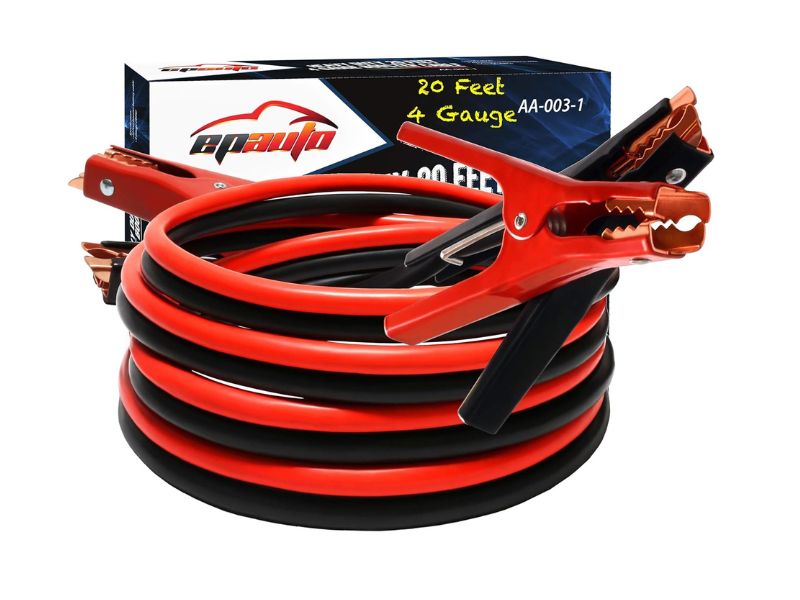
3. EPAuto 4 Gauge 20-Foot 500A Booster Jumper Cables – Best Complete Emergency Kit
Key Features
- 4 AWG cable
- 20-foot length
- Manufacturer-stated 500A capability
- Copper-plated clamps
- Tangle-resistant design
- Compatible with cars, vans, SUVs, motorcycles, and trucks
- Safety gloves included
- Travel bag included
EPAuto follows essentially the same ideal dimensions I like in the CARTMAN set: 4 gauge and 20 feet.
Where the EPAuto distinguishes itself is packaging. The kit includes a storage bag and safety gloves, making it especially suitable for a trunk-based emergency setup.
The manufacturer states a 500-amp maximum current specification. Amperage claims should be treated as one part of the overall picture rather than the only specification that matters. Cable gauge, conductor composition, cable length, temperature, clamp contact, and the electrical condition of both vehicles all influence the amount of current that actually reaches the disabled starter.
Still, 4-gauge cable provides much more useful current capacity than the thin cables found in many bargain roadside kits.
The 20-foot length also lets the donor vehicle remain farther away. This can be useful when helping a vehicle in a parking lot where pulling directly nose-to-nose is not possible.
The copper-plated clamps are designed to provide a strong electrical connection to the battery terminals. When jumping a car, clamp contact is crucial. A heavy cable with a weak, corroded, or poorly positioned clamp can perform worse than expected because the connection itself introduces resistance.
EPAuto’s relatively substantial cable and clamps make the set suitable for a broad mix of everyday vehicles.
The travel bag is useful, although heavy booster cables rarely return to a small bag as neatly as they arrived. My preference is to coil jumper cables in broad loops rather than sharply bending them simply to make them fit a tight case.
For a driver building a complete roadside kit, the included gloves are a useful bonus. They help keep hands cleaner when battery terminals, engine-bay components, or roadside conditions are dirty.
What I Like
- Practical 4-gauge construction.
- 20 feet provides excellent reach.
- 500A manufacturer specification.
- Copper-plated clamps.
- Travel bag included.
- Safety gloves included.
- Useful across many passenger and light-duty vehicles.
- Good fit for a complete emergency kit.
What I Do Not Like
- Bulky compared with shorter cables.
- Copper plating does not mean the entire conductor is pure copper.
- Heavy cable can be harder to coil.
Verdict
EPAuto is my recommendation for someone building a complete trunk emergency kit. The cable dimensions are very practical, and the gloves plus travel bag make storage and roadside handling easier.
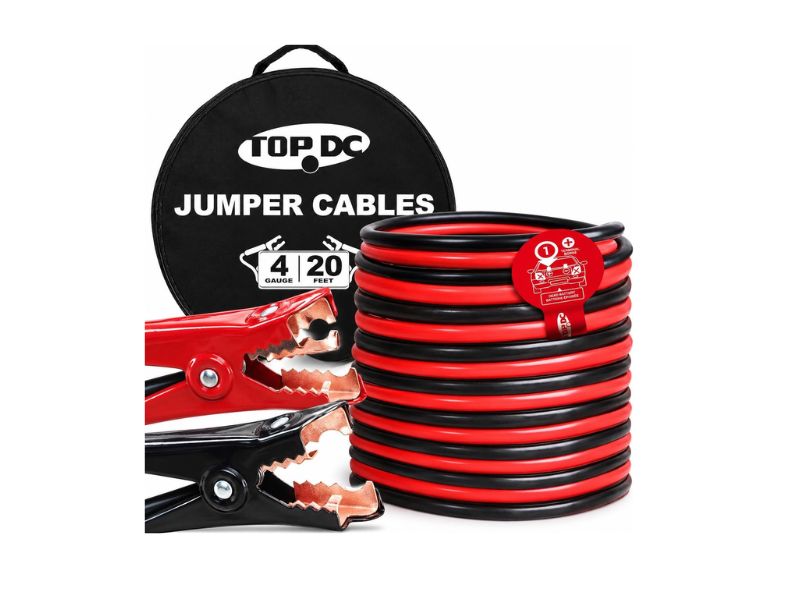
4. TOPDC 4 Gauge 20-Foot Heavy Duty Jumper Cables – Best for Cold Weather
Key Features
- 4-gauge cable
- 20-foot length
- Copper-clad aluminum conductor
- Heavy-duty clamp design
- Wide temperature operating range
- Flexible insulation
- Carrying bag
- Five-year warranty
- Designed for cars, SUVs, and trucks
The TOPDC is another strong 4-gauge, 20-foot cable, but I particularly like it for drivers who need a set that remains usable in winter.
Battery failures become more common as temperatures drop. Cold weather slows battery chemistry while cold engine oil increases the amount of work the starter must perform. Unfortunately, low temperature can also make poor-quality jumper cable insulation stiff and difficult to manage.
TOPDC emphasizes all-weather cable flexibility, which is useful if the cable spends winter in a vehicle.
Its 4-gauge copper-clad aluminum conductor provides a reasonable combination of capacity and manageable weight. CCA cannot match pure copper of the same physical conductor size, but it keeps the cost and weight down.
The 20-foot reach remains one of the biggest advantages.
Imagine your vehicle is parked nose-first in a one-car garage and the battery is dead. A short 8- or 10-foot cable may force the donor vehicle into an impossible position. A 20-foot set can often be routed from the driveway into the engine bay without pushing the disabled vehicle out first.
The heavy-duty clamps use jagged contact surfaces and substantial springs to help maintain a firm connection. Good spring pressure is particularly helpful around batteries where the terminal geometry makes clamp positioning awkward.
The carrying bag gives you a dedicated place to keep the cables, while the longer warranty adds reassurance for something that might spend years waiting for an emergency.
One thing I would emphasize is that 4 gauge does not automatically mean every 4-gauge cable performs identically. Conductor material, actual copper content, clamp resistance, and construction quality can differ.
For normal passenger vehicles, however, this TOPDC set offers a very useful balance.
What I Like
- Excellent cold-weather-oriented design.
- 4-gauge cable.
- 20-foot reach.
- Flexible jacket.
- Strong clamps.
- Carrying bag included.
- Long warranty.
- Appropriate for cars, SUVs, and many light trucks.
What I Do Not Like
- CCA conductor does not equal pure-copper conductivity.
- Long cable adds storage bulk.
- Large clamps may be awkward around small battery compartments.
Verdict
TOPDC is a very sensible choice for drivers in cold climates who want 20 feet of reach and a heavier cable that remains reasonably manageable in winter.
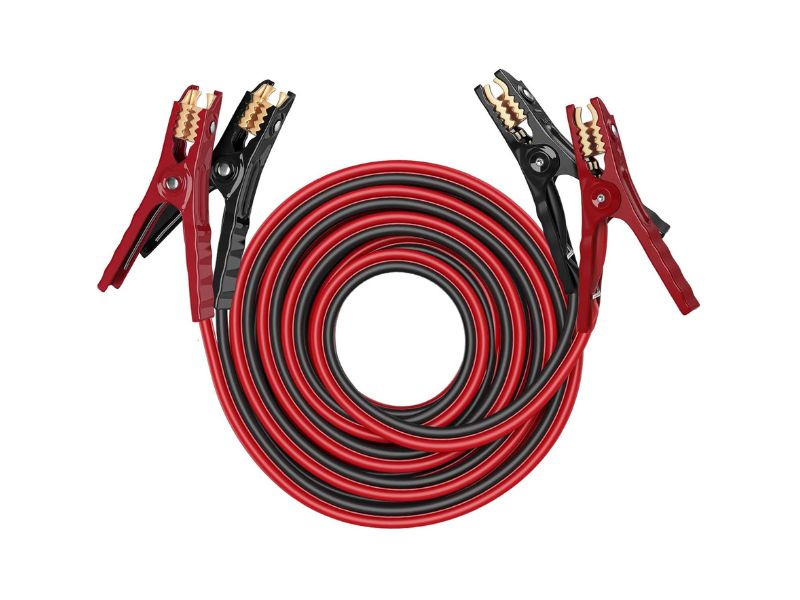
5. THIKPO G420 4 Gauge 20-Foot Jumper Cables – Best Safety-Certified Kit
Key Features
- 4-gauge, 20-foot cable
- Copper-clad aluminum construction
- Manufacturer-stated 300A peak capacity
- UL-certified clamp system
- Double-layer insulation design
- Flexible from approximately -40°F to 140°F
- Intended for up to 6.0L gasoline and 4.0L diesel engines
- Gloves included
- Terminal-cleaning brush included
- Carrying bag included
THIKPO’s G420 is one of the more complete cable kits in this guide.
The manufacturer pairs 4-gauge, 20-foot conductors with a set of accessories that includes gloves, a battery-terminal brush, and a carrying bag.
I particularly like the terminal brush because corrosion can create significant electrical resistance. If battery posts are heavily oxidized, even a high-quality booster cable may struggle to establish a strong connection.
Cleaning accessible corrosion before making the connection can improve contact, although you should always follow appropriate battery-safety precautions and the vehicle manufacturer’s guidance.
THIKPO states that the cable is suitable for engines up to approximately 6.0 liters gasoline and 4.0 liters diesel. Engine-size ratings provide useful context because diesel engines typically require greater cranking effort than similar-size gasoline engines.
The company also emphasizes cold- and hot-temperature flexibility. A stated range down to approximately -40°F gives this set additional appeal for winter emergency kits.
Another positive is the clamp certification. Safety certification does not guarantee that every jump start will be successful, but independent electrical safety standards are preferable to vague marketing language when choosing high-current automotive accessories.
The G420 is constructed from copper-clad aluminum rather than full copper, so it should be evaluated as a practical midrange emergency cable rather than a commercial roadside-assistance cable.
Its 300A manufacturer-stated peak figure is lower than several dramatically advertised competitors, but I actually prefer conservative, realistic expectations to assuming that an unusually large amperage number automatically means superior performance.
For most gasoline passenger vehicles, the cable size is far more relevant than chasing enormous headline amp claims.
What I Like
- 4-gauge cable with 20-foot reach.
- Useful cold-weather flexibility.
- UL-certified clamps.
- Gloves and terminal brush included.
- Convenient storage bag.
- Clear engine-size guidance.
- Good balance for cars and SUVs.
What I Do Not Like
- CCA rather than pure-copper conductor.
- Not my first choice for large diesel pickups.
- Large kit takes more storage room than a basic cable set.
Verdict
The THIKPO G420 is a strong choice for drivers who want a well-equipped safety-oriented jumper cable kit, especially for winter storage.
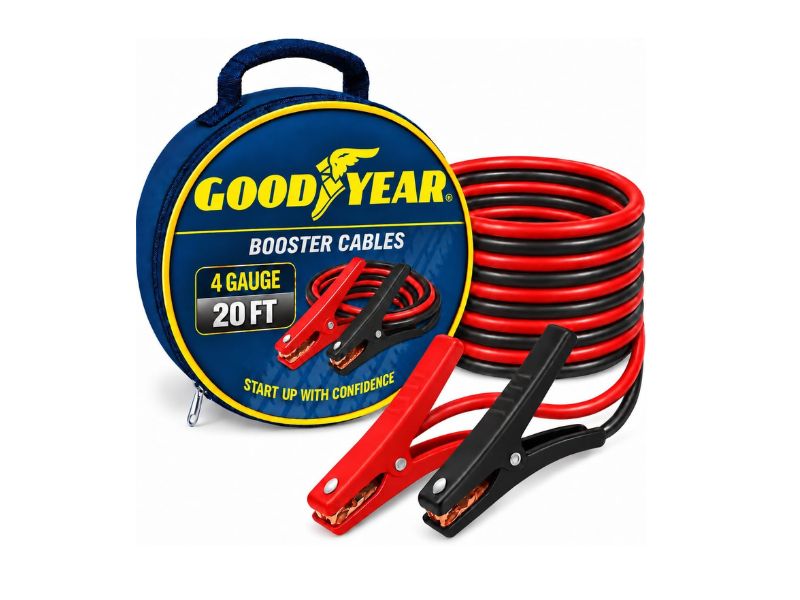
6. Goodyear Heavy Duty 4 Gauge 20-Foot Booster Cables – Best for Everyday SUVs
Key Features
- 4-gauge design
- 20-foot cable length
- Heavy-duty insulated clamps
- Tangle-resistant cable layout
- Flexible jacket
- Suitable for common cars, SUVs, and light trucks
- Durable carrying case
- Instructions included
The Goodyear-branded set follows the configuration that repeatedly makes sense for general automotive use: a 20-foot length with a 4-gauge conductor.
For SUV drivers, that combination is particularly useful.
Modern SUVs can have broad engine compartments, plastic covers, battery boxes, remote jump terminals, and awkward parking positions. Having additional reach can make the difference between a simple connection and having to reposition both vehicles.
The clamps use insulated gripping areas and strong spring pressure. A secure mechanical grip helps maintain electrical contact during cranking, when current demand is highest.
The carrying case is also more useful than it sounds. Heavy booster cables can damage other cargo, catch on tools, or turn into a tangled pile if they are left loose.
I would not buy this model based solely on the familiar brand name. Booster cable performance should still be evaluated according to gauge, conductor construction, clamp quality, and length.
The 4-gauge/20-foot specification is the important reason it earns a place here.
The set works well for owners who want one cable that can serve the family sedan, crossover, SUV, or light pickup.
As with other long 4-gauge sets, storage bulk is the main downside. These are not tiny emergency cables designed for a glove box.
The upside is significantly greater flexibility when another vehicle cannot park immediately beside the dead battery.
What I Like
- 4-gauge construction.
- Excellent 20-foot reach.
- Good match for SUVs and crossovers.
- Heavy-duty clamps.
- Tangle-resistant construction.
- Carrying case.
- Broad vehicle compatibility.
What I Do Not Like
- Larger than a basic passenger-car set.
- Conductor composition is less clearly emphasized than on some competitors.
- Storage case can be tight once cables are uncoiled.
Verdict
This Goodyear set is a useful everyday SUV booster cable for drivers who want more reach and heavier construction without moving into oversized commercial cables.
7. ABN 2 Gauge 25-Foot 600A Jumper Cables – Best Extra-Long Heavy-Duty Pick
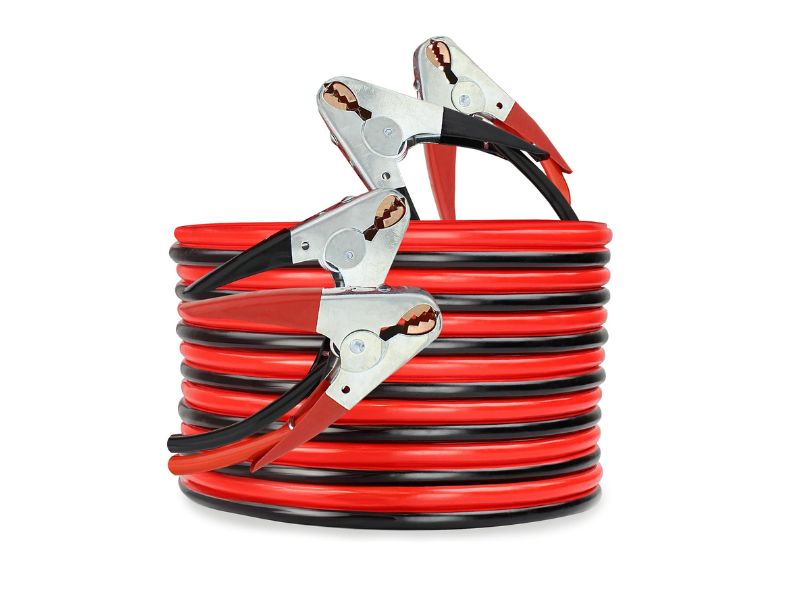
Key Features
- 2-gauge cable
- 25-foot overall length
- Manufacturer-stated 600A capability
- Copper-coated aluminum conductor
- Heavy-duty parrot-style clamps
- Oil-, water-, and chemical-resistant jacket
- Suitable for larger vehicles
- Carrying bag included
The ABN is where this guide moves decisively into heavier-duty territory.
At 2 gauge and 25 feet, these cables are intended for drivers who want substantially more reach while maintaining enough conductor size to manage the electrical resistance associated with that distance.
Twenty-five feet can be extremely useful around trucks, trailers, equipment, and difficult parking situations.
A donor vehicle may be able to remain behind the disabled vehicle rather than needing to park beside it. That can be particularly useful in driveways, parking garages, work sites, or roadside situations where maneuvering space is limited.
The manufacturer states a 600A capability and uses heavy-duty parrot-style clamps. The clamp shape can accommodate common top-post connections while also giving you more positioning flexibility around side terminals and grounding points.
The jacket is designed to resist oil, chemicals, and water. That makes sense for a cable likely to spend time around garages, truck beds, equipment, and dirty engine compartments.
The main tradeoff is obvious as soon as you pick the set up: 2-gauge 25-foot cables are heavy.
They are much less convenient for someone who drives a compact car and simply wants an emergency set under the trunk floor.
That is why this product ranks lower despite its heavier specifications. Bigger is not automatically better for every vehicle.
For a pickup, work truck, large SUV, or vehicle that frequently helps others, however, the extra capability can be worth carrying.
What I Like
- Thick 2-gauge construction.
- Excellent 25-foot reach.
- 600A manufacturer rating.
- Strong parrot-style clamps.
- Better suited to larger engines.
- Resistant jacket.
- Useful around trucks and equipment.
What I Do Not Like
- Heavy.
- Takes significant storage space.
- More cable than most compact-car owners need.
- CCA conductor rather than full copper.
Verdict
The ABN is my favorite option for drivers who need extra-long heavy-duty booster cables. It is particularly appropriate for trucks, work vehicles, and situations where 20 feet still may not provide enough reach.
8. EXTRESPO 4 Gauge 20-Foot 600A Jumper Cables – Best Roadside Accessory Kit
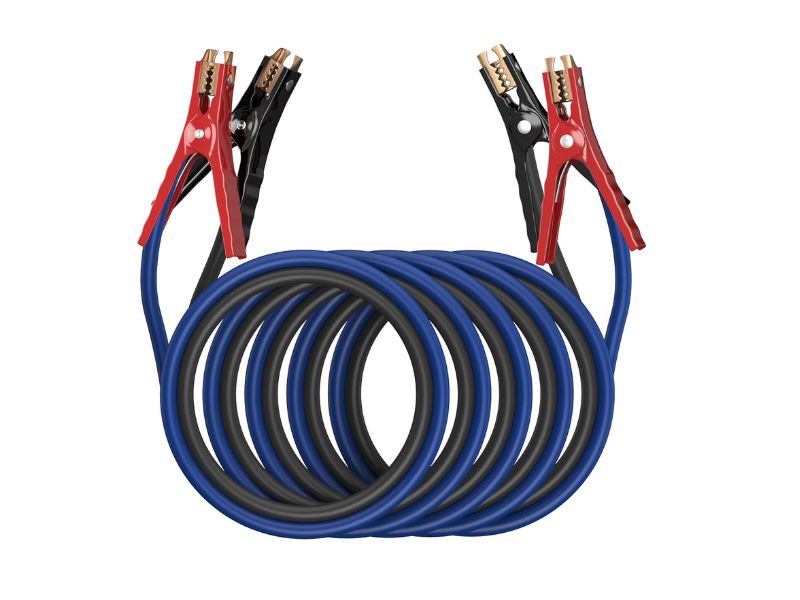
Key Features
- 4-gauge conductors
- 20-foot length
- Manufacturer-stated 600A rating
- Heavy-duty clamps
- Carry bag included
- Safety gloves included
- Battery-terminal brushes included
- Intended for cars, SUVs, and trucks
EXTRESPO combines the popular 4-gauge/20-foot cable layout with a broader assortment of roadside accessories.
Its 600A manufacturer rating positions it as a heavy-duty automotive cable, although—as with every cable here—I would prioritize actual conductor size and connection quality over the headline amp number.
The accessories are more useful than decorative.
Battery-terminal corrosion is a common reason electrical connections deteriorate. The included brush can help clean accessible terminal surfaces before a jump or during routine battery maintenance.
The gloves also make sense when handling dirty batteries or roadside equipment.
At 20 feet, the cable works well in situations where vehicles cannot park directly facing one another.
This length is also useful if a vehicle has remote jump terminals or a battery located deep within the engine bay.
The 4-gauge conductor gives the cable broader capability than 6-, 8-, or 10-gauge emergency sets, while remaining more manageable than 2-gauge commercial designs.
I would consider the EXTRESPO a good middle-ground choice for families with several vehicles because it can live in one primary vehicle and still handle a wide variety of typical roadside situations.
The main concern with accessory-rich kits is that buyers sometimes focus on the extras rather than the cable itself.
For me, the cable remains the priority. Gloves and brushes are useful, but the electrical path needs to be the reason you choose the product.
What I Like
- 4-gauge cable.
- 20-foot length.
- 600A manufacturer-stated rating.
- Useful accessory package.
- Gloves included.
- Terminal-cleaning tools included.
- Carrying bag.
- Suitable for mixed family vehicles.
What I Do Not Like
- Extra accessories add some bulk.
- Heavy-duty marketing does not replace proper vehicle matching.
- Not as substantial as the 2-gauge ABN for large trucks.
Verdict
EXTRESPO is a good complete roadside accessory kit for drivers who want reliable-size cables plus the small tools commonly needed around a battery.
9. NOONE 2 Gauge 20-Foot Jumper Cables with Reverse Polarity Protection – Best for Connection Safety
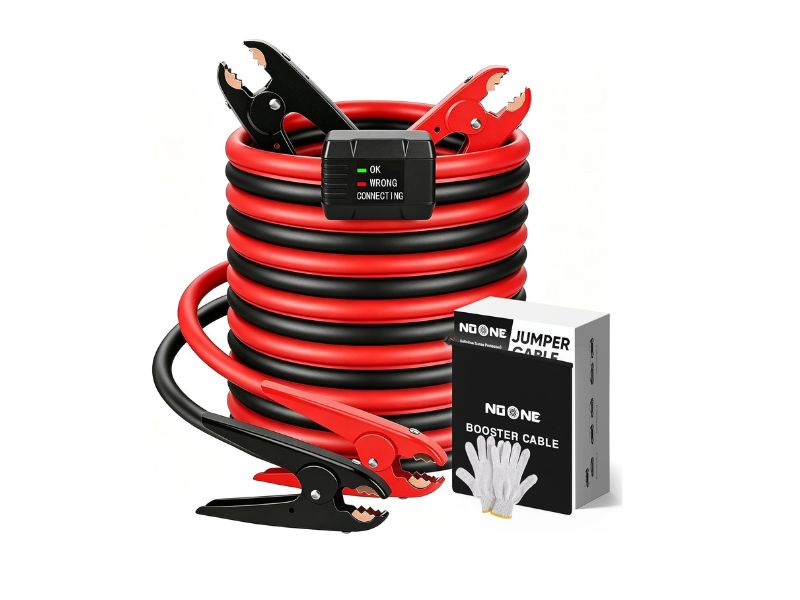
Key Features
- 2-gauge cable
- 20-foot length
- Manufacturer-stated 800A capacity
- Reverse-polarity protection module
- Audible and visual warning
- Heavy-duty clamps
- Carry bag included
- Gloves included
- Designed for cars, SUVs, and trucks
The NOONE set stands out because it combines heavy 2-gauge cable with electronic reverse-polarity protection.
Traditional jumper cables are passive. If you attach them incorrectly, there is nothing inside the cable itself to stop you.
That makes correct connection sequence absolutely critical.
NOONE adds a protection module designed to detect a reversed connection and warn the user with both visual and audible signals while interrupting current under the protected condition.
I still would never treat electronic protection as permission to connect cables carelessly. Always identify positive and negative terminals before attaching anything.
However, an additional warning system can be useful for drivers who are uncomfortable with jump starting or who may be dealing with the situation at night, in poor weather, or under stress.
The physical cable is also substantial.
At 2 gauge and 20 feet, it provides considerably greater current-carrying capability than a typical 6- or 8-gauge passenger-car set.
That makes it suitable for owners who have larger SUVs, pickups, vans, or multiple vehicle types.
The manufacturer states an 800A capability, though real-world current remains dependent on donor battery condition, voltage, starter demand, temperature, connection resistance, and conductor construction.
One disadvantage is cost and complexity. A passive cable contains relatively little that can malfunction. Adding electronic protection introduces another component into the electrical path.
For users who value connection guidance, the tradeoff may be worthwhile.
What I Like
- Thick 2-gauge cable.
- 20-foot reach.
- Reverse-polarity warning.
- Audible and visual alerts.
- 800A manufacturer specification.
- Useful for larger vehicles.
- Carrying bag and gloves included.
What I Do Not Like
- More complex than passive cables.
- Larger and heavier than normal passenger-car cables.
- Still requires correct connection technique.
- More expensive construction may be unnecessary for experienced users.
Verdict
NOONE is the model I would consider if you want heavy cable plus additional connection protection. It can be especially reassuring for an emergency kit used by several family members with different experience levels.
10. HORUSDY 4 Gauge 20-Foot Booster Cable – Best Reverse-Polarity Alternative
Key Features
- 4-gauge cable
- 20-foot length
- Reverse-polarity protection
- Audible/visual connection warning
- ETL-certified design
- Heavy-duty alligator clamps
- Strong clamp springs
- Cold-weather-oriented construction
- Carrying bag
- Five-year limited warranty
HORUSDY rounds out the list with another safety-focused cable.
The basic dimensions are excellent for general-purpose vehicle use: 4 gauge and 20 feet.
The most notable feature is its reverse-polarity warning system, which helps alert the user when the positive and negative connections have been reversed.
Again, this is a supplemental safety feature rather than a replacement for knowing the correct procedure.
The cable also uses large alligator clamps with aggressive contact teeth and strong spring pressure. Strong clamps help maintain contact on terminals and approved grounding locations, particularly when corrosion or unusual battery geometry makes positioning difficult.
The 20-foot length makes it easier to position two vehicles without forcing them excessively close together.
HORUSDY also emphasizes low-temperature flexibility, which is important because winter is one of the most common times for starting batteries to fail.
The ETL certification and longer warranty make this product more attractive than an anonymous cable with similar headline specifications.
The reason it sits in tenth position is primarily review depth rather than an obvious functional weakness. The higher-ranked products have a much larger body of long-term owner feedback.
If reverse-polarity protection is your priority, however, I would compare this directly with the NOONE rather than dismissing it because of its rank.
What I Like
- Good 4-gauge/20-foot specification.
- Reverse-polarity warning.
- ETL-certified design.
- Strong alligator clamps.
- Useful winter flexibility.
- Long warranty.
- Carrying bag included.
What I Do Not Like
- Smaller long-term owner-feedback base than top-ranked products.
- Electronic protection adds complexity.
- 4-gauge cable is not as heavy as 2-gauge commercial options.
Verdict
HORUSDY is a worthwhile choice for drivers who want a general-purpose 4-gauge cable with extra connection protection.
Best Booster Cables for Car Comparison
| Product | Gauge | Length | Stated Current | Conductor/Construction | Safety Feature | Storage | Best For |
| Energizer Jumper Cables | 6 AWG | 16 ft | Varies by configuration | Flexible automotive cable | Insulated clamps | Carry bag | Everyday passenger cars |
| CARTMAN Booster Cables | 4 AWG | 20 ft | — | CCA | Insulated clamps | Carry bag | Best all-around 4-gauge |
| EPAuto Booster Cables | 4 AWG | 20 ft | 500A | Heavy-duty cable | Insulated copper-plated clamps | Bag + gloves | Complete emergency kit |
| TOPDC Jumper Cables | 4 AWG | 20 ft | — | CCA | Heavy-duty insulated clamps | Carry bag | Cold climates |
| THIKPO G420 | 4 AWG | 20 ft | 300A | CCA | Certified clamps | Bag + gloves + brush | Safety-oriented kit |
| Goodyear Booster Cables | 4 AWG | 20 ft | — | Heavy-duty automotive cable | Insulated clamps | Carry case | SUVs and crossovers |
| ABN Jumper Cables | 2 AWG | 25 ft | 600A | CCA | Heavy-duty parrot clamps | Carry bag | Trucks and extra reach |
| EXTRESPO Booster Cables | 4 AWG | 20 ft | 600A | Heavy-duty cable | Insulated clamps | Full accessory kit | Roadside preparedness |
| NOONE Jumper Cables | 2 AWG | 20 ft | 800A | Heavy-duty cable | Reverse-polarity protection | Bag + gloves | Larger vehicles |
| HORUSDY Booster Cable | 4 AWG | 20 ft | High-current design | Heavy-duty cable | Reverse-polarity warning | Carry bag | Added connection safety |
Quick Product Comparison
For most normal car owners, I still prefer the Energizer 6 Gauge 16-Foot Jumper Cables because they provide enough capability for everyday emergency use without becoming unnecessarily heavy.
If I wanted one set to cover a sedan, crossover, SUV, and light pickup, I would move to the CARTMAN 4 Gauge 20-Foot Jumper Cables.
The EPAuto and TOPDC options provide very similar 4-gauge/20-foot versatility, with EPAuto emphasizing an emergency-kit package and TOPDC standing out for cold-weather use.
Truck owners should look more closely at the ABN 2 Gauge 25-Foot set or the NOONE 2 Gauge 20-Foot cable.
For drivers worried about connecting the clamps incorrectly, NOONE and HORUSDY provide additional reverse-polarity warning systems.
How I Chose the Best Booster Cables for Car Use
Review Depth and Long-Term Use
I placed significant weight on products with large amounts of established owner feedback.
A booster cable can look impressive when new but still fail in important areas such as:
- Clamp spring strength
- Cable-to-clamp connection
- Jacket durability
- Cold-weather flexibility
- Storage practicality
- Long-term corrosion resistance
A larger user base provides more information about how a product behaves outside a product description.
Cable Gauge
Cable gauge is one of the most important specifications.
With American Wire Gauge, a lower number generally means a thicker conductor.
That means:
- 2 gauge is thicker than 4 gauge.
- 4 gauge is thicker than 6 gauge.
- 6 gauge is thicker than 8 gauge.
- 8 gauge is thicker than 10 gauge.
Thicker cable generally has lower resistance and can carry more current.
Cable Length
Long cables are more convenient but create greater electrical resistance.
That means length and gauge should be evaluated together.
A very thin 25-foot cable may perform poorly despite its impressive reach.
I generally prefer:
- Around 12–16 feet for compact emergency sets.
- Around 20 feet for all-purpose automotive cables.
- 25–30 feet for trucks, service vehicles, and difficult-access situations.
Clamp Construction
Clamps need to grip terminals securely.
I looked for:
- Strong springs
- Large conductive contact surfaces
- Insulated handles
- Aggressive teeth
- Compatibility with common battery terminals
- Good cable-to-clamp connections
Conductor Material
The two main materials you will encounter are pure copper and copper-clad aluminum.
Pure copper is more conductive.
CCA is lighter and less expensive but requires more conductor area to provide comparable electrical performance.
Many affordable booster cables use CCA.
Cold-Weather Flexibility
A booster cable that becomes extremely stiff below freezing can be difficult to use.
I gave additional consideration to cables designed to remain flexible in severe winter conditions.
Storage
Jumper cables are emergency tools, which means they may sit unused for months.
A carrying bag helps:
- Prevent tangles
- Protect clamps
- Keep dirt away from other cargo
- Make the cable easy to locate during an emergency
Complete Buying Guide: How to Choose Booster Cables for Your Car
Understanding Booster Cable Gauge
Gauge is probably the first specification you should consider.
10-Gauge Jumper Cables
10-gauge cables are relatively thin.
They may work for:
- Small compact cars
- Motorcycles
- Mild conditions
- Batteries that are only moderately discharged
I generally do not recommend 10 gauge as the primary emergency cable for an average family car.
8-Gauge Jumper Cables
8 gauge is better than 10 gauge but still relatively light duty.
It can be appropriate for:
- Compact four-cylinder cars
- Short cable lengths
- Mild climates
Again, I would usually spend a little more for 6 or 4 gauge.
6-Gauge Jumper Cables
6 gauge is a practical starting point for normal passenger cars.
It offers:
- Better conductivity
- Manageable weight
- Easy storage
- Enough capability for many gasoline vehicles
This is why the 6-gauge Energizer earns my top overall position.
4-Gauge Jumper Cables
For many drivers, 4 gauge is the sweet spot.
It provides substantially more current-carrying capability without the size and weight of commercial 1- or 2-gauge sets.
Four-gauge cable works particularly well for:
- Sedans
- Crossovers
- SUVs
- Vans
- Light trucks
- Larger gasoline engines
A 4-gauge, 20-foot cable is my favorite universal configuration.
2-Gauge Jumper Cables
Two-gauge cables are heavy duty.
They make sense for:
- Pickup trucks
- Large SUVs
- Diesels
- Commercial vans
- Longer 20–25-foot cable runs
- Frequent jump starting
The tradeoffs are cost, weight, and storage size.
1-Gauge and 0-Gauge Booster Cables
These are primarily appropriate for demanding use.
Consider them for:
- Large diesel trucks
- Commercial service
- Fleet use
- Roadside-assistance vehicles
- Heavy equipment
For an ordinary compact car, they are often unnecessary.
What Gauge Booster Cable Is Best for a Car?
For an average passenger car, I recommend 4 or 6 gauge.
Choose 6 gauge when:
- The cable is relatively short.
- You drive a small-to-midsize gasoline car.
- Compact storage matters.
Choose 4 gauge when:
- You want one cable for several vehicles.
- You own an SUV or pickup.
- You want a 20-foot cable.
- You drive in colder climates.
- You want more starting-current reserve.
If you own a large diesel, consider 2 gauge or heavier.
Why Longer Jumper Cables Need to Be Thicker
Electrical conductors have resistance.
Resistance increases with length.
When high starter current travels through a long cable, resistance causes voltage drop.
A simplified relationship is:
Voltage drop = Current × Resistance
During a jump start, the starter can demand hundreds of amps for a short period.
Even a relatively small amount of cable resistance can therefore produce a meaningful voltage drop.
This is why a 25-foot 10-gauge cable is not an ideal heavy-duty jump-starting solution.
If you want more length, increase conductor size.
12-Foot vs. 16-Foot vs. 20-Foot Jumper Cables
12 Feet
Advantages:
- Compact
- Light
- Easy to store
- Lower resistance
Disadvantages:
- Vehicles need to park close together.
- Can be difficult in garages.
- May not reach around large engine compartments.
16 Feet
This is a useful compromise for normal passenger cars.
It provides more flexibility than a 12-foot cable without becoming too bulky.
20 Feet
Twenty feet is my favorite general-purpose length.
It allows:
- Side-by-side jumping
- More flexible parking
- Greater separation between vehicles
- Easier connection to large SUVs
The cable should ideally be 4 gauge or heavier.
25 to 30 Feet
These lengths are valuable for:
- Work trucks
- Commercial vehicles
- Trailers
- Roadside assistance
- Large equipment
Because of resistance, I prefer 2 gauge or heavier for very long demanding cables.
Pure Copper vs. Copper-Clad Aluminum Jumper Cables
Pure Copper
Copper has excellent electrical conductivity.
Advantages include:
- Lower electrical resistance
- Better current transfer
- Smaller conductor needed for equivalent performance
- Excellent flexibility in quality cable
- Better choice for repeated professional use
The disadvantage is cost.
A genuine long, thick pure-copper jumper cable can be dramatically more expensive than a CCA cable.
Copper-Clad Aluminum
CCA uses aluminum as the primary conductor with a copper layer.
Advantages:
- Lower cost
- Lower weight
- Common availability
- Adequate for many emergency applications
Disadvantages:
- Higher resistance than pure copper
- Needs larger conductor area for comparable performance
- Less ideal for extreme heavy-duty use
For an emergency set used occasionally, quality 4-gauge CCA can be perfectly practical.
For a tow truck or professional service vehicle, I would favor heavy pure-copper cable.
Why Clamp Quality Matters So Much
The clamp is part of the electrical circuit.
A poor clamp creates resistance between the booster cable and the battery.
This can lead to:
- Slow cranking
- Heating
- Arcing
- Failed starting attempts
Look for clamps with strong springs and large conductive jaw surfaces.
The jaws should grip firmly without falling off when the cable is moved.
Top-Post vs. Side-Post Batteries
Traditional batteries usually have top-mounted posts.
Some vehicles use:
- Side terminals
- Remote positive terminals
- Dedicated jump points
- Chassis grounding studs
A good clamp should offer enough jaw geometry to accommodate different connection points.
Always consult the vehicle owner’s manual if you are unsure where to connect jumper cables.
Modern vehicles may specify dedicated jump-start terminals even when the actual battery is located elsewhere.
Do High-Amp Jumper Cable Ratings Matter?
Yes, but not as much as marketing often suggests.
A cable advertised as 1000A is not automatically better than every cable advertised at 500A.
Performance depends on:
- Actual conductor cross section
- Copper content
- Cable length
- Clamp resistance
- Connection quality
- Donor battery condition
- Temperature
- Starter demand
Gauge and material provide more useful information than a giant amp number by itself.
What Are Reverse-Polarity Protection Jumper Cables?
Reverse polarity occurs when positive and negative are connected incorrectly.
Smart-protection cables may include circuitry that detects incorrect connection and produces:
- Warning light
- Audible alarm
- Current interruption
This is useful, especially for occasional users.
However, protection circuitry should be considered backup protection, not a substitute for proper connection.
Always identify terminal polarity before attaching cables.
Booster Cables vs. Portable Jump Starter
Both belong in the roadside-emergency category, but they work differently.
Booster Cable Advantages
- No internal battery to recharge.
- Can sit in a vehicle for years.
- Generally inexpensive.
- Simple construction.
- High-quality cables can last decades.
- Donor vehicle provides the energy.
Booster Cable Disadvantages
- Requires another vehicle or compatible external battery.
- Vehicles need to be positioned within cable reach.
- Connection must be performed correctly.
Portable Jump Starter Advantages
- Does not require another vehicle.
- Extremely convenient.
- Compact lithium models provide good power.
- Often include flashlights and USB outputs.
Portable Jump Starter Disadvantages
- Internal battery needs periodic charging.
- Lithium battery ages over time.
- Extreme vehicle temperatures can affect storage life.
- A discharged jump pack is useless when needed.
My preferred approach for frequent travel is actually to carry both.
The lithium jump starter provides independence, while traditional booster cables serve as an excellent backup.
How to Use Booster Cables Safely
Jump-start procedures vary by vehicle, especially with hybrids, EVs, modern battery-monitoring systems, and remotely located batteries.
Always follow the vehicle manufacturer’s instructions first.
For conventional compatible 12V vehicles, the general process commonly involves the following.
Check Both Vehicles
Before connecting anything:
- Confirm compatible system voltage.
- Inspect the batteries.
- Do not jump a visibly damaged, leaking, swollen, or frozen battery.
- Keep vehicles from touching each other.
- Switch off ignition and unnecessary accessories.
Identify Positive and Negative
Positive is normally marked:
+
Negative is normally marked:
–
Do not rely only on cable color if terminal markings are unclear.
Attach the Positive Cable to the Disabled Battery
Connect the red positive clamp to the positive terminal or designated positive jump point.
Connect Positive to the Donor Battery
Attach the other red clamp to the donor battery’s positive terminal.
Connect Negative to the Donor Battery
Attach the black negative clamp to the donor battery negative terminal.
Complete the Ground Connection
For many conventional vehicles, the final negative connection is made to an approved unpainted metal grounding point on the disabled vehicle rather than directly beside the dead battery.
This can reduce the likelihood of a spark occurring near the battery.
Your owner’s manual should identify the correct point.
Start the Donor Vehicle if Directed
Follow manufacturer instructions regarding whether and how long the donor engine should run before attempting to crank the disabled vehicle.
Attempt to Start the Disabled Vehicle
Do not crank continuously for an excessive period.
Starter motors generate heat quickly.
If the engine does not start after reasonable attempts, the problem may be something other than simple battery discharge.
Disconnect in the Recommended Reverse Sequence
Once the vehicle is running, follow the manufacturer-recommended disconnection sequence.
Keep clamps from touching one another or moving components.
When You Should Not Jump-Start a Battery
Do not attempt normal jump starting if the battery is:
- Cracked
- Leaking
- Swollen
- Frozen
- Producing unusual odors
- Extremely hot
- Physically damaged
Also avoid jump starting if you are uncertain about:
- Vehicle voltage
- Hybrid procedures
- EV 12V system procedures
- Dedicated jump points
- Battery terminal polarity
Consult the vehicle documentation or roadside assistance instead.
Can Booster Cables Damage a Car?
Yes, improper use can cause serious electrical damage.
Possible risks include:
- Reversed polarity
- Sparks
- Short circuits
- Damage to electronic modules
- Battery explosion
- Cable overheating
Modern vehicles contain sensitive electronics.
That makes careful connection more important than ever.
Why Jumper Cables Get Hot
Some warmth can occur because large current flows through resistance.
Excessive heat may indicate:
- Cable too thin
- Cable too long
- Poor clamp connection
- Corroded terminals
- Undersized conductor
- Damaged cable
- Very high starter demand
- Extended cranking
If cables become dangerously hot, stop the procedure and investigate.
Can Thin Jumper Cables Start a Big Engine?
Sometimes, but performance can be poor.
A thin cable may allow enough current to slowly transfer charge into the dead battery if the vehicles remain connected for several minutes.
However, it may not transfer sufficient current directly to the starter during cranking.
This can result in:
- Slow cranking
- Clicking starter solenoid
- Hot cables
- Failed starting attempts
Using a thicker cable reduces voltage drop.
Best Booster Cable for a Small Car
For a small gasoline car, I prefer:
Energizer 6 Gauge 16-Foot Jumper Cables.
The cable provides a useful balance without consuming too much trunk space.
A quality 4-gauge cable is also perfectly suitable and gives additional capacity.
Best Booster Cable for an SUV
For an SUV, I prefer:
CARTMAN 4 Gauge 20-Foot Jumper Cables or TOPDC 4 Gauge 20-Foot Jumper Cables.
The 20-foot reach makes positioning easier around larger vehicles, and 4-gauge wire gives additional starting-current capacity.
Best Booster Cable for a Pickup Truck
For pickups, especially those with large gasoline engines, I would start with:
ABN 2 Gauge 25-Foot Jumper Cables.
A 4-gauge cable can work for many pickups, but 2 gauge provides more reserve.
Best Booster Cable for Diesel Trucks
Diesel engines use higher compression and commonly need substantial cranking current.
For diesel use, prioritize:
- 2 gauge or heavier
- Shorter cable when possible
- Strong clamps
- High copper content
- Quality insulation
- Proper donor vehicle capacity
Large heavy-duty diesels may justify 1 gauge, 0 gauge, or commercial pure-copper booster cables beyond the typical passenger-car products in this guide.
Best Booster Cables for Winter
Cold-weather booster cables should have:
- Flexible insulation
- Heavy gauge
- Strong clamps
- Enough length for safe vehicle positioning
I particularly like the TOPDC and THIKPO G420 for cold climates because their cable designs emphasize flexibility at low temperature.
How to Store Jumper Cables Properly
Let Them Cool
If the cables became warm during use, allow them to return to normal temperature before packing them tightly.
Inspect the Insulation
Look for:
- Cuts
- Cracks
- Exposed conductor
- Melted areas
- Damaged clamp connections
Replace damaged cables.
Coil in Large Loops
Do not sharply bend heavy cable.
Large loops reduce stress on conductors and insulation.
Keep Clamps Separated
Position positive and negative clamps so conductive jaws cannot easily contact one another.
Store in the Carrying Bag
A bag keeps the cables clean and prevents them from tangling with other emergency gear.
How Long Do Jumper Cables Last?
A quality passive jumper cable can last many years.
Unlike a lithium jump starter, it contains no internal battery that naturally ages with charging cycles.
Service life depends on:
- Insulation quality
- Copper/aluminum corrosion
- Clamp spring condition
- Crimp quality
- Exposure to heat
- Exposure to chemicals
- Storage practices
Inspect your cables periodically even if they have never been used.
Signs You Should Replace Booster Cables
Replace the cable if you find:
- Exposed wire
- Melted insulation
- Loose clamps
- Broken clamp springs
- Severe corrosion
- Burn marks
- Damaged crimp connections
- Cracked insulation
- Cable that becomes dangerously hot during appropriate use
Emergency equipment is not the place to rely on questionable wiring.
Do Jumper Cable Clamps Need to Be Copper?
Not necessarily.
Many affordable cables use steel clamps with copper plating or conductive inserts.
What matters is whether the clamp creates a low-resistance electrical path.
Pure-copper clamps provide excellent conductivity but cost more.
For occasional passenger-car use, a quality plated clamp can work very well.
Are 20-Foot Jumper Cables Too Long?
No, not when paired with an appropriate gauge.
Twenty feet is arguably the most versatile length for normal vehicles.
The increased resistance compared with a 12-foot cable can be compensated for by using 4-gauge or heavier conductors.
The convenience during awkward parking situations often outweighs the added weight.
Are 25-Foot Jumper Cables Better?
They provide more reach, but they are not automatically better.
A 25-foot cable:
- Weighs more
- Costs more
- Requires more storage
- Has greater electrical resistance
For long cable runs, choose thicker conductors.
The ABN 2-gauge 25-foot set is a good example of pairing extra length with a lower gauge.
Why Cheap Jumper Cables Sometimes Fail
Very inexpensive cables may cut costs by using:
- Thin conductors
- Thick insulation that makes the cable appear larger
- Low copper content
- Weak clamps
- Poor crimps
- Short contact surfaces
- Stiff jackets
A cable can look physically thick from the outside while containing a relatively small conductor.
That is why reputable specifications and real user history matter.
Should Every Car Have Booster Cables?
I believe most conventional gasoline and diesel vehicle owners should keep a suitable emergency starting option in the vehicle.
A traditional booster cable is particularly attractive because:
- It does not need charging.
- It tolerates long storage.
- It is relatively inexpensive.
- It can help another driver as well as you.
Drivers of hybrids and EVs should check their owner’s manual for appropriate 12V-system emergency procedures before purchasing or using booster cables.
What Else Should Be in a Car Battery Emergency Kit?
A useful battery-related kit can contain:
- Booster cables
- Portable jump starter
- Work gloves
- Safety glasses
- Flashlight
- Battery-terminal brush
- Basic wrench or socket
- Reflective vest
- Warning triangle
- Multimeter
- Emergency contact information
The safest roadside repair is one performed where you are visible and away from traffic.
Common Booster Cable Buying Mistakes
Choosing the Cheapest Cable
A jumper cable may sit unused for years and then need to work immediately on the coldest day of the season.
This is not a tool where saving a few dollars on extremely thin conductors makes much sense.
Buying by Amp Rating Alone
A dramatic amperage number does not tell the entire story.
Gauge, conductor material, length, and clamps all matter.
Ignoring Cable Length
A heavy 6-foot cable may transfer current efficiently but be impossible to connect when vehicles cannot park closely.
Buying Too Much Cable
A compact car owner may not need 30 feet of 0-gauge cable.
More cable adds weight and resistance.
Ignoring Conductor Material
Do not assume a copper-colored cable is pure copper.
Many cables use copper-clad aluminum.
Buying Thin Extra-Long Cable
Longer cable should generally be paired with a thicker conductor.
Ignoring Cold-Weather Flexibility
A stiff cable is extremely frustrating to use in freezing temperatures.
Forgetting Storage
A loose 20-foot cable can become a tangled mess.
Choose a storage bag or add one yourself.
Frequently Asked Questions
1. What are the best booster cables for car use?
The Energizer 6 Gauge 16-Foot set is my best overall choice for normal passenger cars.
It balances useful current capacity with manageable weight and storage size. Drivers who want greater capability should consider a 4-gauge, 20-foot set such as CARTMAN, EPAuto, or TOPDC. Large pickups and diesels benefit from heavier 2-gauge or commercial cable.
2. What gauge jumper cable is best for a car?
Four to six gauge is ideal for many passenger vehicles.
Six gauge works well for normal compact and midsize gasoline cars, particularly at moderate cable lengths. Four gauge provides additional capacity for SUVs, pickups, larger engines, longer cables, and colder conditions.
3. Is 4 gauge better than 6 gauge jumper cable?
Yes, 4 gauge is thicker and generally carries more current with less resistance.
However, a 4-gauge cable is heavier and more expensive. A quality 6-gauge set can be completely adequate for a normal passenger car. Four gauge becomes more attractive for 20-foot lengths and larger engines.
4. Is 2 gauge better than 4 gauge for jumper cables?
Two gauge provides greater current capacity but is heavier and bulkier.
It is particularly useful for trucks, diesels, long cable runs, and frequent jump starting. For an average sedan, 4 gauge usually offers a better balance of performance and storage convenience.
5. How long should car booster cables be?
Approximately 16–20 feet is a practical range for most drivers.
Sixteen feet provides good reach without excessive bulk. Twenty feet is more versatile when vehicles cannot park directly beside each other. Work trucks and roadside-assistance vehicles may benefit from 25–30 feet.
6. Are 20-foot jumper cables too long?
No, 20 feet works very well when the conductor is sufficiently thick.
I prefer 4 gauge or heavier for a general-purpose 20-foot automotive set. Extra length makes positioning much easier in garages and parking lots.
7. Is pure copper better than copper-clad aluminum?
Pure copper offers better electrical conductivity than equivalent CCA cable.
Copper-clad aluminum is lighter and less expensive, which makes it popular for consumer booster cables. A properly designed 4-gauge CCA cable can work well for occasional emergency use, while full copper is preferable for professional and extreme-duty use.
8. Can 6-gauge jumper cables start a V8?
They may, but engine size, cable length, temperature, and battery condition all matter.
For a large V8—especially in cold weather—I prefer 4 gauge or heavier because the lower resistance provides more starting-current reserve.
9. What gauge cable should I use for a diesel truck?
Two gauge or heavier is a better starting point for many diesel trucks.
Large diesel engines can require substantial cranking current. For heavy-duty diesels, commercial 1-, 0-, or 1/0-gauge pure-copper cables may be more appropriate.
10. Are longer jumper cables less powerful?
Longer cables have more electrical resistance when all other factors are equal.
The solution is to use thicker cable. For example, a 25-foot 2-gauge set can be more suitable for heavy duty use than a thin 25-foot 8-gauge set.
11. Why won’t my jumper cables start the car?
The problem may be poor connections, thin cables, battery failure, or a non-battery vehicle fault.
Check for terminal corrosion, confirm correct connection, and make sure clamps grip securely. A failed starter, damaged battery, poor ground connection, or other electrical problem can prevent starting even with good booster cables.
12. Should jumper cables get hot?
Slight warmth can occur, but excessive heat indicates a problem.
Possible causes include undersized cable, poor clamp contact, corrosion, damaged conductors, or excessive cranking. Stop if the cables become dangerously hot.
13. Are booster cables and jumper cables the same thing?
Yes, the terms usually refer to the same type of vehicle battery cable.
Both connect a disabled vehicle’s starting system to an external 12V power source, usually another compatible vehicle battery.
14. Is a portable jump starter better than booster cables?
A portable jump starter is more independent, while booster cables never need recharging.
I like lithium jump packs for convenience, but traditional cables make an excellent backup because they can remain stored for years without an internal battery losing capacity.
15. Can jumper cables damage the alternator?
Improper jump-start procedures can potentially stress electrical systems.
Voltage spikes, reversed connections, incompatible vehicles, and incorrect procedures can damage electronics. Follow both vehicle manufacturers’ jump-start instructions rather than improvising.
16. Should the donor car be running when jump starting?
Follow the vehicle manufacturers’ procedures because recommendations can differ.
Some conventional procedures call for starting the donor engine before attempting to crank the disabled vehicle, while certain modern vehicles have more specific requirements. The owner’s manual is the authoritative guide.
17. Where should the black jumper cable connect?
The correct final negative connection depends on the vehicle’s prescribed jump-start procedure.
Many vehicles specify an approved chassis or engine grounding point on the disabled vehicle rather than connecting beside the dead battery. Check the owner’s manual for the designated location.
18. Can I jump a completely dead car battery?
Often yes, if the battery is merely discharged and otherwise healthy.
A battery with internal failure, physical damage, freezing, severe sulfation, or a shorted cell may not accept a successful jump. Do not attempt to jump visibly damaged batteries.
19. Are reverse-polarity protection cables worth it?
They can be useful for inexperienced drivers but should remain a backup safety feature.
NOONE and HORUSDY provide warning systems designed to alert users to reversed connections. You should still verify positive and negative terminals before attaching any clamps.
20. How should jumper cables be stored?
Store them clean, dry, loosely coiled, and protected inside a bag or case.
Avoid sharp bends, inspect the insulation periodically, and keep the clamp jaws from damaging surrounding cargo. Proper storage can allow a quality cable to remain serviceable for many years.
Final Buying Advice
The right booster cable should match the largest vehicle you realistically expect to jump.
For compact and midsize gasoline cars, a good 6-gauge cable may be all you need.
For households with mixed vehicles, I prefer 4 gauge and approximately 20 feet. This specification provides useful reach without the extreme bulk of commercial cables and is why so many of my recommended products fall into this category.
For pickup trucks, larger V8 engines, diesels, or frequent roadside use, move toward 2 gauge or heavier.
Also remember that conductor material matters. Copper-clad aluminum is common and practical for occasional emergency use, while high-quality pure copper remains the benchmark when maximum conductivity and professional durability are priorities.
Conclusion
The best booster cables for car emergencies should be easy enough to keep in the vehicle, long enough to reach a donor battery in realistic parking conditions, and heavy enough to transfer the current your engine requires.
My primary recommendation is the Energizer 6 Gauge 16-Foot Jumper Cables for everyday passenger cars. They provide a useful combination of size, flexibility, reach, and trunk-friendly storage without forcing the average driver to carry an oversized commercial cable set.
If you want greater capacity and reach, the CARTMAN 4 Gauge 20-Foot Jumper Cables are my preferred upgrade. Their 4-gauge/20-foot configuration is one of the best combinations for a family that owns cars, crossovers, SUVs, or light trucks.
The EPAuto 4 Gauge 20-Foot 500A Booster Cables are another excellent all-purpose option, particularly if you like having gloves and a dedicated travel bag in your emergency kit. TOPDC is particularly attractive for winter use, while THIKPO G420 offers a useful safety-focused accessory package.
For larger vehicles, the ABN 2 Gauge 25-Foot Jumper Cables provide significantly more reach and conductor capacity. NOONE is also worth considering when you want a heavy 2-gauge cable combined with reverse-polarity protection.
The key is not simply buying the largest cable available. Match gauge, length, conductor construction, clamps, and vehicle size correctly, store the cable properly, and familiarize yourself with your vehicle’s approved jump-start procedure before an emergency happens.
For most normal passenger-car owners, I would choose the Energizer 6 Gauge 16-Foot Jumper Cables first, while drivers wanting a more versatile heavy-duty set should move to a 4-gauge, 20-foot option such as CARTMAN.