A rechargeable car battery charger is a practical emergency tool when you want starting power without depending on another vehicle or an electrical outlet beside your car. These compact lithium battery packs can be charged in advance, stored in the vehicle, and connected to a weak 12V battery when the engine will not crank.
My primary recommendation is the NOCO Boost Plus GB40 1000A Jump Starter. It has an exceptionally large history of buyer feedback and combines compact dimensions with dependable clamps, reverse-polarity protection, spark-resistant operation, and enough starting capacity for most passenger cars and many SUVs.
For buyers who want considerably more advertised starting output, the DBPOWER Peak 3000A 18000mAh Portable Car Jump Starter is my second choice. Its 18,000mAh internal battery, LCD display, USB power-bank capability, and compatibility with larger engines make it particularly versatile.
The AstroAI S8 1500A Car Battery Jump Starter is my preferred lightweight option. At roughly one pound, it is easy to keep in a small car while still being rated for gasoline engines up to 6.0L and diesel engines up to 3.0L.
Best Rechargeable Car Battery Charger
| Image | Product Name | Check Price |
|---|---|---|
Best Choice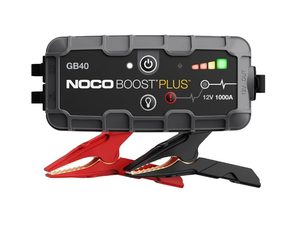 | NOCO Boost Plus GB40 1000A Jump Starter – Best Overall | Check Price |
Second Best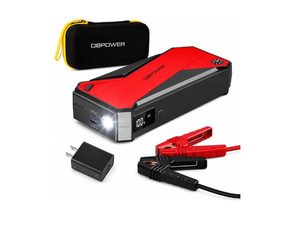 | DBPOWER Peak 3000A 18000mAh Portable Car Jump Starter | Check Price |
Third Choice | AstroAI S8 1500A Car Battery Jump Starter | Check Price |
1. NOCO Boost Plus GB40 1000A Jump Starter – Best Overall

Key Features
- 1,000A peak output
- Designed for 12V vehicle batteries
- Up to 6.0L gasoline engines
- Up to 3.0L diesel engines
- Rechargeable lithium-ion battery
- Reverse-polarity protection
- Spark-resistant connection system
- Manual override function
- Built-in LED flashlight
- USB power-bank function
- Rugged compact housing
- IP65-rated enclosure with ports closed
The NOCO Boost Plus GB40 remains my first choice because a roadside battery tool should be judged by more than the largest amp number printed on its case.
Its 1,000A output is intended for gasoline engines up to 6.0 liters and diesel engines up to 3.0 liters. That covers a broad range of sedans, hatchbacks, crossovers, motorcycles, and lighter trucks.
The most important advantage for everyday drivers is usability.
NOCO’s safety system helps prevent output when the clamps are connected incorrectly, while its spark-resistant design reduces the risk associated with attaching the unit around battery terminals.
That makes it much less intimidating for someone who only handles a battery during occasional emergencies.
The GB40 is also genuinely portable. Instead of taking up a large section of the trunk like an old lead-acid booster pack, it can fit into a compact roadside emergency bag.
A built-in flashlight gives you useful illumination around the engine compartment at night, and the internal battery can supply USB power to a phone or other small device.
The manual override feature is also worth knowing about. Smart jump starters sometimes cannot automatically recognize a battery when its voltage has fallen extremely low. Override mode allows the user to energize the clamps manually.
However, manual override should only be used after carefully confirming correct polarity because some automatic safeguards are intentionally bypassed.
What I Like
- Extremely established model
- Huge volume of long-term buyer feedback
- Compact enough for everyday vehicle storage
- Excellent clamp design
- Straightforward safety system
- Good fit for ordinary passenger cars
- Reverse-polarity protection
- Useful emergency flashlight
- Can recharge USB devices
- Rugged enclosure
What I Do Not Like
- 1,000A looks modest beside newer high-output competitors
- Short clamp leads may be awkward on some battery layouts
- Older USB technology than newer premium jump packs
- Drivers with very large diesel engines need a stronger unit
Verdict
The NOCO GB40 is the best rechargeable car battery charger for most drivers who actually mean a self-powered rechargeable jump starter.
Its balance of reliability, portability, clamp quality, safety, and enormous buyer history makes it easier to recommend than products relying mainly on extremely high advertised peak-current figures.
2. DBPOWER Peak 3000A 18000mAh Portable Car Jump Starter – Best High-Power Value

Key Features
- 3,000A peak output
- 18,000mAh internal battery
- Up to 8.0L gasoline engines
- Up to 6.0L diesel engines
- Rechargeable lithium battery
- LCD battery-status display
- Smart clamp protection
- USB device charging
- Built-in LED light
- Compass
- Compact portable construction
- Suitable for multiple 12V vehicle types
The DBPOWER 3000A is particularly compelling if you want more engine compatibility without moving to a large traditional booster box.
Its 3,000A advertised peak output supports gasoline engines up to approximately 8.0 liters and diesels up to 6.0 liters.
That gives it a wider intended vehicle range than the smaller NOCO GB40.
The 18,000mAh battery capacity also makes the DBPOWER more useful as an emergency power bank. If your vehicle will not start and your phone is also nearly dead, having additional stored energy can be genuinely valuable.
I also like the LCD display.
Basic rechargeable jump starters often provide only three or four indicator lights. A digital display makes it easier to see how much stored charge remains before placing the unit back in your trunk.
The smart clamps provide protections against common electrical mistakes such as short circuits, overcurrent, excessive voltage, and improper operating conditions.
At roughly compact power-bank dimensions, the unit remains easy to store despite its higher output.
Another advantage is its established product history. It has accumulated a substantial amount of buyer feedback over many years rather than appearing as a newly launched high-amp product with little long-term usage information.
What I Like
- Strong 3,000A advertised output
- 18,000mAh internal battery
- Suitable for larger engines
- LCD battery indicator
- USB device charging
- Smart clamp protections
- Compact for the rated power
- Long-established listing history
- Emergency flashlight
- Strong overall value
What I Do Not Like
- Build quality is less refined than the NOCO
- Peak-current ratings between manufacturers are not directly comparable
- More features make the controls slightly busier
- Must still be periodically recharged during storage
Verdict
The DBPOWER 3000A is my preferred value option when you want more starting reserve and a larger internal power bank without moving to a much heavier jump box.
It is particularly suitable for households with several vehicles or drivers who own a pickup or SUV alongside a smaller car.
3. AstroAI S8 1500A Car Battery Jump Starter – Best Compact Pick

Key Features
- 1,500A peak output
- 10,000mAh internal battery
- 12V vehicle compatibility
- Up to 6.0L gasoline engines
- Up to 3.0L diesel engines
- Around 0.95-pound weight
- Smart jumper clamps
- Boost function
- USB power output
- Three-mode flashlight
- Compact lithium construction
- Passenger-car-friendly design
The AstroAI S8 makes the most sense for drivers who want a rechargeable battery booster that takes up as little storage room as possible.
Its rated 1,500A output covers gasoline engines up to 6.0L and diesels up to 3.0L, making its intended vehicle range very similar to the NOCO GB40 despite the higher advertised peak-current figure.
The S8’s standout characteristic is its weight.
At roughly 0.95 pound, the main unit is light enough to keep in a small emergency bag, glove compartment, under-seat organizer, or trunk storage area without becoming another bulky piece of automotive equipment.
Its 10,000mAh internal lithium battery also allows the unit to function as emergency power for compatible USB devices.
A three-mode flashlight provides normal illumination plus emergency signaling options.
AstroAI includes smart clamp electronics designed to identify common connection problems. A boost function can also assist when the vehicle battery is too deeply discharged for normal automatic detection.
As with any manual boost feature, confirm the clamps are attached correctly before activating it.
The AstroAI does not feel quite as rugged or premium as the NOCO, but that is understandable given its value-focused position.
For a normal four-cylinder or six-cylinder passenger vehicle, its combination of small size, sufficient output, and straightforward operation is very attractive.
What I Like
- Extremely compact
- Around one pound
- 1,500A advertised output
- Suitable for most passenger cars
- Good 6.0L gas compatibility
- 10,000mAh rechargeable battery
- USB charging function
- Three-mode flashlight
- Smart clamp system
- Excellent choice for limited storage space
What I Do Not Like
- Less rugged housing than the NOCO
- Not designed for very large diesels
- Smaller battery capacity than DBPOWER
- Compact clamps and cables can limit placement options
Verdict
The AstroAI S8 is my favorite compact option for drivers who want enough emergency starting capability for an ordinary car without carrying unnecessary weight or bulk.
Rechargeable Car Battery Charger Comparison
| Product | Peak Output | Internal Battery | Gas Engine Rating | Diesel Rating | USB Power | Key Advantage |
| NOCO Boost Plus GB40 | 1,000A | Rechargeable lithium | Up to 6.0L | Up to 3.0L | Yes | Best overall reliability |
| DBPOWER 3000A | 3,000A | 18,000mAh | Up to 8.0L | Up to 6.0L | Yes | High-power value |
| AstroAI S8 | 1,500A | 10,000mAh | Up to 6.0L | Up to 3.0L | Yes | Compact lightweight design |
The NOCO GB40 remains the strongest all-around choice because its combination of construction quality, safety protections, portability, and proven user history outweighs its lower headline amp rating.
The DBPOWER is more attractive when you own a larger engine or want more stored power for USB devices.
The AstroAI S8 is the one I would keep in a small sedan where every inch of storage space matters.
Rechargeable Car Battery Charger vs. Regular Battery Charger
The terminology can be confusing.
A rechargeable portable unit like the three products reviewed above is technically a battery jump starter or booster pack, not a conventional battery charger.
Its job is primarily to supply enough current to crank the engine.
After the vehicle starts, the vehicle’s charging system begins restoring the battery.
A conventional car battery charger works differently.
It plugs into an AC electrical outlet and gradually returns energy to the vehicle battery over several hours.
Choose a Rechargeable Jump Starter If You Need:
- Emergency roadside starting
- Operation without an electrical outlet
- Compact trunk storage
- Independent starting without another car
- USB emergency power
- Portable backup on road trips
Choose an AC Smart Charger If You Need:
- Full battery recharging
- Battery maintenance during storage
- AGM maintenance
- Battery conditioning
- Overnight charging
- Long-term float maintenance
Many drivers benefit from owning both tools because they solve different problems.
How to Choose the Best Rechargeable Car Battery Charger
Match It to Your Engine Size
Engine compatibility is more meaningful than simply choosing the largest advertised amp number.
A compact gasoline sedan requires much less starting power than a large diesel pickup.
For a typical passenger car, a quality unit rated for 6.0L gasoline engines provides plenty of compatibility.
Drivers with V8 pickups or larger diesels should choose a model specifically rated for their engine displacement.
Do Not Judge Only by Peak Amps
Peak-current figures are among the most heavily advertised specifications in this market.
They are useful—but imperfect.
Brands can measure and communicate peak current differently.
Real performance depends on:
- Internal battery quality
- Battery state of charge
- Clamp resistance
- Cable design
- Ambient temperature
- Engine displacement
- Starter motor condition
- Vehicle battery condition
This is why a well-designed 1,000A product can be a better purchase than an inexpensive product advertising 4,000A or more.
Check the Internal Battery Capacity
Rechargeable jump starters contain lithium battery cells.
A larger internal capacity can provide:
- More potential starting attempts
- More USB charging capacity
- Longer emergency-light operation
- Greater reserve power
However, additional battery capacity usually increases weight and size.
For a tool whose primary purpose is jump-starting, I would prioritize proven starting performance and clamp quality before using mAh alone to choose.
Look for Smart Clamps
Smart clamps make modern lithium jump starters much easier to use.
Useful protections include:
- Reverse polarity
- Short circuit
- Overcurrent
- Overvoltage
- Overtemperature
- Overcharge
- Spark protection
These features are especially useful if you do not regularly work around vehicle batteries.
Consider a Manual Boost Function
A deeply discharged battery may fall below the voltage threshold required for automatic detection.
Manual boost or override mode allows compatible jump starters to provide output anyway.
This feature can save the day when a battery is extremely flat.
However, it also requires greater caution.
Before activating override:
- Confirm red is connected correctly
- Confirm the negative connection is correct
- Verify the battery is a compatible 12V battery
- Inspect for swelling, leaks, cracks, or physical damage
Never override safety systems on a visibly damaged battery.
Pay Attention to Clamp Quality
Peak output is useless if the clamps cannot make good electrical contact.
Look for clamps with:
- Strong springs
- Solid conductive contact areas
- Adequate jaw opening
- Good cable reinforcement
- Secure insulation
Battery terminals in modern vehicles are not always easy to access, so clamp shape matters too.
Consider Size and Weight
A jump starter only helps during an emergency if it is actually with you.
The ideal unit should be compact enough that you do not eventually remove it from the vehicle because it takes up too much room.
The AstroAI S8 is particularly attractive in this area, while the NOCO GB40 also strikes a very good balance.
Look for USB Charging
A vehicle breakdown and a nearly empty phone battery can happen at the same time.
USB power-bank capability lets the rechargeable pack provide temporary energy for devices such as:
- Smartphones
- GPS units
- Small tablets
- Cameras
- USB flashlights
Preserve enough energy for vehicle starting if the car battery is already weak.
How to Use a Rechargeable Jump Starter
Always follow the instructions supplied with your specific unit and vehicle.
A typical procedure is:
- Turn the vehicle off.
- Switch off lights, climate control, and accessories.
- Identify the battery terminals.
- Connect the positive clamp correctly.
- Attach the negative clamp to the approved terminal or grounding location.
- Confirm the jump starter indicates a safe connection.
- Activate the unit if required.
- Start the vehicle.
- Disconnect the booster according to its instructions.
- Recharge the jump starter after use.
Avoid repeated long cranking attempts.
If the engine does not start after the manufacturer’s recommended number of attempts, investigate the battery, starter, fuel, ignition, or other possible problems instead of continuously cranking.
How Often Should You Recharge the Jump Starter?
A portable jump starter should not be forgotten in the trunk indefinitely.
Lithium batteries slowly lose charge during storage.
Check the battery level periodically—especially before:
- Winter
- Long road trips
- Camping trips
- Severe-weather season
- Extended vehicle storage
A reasonable habit is checking the pack every few months, while following the manufacturer’s specific charging guidance.
Recharge it after use rather than putting a partially depleted unit back into your emergency kit.
Cold Weather Considerations
Cold weather makes starting more difficult for two reasons.
First, the vehicle battery delivers less power at low temperatures.
Second, cold engine oil can increase cranking resistance.
Lithium jump starters also lose some available performance when extremely cold.
Drivers in severe winter climates should therefore leave additional capacity when selecting a unit rather than choosing a model right at the limit of their engine rating.
Keeping the jump starter reasonably charged is particularly important during winter.
Rechargeable Jump Starter Safety
Never Jump a Visibly Damaged Battery
Do not connect a jump starter to a battery that appears:
- Swollen
- Cracked
- Frozen
- Leaking
- Severely corroded
- Physically deformed
Have the battery inspected instead.
Verify Voltage
These products are intended primarily for compatible 12V vehicle systems.
Do not connect a 12V jump starter to an incompatible electrical system unless the manufacturer explicitly supports it.
Check Polarity
Positive and negative connections matter even when smart safety systems are present.
Never depend entirely on electronics to correct careless connections.
Avoid Extreme Heat
Vehicle cabins and trunks can become extremely hot in summer.
Lithium batteries should be stored within their specified temperature limits.
Periodically inspect the pack for:
- Swelling
- Cracking
- Melted areas
- Unusual odor
- Charging problems
Stop using a damaged lithium battery pack.
Rechargeable Jump Starter vs. Jumper Cables
Traditional jumper cables have one major advantage: they do not contain a battery that needs recharging.
However, they require another vehicle.
A rechargeable jump starter allows you to restart your vehicle independently.
This is particularly valuable:
- Late at night
- In empty parking lots
- At remote campsites
- On rural roads
- When nobody else is nearby
- When positioning another vehicle is difficult
A well-prepared emergency kit can contain both.
Common Buying Mistakes
Buying Based Only on Peak Amps
Higher numbers do not automatically equal better real-world performance.
Consider engine compatibility and construction quality.
Choosing Too Little Capacity for a Diesel
Diesel engines generally demand more starting current.
Follow the published diesel displacement rating.
Forgetting to Recharge the Pack
Even the best jump starter cannot help if its internal battery is empty.
Assuming It Fully Charges the Vehicle Battery
A portable jump starter primarily provides cranking power.
If the vehicle battery needs a proper recharge, use a suitable battery charger or have the vehicle’s charging system inspected.
Ignoring Battery Age
Repeatedly jump-starting an old battery is not a permanent solution.
If your car repeatedly needs assistance, test the battery and charging system.
Frequently Asked Questions
What is the best rechargeable car battery charger?
The NOCO Boost Plus GB40 is my best overall rechargeable portable option.
Its compact construction, safety protections, strong clamps, huge buyer history, and compatibility with gasoline engines up to 6.0L and diesels up to 3.0L make it appropriate for most everyday drivers.
Is a rechargeable car battery charger the same as a jump starter?
In portable product searches, the term commonly refers to a rechargeable jump starter.
A jump starter supplies short-term cranking power from an internal lithium battery. A conventional charger plugs into electrical power and gradually recharges the vehicle battery itself.
Can a rechargeable jump starter charge a completely dead car battery?
It primarily starts the engine rather than fully recharging the vehicle battery.
Once the engine is running, the vehicle’s charging system provides electrical energy. A deeply discharged battery may still need proper charging afterward.
How many amps do I need?
Engine compatibility is more useful than choosing by peak amps alone.
A 1,000–1,500A-class quality jump starter can be enough for many passenger cars. Larger gasoline and diesel engines may require substantially more capacity.
Is 1,000 amps enough to start a car?
Yes, a quality 1,000A unit can start many passenger vehicles.
For example, the NOCO GB40 is designed for gasoline engines up to 6.0L and diesel engines up to 3.0L.
Is 3,000A better than 1,000A?
Not automatically.
Peak-current specifications are not always directly comparable between manufacturers. Build quality, internal battery design, clamps, cables, temperature, and engine requirements all affect actual performance.
Can I keep a rechargeable jump starter in my car?
Yes, provided it is stored within the manufacturer’s temperature limits.
Keep it protected from excessive heat and physical damage, and periodically inspect its battery condition.
How often should I recharge it?
Check the stored charge every few months and before major trips.
Also recharge the unit after every significant use so it is ready for the next emergency.
Can it start a car with no battery power at all?
Some units can assist extremely discharged batteries using manual boost modes.
These modes require additional care because automatic battery detection or certain safety protections may be bypassed.
Can I use one on a diesel car?
Yes, if the product is rated for your diesel engine size.
The NOCO GB40 and AstroAI S8 support diesels up to 3.0L, while the DBPOWER model reviewed here is intended for substantially larger diesel engines.
Can I charge my phone from a jump starter?
Yes, all three picks provide USB power-bank functionality.
This can be extremely useful during a breakdown, although you should preserve enough charge for starting the vehicle.
Which rechargeable jump starter is best for a small car?
The AstroAI S8 is particularly attractive for small cars.
It weighs roughly one pound and offers enough intended starting capacity for a wide range of normal passenger vehicles.
Final Thoughts
The best rechargeable car battery charger in the portable, self-powered sense should provide dependable emergency starting without becoming another bulky tool you eventually remove from your vehicle.
The NOCO Boost Plus GB40 is my overall recommendation. Its massive user history, compact design, excellent clamps, safety protections, and realistic engine compatibility make it a dependable fit for most passenger-car owners.
The DBPOWER Peak 3000A is the better choice when you need greater advertised engine capacity, a larger 18,000mAh internal battery, and an LCD display.
The AstroAI S8 is the standout option for drivers who prioritize low weight and compact storage while still needing enough power for a normal gasoline car or smaller diesel.
For most motorists, I would choose the NOCO Boost Plus GB40 and keep it charged alongside the vehicle’s other roadside emergency equipment.