Choosing the best spark plugs for Chevy Avalanche begins with identifying the truck’s model year and engine. Chevrolet produced the Avalanche with several gasoline V8 engines, and a plug intended for a first-generation Avalanche 1500 may not be correct for a later model or an Avalanche 2500 with the 8.1-liter engine.
My primary recommendation is the ACDelco GM Original Equipment 41-162 Iridium Spark Plug for compatible 2007–2013 Avalanche applications. It provides the most convincing combination of original-equipment design, long-term durability, stable ignition, and documented late-model fitment.
I would consider the ACDelco 41-962 Double Platinum Spark Plugs, 8-Pack for compatible 2002–2006 Avalanche 1500 models. The eight-plug package is convenient for a complete V8 service, although buyers must verify the engine and specified gap before installation.
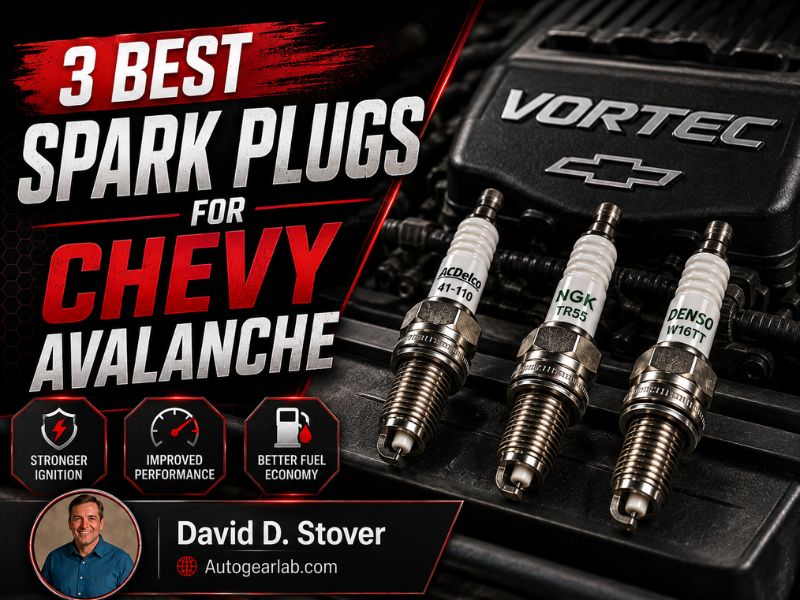
The NGK 7164 TR55IX Iridium IX Spark Plugs, 8-Pack is the more relevant alternative for a compatible 2002–2006 Avalanche 2500 equipped with the 8.1-liter V8. It is not a universal replacement for every Avalanche, but its fine-wire iridium construction is useful when correct 8.1-liter fitment has been confirmed.
All three options can be appropriate, but they serve different generations and engines. The safest purchasing strategy is to prioritize exact fitment over electrode material, packaging convenience, or performance-oriented marketing.
Best Spark Plugs for Chevy Avalanche Reviewed
| Image | Product Name | Check Price |
|---|---|---|
Best Choice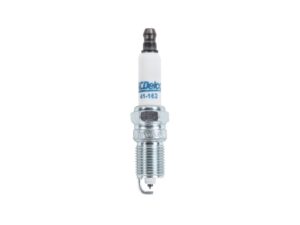 | ACDelco GM Original Equipment 41-162 Iridium Spark Plug | Check Price |
Second Best | ACDelco 41-962 Double Platinum Spark Plugs, 8-Pack | Check Price |
Third Choice | NGK 7164 TR55IX Iridium IX Spark Plugs, 8-Pack | Check Price |
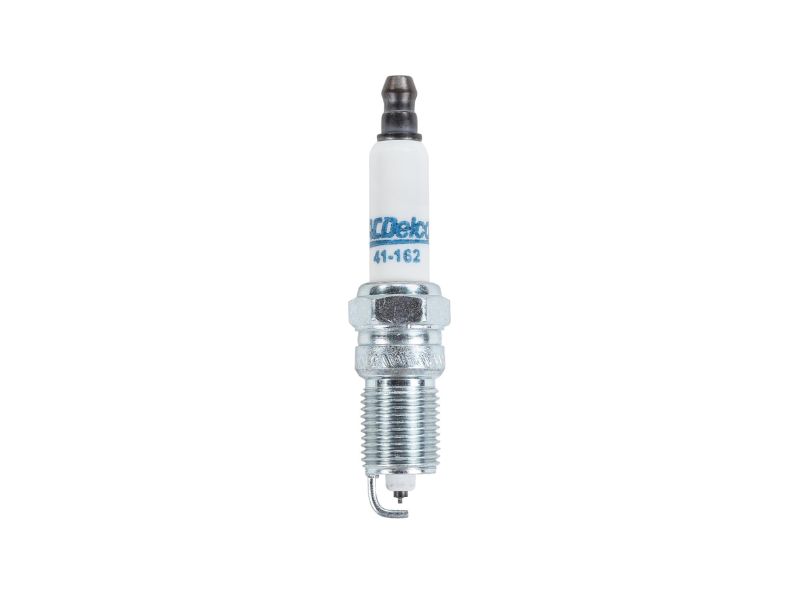
1. ACDelco GM Original Equipment 41-162 Iridium Spark Plug
Key Features
- Intended for compatible 2007–2013 Chevrolet Avalanche applications
- Fine-wire iridium center electrode
- Copper-core construction
- Approximately 0.040-inch cataloged plug gap
- Tapered seat without a separate gasket
- Resistor-type spark plug
- Sold individually
- Designed as a current GM original-equipment service option
The ACDelco 41-162 is my primary recommendation because it provides the most balanced choice for the later and more broadly relevant Avalanche generation covered in this guide. It is an original-equipment-style iridium plug, meaning its dimensions, electrical characteristics, heat range, and electrode configuration are intended to work with compatible GM ignition systems.
An iridium center electrode can be made finer than a conventional nickel electrode while maintaining good resistance to heat and erosion. The smaller firing tip concentrates the electrical field, allowing the ignition system to initiate a spark reliably without requiring an unnecessarily large electrode. This matters in a modern coil-near-plug ignition system, particularly as the plug accumulates operating hours.
The plug uses a copper core to transfer heat through the insulator and shell. Copper is not the exposed wear surface; the iridium firing tip provides that function. The combination supports predictable heat management and longer electrode life than a conventional copper-core plug with a basic nickel firing surface.
Its tapered seat seals against the cylinder head without a removable crush washer. That detail is important during installation. A tapered-seat plug uses a different tightening approach than a gasket-seat plug, so a generic torque instruction should not be substituted for the specification applicable to the engine.
The cataloged gap is approximately 0.040 inch, but that does not eliminate the need for inspection. A new plug can be mishandled during shipping, and an installer should compare the gap with the specification on the truck’s emissions label or in current service information. A fine-wire electrode should be measured carefully without pressing a wedge-style tool against the iridium tip.
The 41-162 is sold as an individual spark plug in the linked configuration. Since an Avalanche V8 requires eight plugs, buyers need to order eight units for a complete replacement. That is less convenient than a preassembled eight-pack, but it also allows someone addressing a damaged plug or a specific repair to buy the needed quantity.
Owners may encounter the older ACDelco 41-110 number in service records, forum discussions, or previous maintenance documentation. A historical number should not automatically be reordered without checking the current application catalog. Service parts can be revised, and the currently specified replacement should be selected using the VIN and engine information.
In a healthy engine, these plugs should support a stable idle, predictable cold starting, and consistent combustion under normal driving and towing loads. They should not be expected to create extra horsepower in an otherwise properly running engine. Replacing worn or incorrect plugs can restore lost smoothness and efficiency, but spark plugs cannot correct weak coils, damaged plug wires, fuel-delivery problems, vacuum leaks, oil consumption, or low compression.
This option makes the most sense for an owner of a compatible 2007–2013 Avalanche who wants an OE-oriented replacement rather than a performance experiment. I would choose it for routine maintenance, restoration of the factory ignition configuration, or diagnosis in which using the correct original-equipment-style plug helps remove an unnecessary variable.
I would avoid ordering it solely because the truck is called an Avalanche. Earlier 2002–2006 models, particularly the Avalanche 2500 with the 8.1-liter V8, may require a different specification. Engine identification still comes before product ranking.
What I Like
- Its official application coverage includes later Chevrolet Avalanche models.
- The fine-wire iridium center electrode resists firing-tip wear.
- Original-equipment construction reduces uncertainty for compatible engines.
- The resistor design helps control electrical interference.
- The 0.040-inch cataloged gap provides a useful verification reference.
- Individual packaging allows an exact replacement quantity to be selected.
What I Do Not Like
- Eight individual plugs must be ordered for a complete V8 service.
- It is not a universal fit for every Avalanche engine and model year.
- Older part numbers can create confusion when checking maintenance records.
- Buyers must still verify the required gap and torque specification.
For a compatible 2007–2013 truck, the ACDelco 41-162 is the most practical overall choice in this comparison. Its OE-oriented design and iridium firing tip make it well suited to owners seeking correct fitment, durability, and factory-like ignition behavior rather than unsupported performance claims.
2. ACDelco 41-962 Double Platinum Spark Plugs, 8-Pack

Key Features
- Intended for compatible 2002–2006 Avalanche 1500 applications
- Complete set of eight plugs for a V8 engine
- Double-platinum electrode design
- Copper-core construction
- Resistor-type plug
- Fired-in suppressor seal
- Designed for compatible distributorless ignition systems
- Application-specific gap verification required
The ACDelco 41-962 is the first alternative because it addresses an important group of first-generation Avalanche 1500 owners. It combines a complete eight-plug package with a double-platinum electrode design that is appropriate for compatible GM ignition systems.
“Double platinum” refers to precious-metal wear surfaces on both sides of the spark gap. One platinum pad is associated with the center-electrode side, while another protects the ground-electrode firing surface. This is especially relevant to ignition systems in which paired cylinders may fire with opposite electrical polarity.
In a waste-spark or certain distributorless arrangements, electrode erosion can occur differently depending on the direction in which current crosses the gap. A single-platinum design may protect only one side. A double-platinum plug provides a durable firing surface at both electrodes, helping the gap remain more consistent over the plug’s service life.
The copper core helps conduct heat away from the firing end. As with the iridium option, “copper core” should not be confused with a basic copper or nickel replacement plug. The exposed precious-metal surfaces determine much of the plug’s resistance to electrode erosion, while the internal copper contributes to thermal control.
The package contains eight plugs, matching the number required for a complete service on the applicable V8. This removes the possibility of accidentally ordering only one plug and is convenient for owners replacing the full set at the same time.
However, package quantity does not establish compatibility. The first-generation Avalanche included different configurations, and the Avalanche 2500’s 8.1-liter V8 should not be treated as though it uses the same plugs as an Avalanche 1500. Before selecting the 41-962, the buyer should confirm the 1500 designation, engine code, model year, and current application information.
Gap specifications deserve particular attention on older GM engines. Historical references, under-hood labels, replacement catalogs, and previous service information can sometimes display different figures. An installer should not change the gap based on an isolated online comment or assume that every early 5.3-liter application uses the same setting.
The correct procedure is to check the emissions label under the hood and current service information for the exact VIN. The plugs should then be inspected with a suitable wire-style gauge. If adjustment is necessary and permitted, pressure should be applied only to the ground electrode. The platinum surfaces and ceramic insulator should not be struck or used as leverage points.
These plugs are a sensible maintenance choice when the application calls for the 41-962 specification. They can help restore a clean idle or dependable starting when the removed plugs are worn, fouled, or excessively gapped. They cannot compensate for cracked ignition wires, corroded coil terminals, leaking valve-cover areas, poor fuel pressure, injector problems, or mechanical engine wear.
First-generation Avalanche owners should pay close attention to the plug boots and wires while performing the service. Heat cycles can make an older boot adhere tightly to the porcelain. Pulling directly on the wire can separate the conductor or damage the terminal. The boot should be twisted gently to break its seal and removed using an appropriate boot tool when necessary.
The 41-962 is particularly suitable for an owner who wants to service a compatible 2002–2006 Avalanche 1500 with a matched set of eight plugs. I prefer it over an inexpensive conventional plug when the application calls for double platinum because the electrode configuration is designed to provide more stable long-term wear.
I would choose the 41-162 instead for a compatible later Avalanche requiring that current iridium specification. For a confirmed Avalanche 2500 with the 8.1-liter engine, I would consult the engine-specific catalog rather than assuming the 41-962 carries over.
What I Like
- The package contains all eight plugs required for an applicable V8.
- Double-platinum surfaces protect both sides of the spark gap.
- The design suits compatible distributorless ignition systems.
- Copper-core construction supports controlled heat transfer.
- A suppressor seal helps reduce combustion-gas leakage and electrical interference.
- It is a logical OE-oriented option for compatible early Avalanche 1500 models.
What I Do Not Like
- It does not cover every 2002–2006 Avalanche engine.
- Conflicting historical gap information makes verification essential.
- Platinum firing tips are less fine than newer OE-style iridium designs.
- Eight-pack packaging is inconvenient if only one replacement plug is required.
- Old plug wires or boots may need attention during the same service.
The ACDelco 41-962 is a strong first alternative for an application-confirmed 2002–2006 Avalanche 1500. Its double-platinum design and eight-plug package are practical for a complete service, but buyers should verify the engine and gap rather than treating it as a universal first-generation Avalanche plug.
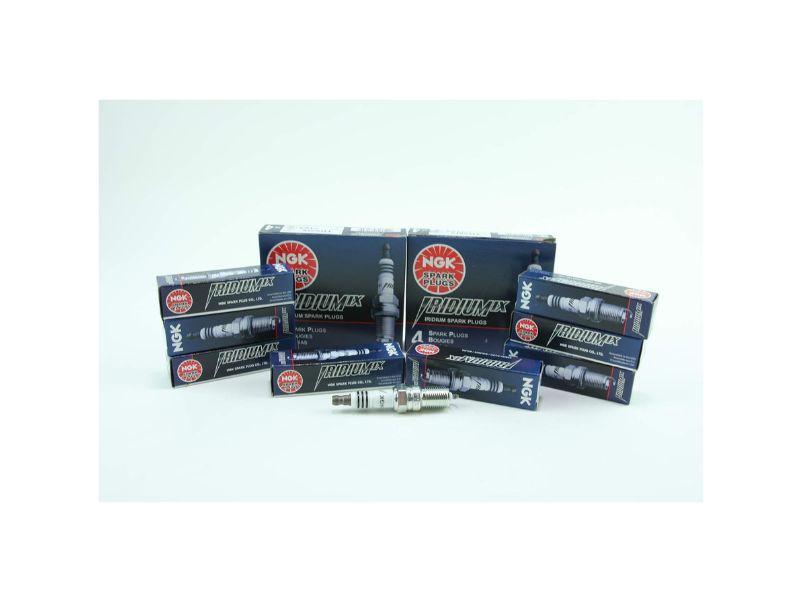
3. NGK 7164 TR55IX Iridium IX Spark Plugs, 8-Pack
Key Features
- Relevant to compatible 2002–2006 Avalanche 2500 8.1-liter applications
- Eight plugs for a complete V8 replacement
- Fine-wire iridium center electrode
- Tapered-cut ground electrode
- Resistor construction
- Designed to promote dependable ignitability
- Performance-oriented aftermarket plug family
- Exact engine and gap confirmation required
The NGK 7164 TR55IX is the most specialized option in this comparison. Its primary value is not that it is universally better than the ACDelco plugs; it is that it can serve a different engine application, including compatible Avalanche 2500 models equipped with the 8.1-liter V8.
The 8.1-liter engine is a critical distinction. A buyer searching only by the Avalanche name could easily encounter recommendations intended for the more common 5.3-liter engine. Physical similarities between two plugs do not guarantee matching heat ranges, firing-end projections, gaps, electrical characteristics, or approved applications.
The TR55IX belongs to NGK’s Iridium IX family. Its fine-wire iridium center electrode is designed to concentrate the electrical field and support dependable spark formation. The tapered-cut ground electrode reduces the amount of material surrounding the spark path, which can help expose the developing flame kernel to the air-fuel mixture.
These characteristics make Iridium IX plugs popular as an aftermarket replacement when the exact plug number is approved for the engine. However, “performance” should be understood realistically. Installing them in a healthy stock Avalanche should not be expected to create a large horsepower increase. Their practical advantage is consistent ignitability and resistance to center-electrode wear.
The package includes eight plugs, which is the correct count for the 8.1-liter V8. As with the ACDelco eight-pack, the convenience of receiving a matched set does not replace a fitment check. The buyer should confirm the 2500 designation, 8.1-liter displacement, model year, VIN code, and cataloged plug number.
The gap used by a large-displacement early-2000s ignition application may differ significantly from the approximately 0.040-inch setting associated with certain later Avalanche plugs. Therefore, the NGK plugs should not be regapped to match the number listed for the ACDelco 41-162.
The correct value must come from engine-specific service information or the under-hood emissions label. When checking a fine-wire iridium plug, a round-wire gauge is preferable. The center electrode should never be pried against, scraped, or struck.
Iridium IX is a single-iridium design rather than an OE-style double precious-metal configuration in every application. That means its construction priorities are not identical to those of a long-interval original-equipment iridium plug with a precious-metal ground pad. Maintenance expectations should be based on the engine, operating conditions, and plug manufacturer’s application guidance rather than assuming that all plugs containing iridium have the same service life.
This option is especially appropriate for a confirmed Avalanche 2500 8.1-liter owner who wants a recognized fine-wire aftermarket plug in a complete set. The large engine can expose ignition components to heat and demanding loads, so the condition of plug wires, coils, terminals, grounds, and charging voltage should also be considered.
Access and removal can be challenging in a full-size engine compartment, particularly when boots have been installed for many years. One plug and wire should be serviced at a time to avoid mixing up connections. Compressed air can be used cautiously to remove loose debris from each plug well before the old plug is removed.
If an engine misfire is already present, spark plugs should not be replaced blindly. A diagnostic scan can identify cylinder-specific misfire counts, but the cause may still be a coil, wire, injector, vacuum leak, compression problem, or contaminated plug. Examining the removed plugs and keeping them arranged by cylinder can provide useful diagnostic evidence.
I would choose the NGK TR55IX only when its application has been confirmed for the specific 8.1-liter truck. For a compatible 2007–2013 Avalanche, the ACDelco 41-162 remains my primary recommendation. For an application-confirmed early Avalanche 1500, the ACDelco 41-962 offers a more relevant OE-oriented alternative.
What I Like
- It addresses compatible 8.1-liter Avalanche 2500 applications.
- Eight plugs provide a complete set for the V8.
- The fine-wire iridium center electrode supports reliable spark formation.
- The tapered ground electrode exposes the firing area.
- Resistor construction helps control electrical noise.
- The engine-specific application prevents the guide from treating every Avalanche alike.
What I Do Not Like
- It is unsuitable as a universal Avalanche replacement.
- The gap must not be copied from a different engine’s plug specification.
- Its aftermarket performance positioning may create unrealistic power expectations.
- A single-iridium design may have different service-life priorities than an OE double precious-metal plug.
- Owners must carefully confirm 2500 and 8.1-liter compatibility.
The NGK 7164 TR55IX is the most appropriate specialized alternative for a confirmed 8.1-liter application among these three products. I recommend it only after exact catalog verification because choosing the correct engine-specific plug is considerably more important than choosing iridium based on material alone.
Chevy Avalanche Spark Plug Comparison
| Product | Intended application | Electrode design | Package | Seat style | Primary strength | Important limitation |
| ACDelco 41-162 | Compatible 2007–2013 Avalanche applications | Fine-wire iridium center | One plug | Tapered | Current OE-oriented late-model choice | Eight individual units are required |
| ACDelco 41-962 | Compatible 2002–2006 Avalanche 1500 applications | Double platinum | Eight plugs | Application-specific | Complete OE-oriented V8 set | Early-model engine must be verified |
| NGK 7164 TR55IX | Compatible 2002–2006 Avalanche 2500 8.1L applications | Fine-wire iridium center | Eight plugs | Tapered | Specialized 8.1L alternative | Not appropriate for most 5.3L applications |
The most important difference is application rather than electrode material. The ACDelco 41-162 is the strongest overall recommendation for compatible later trucks, while the 41-962 covers relevant early Avalanche 1500 applications. The NGK TR55IX serves a narrower but important use case involving the Avalanche 2500’s 8.1-liter engine.
Package quantity is another practical distinction. The ACDelco 41-162 is sold individually, whereas the other options are offered as complete eight-plug sets. Regardless of packaging, confirm the engine before buying and inspect every plug before installation.
How to Choose Spark Plugs for a Chevy Avalanche
Identify the Exact Engine First
“Chevy Avalanche” is not a complete spark plug application. At minimum, determine:
- Model year
- Avalanche 1500 or Avalanche 2500 designation
- Engine displacement
- Engine code or RPO code
- Relevant VIN character
- Under-hood emissions specification
The RPO label contains codes describing how the vehicle was originally built. Depending on the model year, it may be located in the glove compartment or another documented vehicle location. The VIN and emissions label provide additional identification.
Do not rely entirely on an engine cover, previous plug, registration description, or seller’s informal listing. Engines can be replaced, previous owners can install incorrect components, and electronic catalogs can contain incomplete application data.
Understand Iridium and Platinum
Both iridium and platinum are precious metals used because they tolerate high temperatures and resist electrode erosion better than ordinary nickel firing surfaces.
An iridium center electrode can be made very fine while retaining durability. Its small diameter concentrates the electrical field and can help the ignition system produce a consistent spark.
A double-platinum plug protects both the center and ground-electrode firing surfaces. This can be valuable in compatible distributorless systems where electrical polarity and wear patterns differ across paired cylinders.
The material alone does not determine quality or compatibility. An incorrect iridium plug is a worse choice than the correct platinum plug. Dimensions, heat range, projection, resistance, seat design, and approved application must all match.
Match the Heat Range
A spark plug’s heat range describes how quickly it transfers heat from the firing end into the cylinder head. It does not refer to the temperature or energy of the spark.
A plug that operates too cold can accumulate deposits and foul under certain conditions. A plug that operates too hot can contribute to overheating, pre-ignition, or electrode damage. Heat-range numbering is not standardized across manufacturers, so a number from one brand should not be directly compared with a number from another.
A stock engine should normally use the cataloged heat range. Modified engines, forced induction, nitrous systems, or unusual operating conditions require engine-specific tuning knowledge rather than an arbitrary colder-plug recommendation.
Verify Thread Reach and Seat Type
Thread reach is the distance the plug extends through the threaded portion of the cylinder head. Installing a plug with the wrong reach can position the firing end incorrectly, expose threads to combustion deposits, or create mechanical interference.
The seat seals the plug against the head. A tapered-seat plug seals through the angle machined into its shell. A gasket-seat plug uses a crush washer. Their tightening requirements differ, and one type should not be substituted for the other without explicit application approval.
Thread diameter and pitch must also match. A plug that feels resistant during the first few turns should be removed immediately rather than forced.
Confirm the Required Gap
The spark plug gap is the distance between the center and ground electrodes. A wider gap requires more voltage to fire. A gap that is too narrow can produce a small flame kernel, while an excessive gap may cause misfires under load, especially when ignition components are weak.
Use the specification for the exact engine and calibration. The emissions label, factory service information, and current application catalog are better references than a universal online chart.
Check new plugs even when described as pre-gapped. Shipping damage can bend a ground electrode. Use a round-wire gauge and avoid forcing a wedge tool between delicate precious-metal surfaces.
Buy the Correct Quantity
Every gasoline-powered Avalanche discussed here uses a V8 engine, so a complete replacement normally requires eight spark plugs.
An eight-pack is convenient, but buyers should verify that every plug carries the same part number and appears undamaged. When plugs are sold individually, order eight for a complete service. Purchasing one extra can be useful if a plug is accidentally dropped or damaged, although it should remain clean and protected until needed.
Evaluate the Ignition Wires and Boots
Many Avalanche configurations use short spark plug wires between the coils and plugs. These wires operate near hot exhaust components and can deteriorate with age.
Check for:
- Brittle or cracked insulation
- Burn marks
- Loose metal terminals
- Corrosion
- Oil contamination
- Torn boots
- Excessive resistance
- Evidence of arcing
A new spark plug cannot correct a defective wire. If a boot tears during removal or a terminal separates, replace the damaged component rather than reinstalling it.
Consider the Truck’s Operating Conditions
Towing, extended idling, short trips, oil consumption, and high under-hood temperatures can affect spark plug condition. These conditions do not automatically justify changing the heat range or gap, but they may justify more frequent inspection.
A truck that burns oil may foul new plugs until the mechanical cause is addressed. Coolant contamination, rich fuel mixtures, malfunctioning injectors, or weak coils can also shorten plug life. Spark plug appearance is therefore a diagnostic clue, not merely a maintenance concern.
Chevy Avalanche Spark Plug Installation Guidance
Work on a Cold Engine
Allow the engine to cool completely. Aluminum cylinder-head threads are more vulnerable to damage when hot, and nearby exhaust components can cause burns.
Disconnecting the battery is not always necessary for a basic plug service, but the ignition should remain off and the key should be removed. Follow current service procedures if electrical components must be disconnected.
Clean Around Each Plug
Dust, sand, and rust particles can collect around the plug and boot. Remove loose debris before loosening the plug so contaminants do not fall into the cylinder.
Compressed air can be helpful when used carefully with eye protection. Ensure the area is dry and do not direct debris toward exposed electrical connectors.
Replace One Plug at a Time
Servicing one cylinder at a time reduces the chance of mixing up plug wires or coil connections. Twist the boot gently to break its seal before pulling it off. Pull on the boot—not the wire itself.
A suitable spark plug socket, extension, and controlled ratchet movement are preferable to excessive force. If a plug is unusually tight, stop and reassess instead of risking cylinder-head thread damage.
Inspect the Removed Plug
Keep removed plugs arranged by cylinder. Compare their condition for clues:
- Dry black deposits can suggest rich operation or weak ignition.
- Wet fuel may indicate a cylinder that is not firing.
- Oily deposits can suggest oil entering the combustion chamber.
- White blistering or electrode damage may indicate excessive heat.
- One abnormal plug can point toward a cylinder-specific problem.
- Uniformly worn electrodes may simply indicate normal service wear.
These observations are diagnostic clues rather than definitive conclusions. Trouble codes, fuel trims, compression testing, leak-down testing, and ignition measurements may be required.
Start New Plugs by Hand
Insert each plug squarely and turn it by hand for several threads. A short piece of flexible hose can hold the porcelain and make cross-threading less likely because the hose slips if resistance becomes excessive.
Never use an impact wrench to install spark plugs. Cross-threading an aluminum cylinder head can turn a routine maintenance job into an expensive repair.
Use the Correct Torque Specification
Spark plug torque affects sealing and heat transfer. Insufficient tightening can allow leakage and poor thermal contact, while excessive tightening can stretch the shell or damage cylinder-head threads.
Use the specification and procedure for the exact engine, plug type, and thread condition. Do not rely on a single universal torque number because seat design, thread size, cylinder-head material, and service instructions can differ.
Do Not Automatically Apply Anti-Seize
Many modern plated spark plug shells are intended to be installed without anti-seize. Lubricant changes thread friction and can cause excessive clamping force when a dry torque specification is used.
Apply anti-seize only when the plug manufacturer or current service procedure specifically instructs it. More is not better, and the compound must never contaminate the firing end.
Use Dielectric Grease Sparingly
A small amount of dielectric grease may be applied inside the mouth of a clean plug boot when appropriate. It helps exclude moisture and makes future removal easier.
Do not pack the terminal with grease or coat the spark plug electrodes. Dielectric grease is an insulator; excessive application in the wrong location can interfere with a secure terminal connection.
Common Chevy Avalanche Spark Plug Problems
Misfire Under Load
A plug may fire acceptably at idle yet misfire during acceleration or towing because cylinder pressure increases the voltage needed to cross the gap. Excessive plug gap, worn electrodes, weak coils, damaged wires, or poor electrical grounds can contribute.
Rough Idle After Replacement
A new rough idle does not necessarily mean the new plug design is defective. Common causes include an incompletely seated wire, swapped connections, cracked porcelain, incorrect gap, cross-threaded or loose plugs, and disturbed vacuum hoses.
Recheck the work before replacing unrelated parts.
Oil-Fouled Plugs
Oil deposits indicate an engine condition that should be investigated. Potential causes include worn rings, cylinder-wall wear, valve-seal problems, or crankcase-ventilation issues. New plugs may improve operation temporarily, but fouling can return until the underlying cause is corrected.
Carbon Deposits
Carbon can develop from prolonged rich operation, repeated short trips, excessive idling, weak ignition, or an engine that does not reach normal operating temperature. Diagnose the operating condition instead of repeatedly replacing plugs.
Damaged Threads
Cross-threading, overtightening, removing plugs from a hot aluminum head, or forcing a seized plug can damage cylinder-head threads. If a plug will not turn smoothly by hand during installation, remove it and inspect the threads.
Common Spark Plug Buying and Installation Mistakes
Shopping Only by Model Name
A plug described for a Chevrolet Avalanche is not necessarily correct for every Avalanche. The 1500 and 2500 configurations and their different engines are the clearest examples.
Assuming Every 5.3-Liter Engine Uses the Same Plug
Engine displacement alone may not capture the model year, engine family, cylinder-head design, calibration, or current service-part revision. Use the VIN and application catalog.
Copying a Gap from Another Engine
A 0.040-inch specification for one plug does not establish the correct gap for every Avalanche. Use engine-specific service information.
Choosing Material Before Fitment
Iridium is not automatically superior to the correct double-platinum plug. Electrode material is only one part of the design.
Installing a Dropped Plug
Dropping a spark plug can crack the ceramic insulator or bend the ground electrode. Damage may not be immediately visible. Inspect it carefully and replace it if there is uncertainty.
Forcing the Plug into the Head
Resistance during the first few turns usually indicates misalignment, debris, or thread trouble. Back the plug out and investigate.
Overtightening Lubricated Threads
Applying anti-seize and then using a dry-thread torque value can increase actual clamping force. Follow the plug and engine instructions.
Ignoring Wires and Coils
Worn plugs may stress the ignition system, but replacing them will not repair damaged wires or weak coils. Inspect the entire ignition path.
Expecting Large Power Gains
Correct plugs can restore performance lost through wear or misfiring. They generally do not create substantial additional power in an otherwise healthy stock engine.
Frequently Asked Questions
What are the best spark plugs for a Chevy Avalanche?
The best choice is the plug cataloged for the exact engine and model year. For compatible 2007–2013 applications, the ACDelco 41-162 is my primary recommendation. Compatible 2002–2006 Avalanche 1500 models may use the ACDelco 41-962, while certain Avalanche 2500 trucks with the 8.1-liter engine can use the NGK 7164 TR55IX. Confirm the VIN and engine before ordering.
Do all Chevy Avalanche models use the same spark plugs?
No, Avalanche spark plug requirements vary by engine and model year. Chevrolet sold the Avalanche in different configurations, including the more common 1500 and the heavy-duty 2500 with an 8.1-liter V8. Later models can also require different plugs from early 1500 trucks. Similar thread dimensions do not make two plugs interchangeable because their heat range, reach, projection, gap, and electrode design may differ.
How many spark plugs does a Chevy Avalanche need?
A gasoline-powered Chevy Avalanche V8 normally requires eight spark plugs. Each cylinder uses one plug, and the Avalanche engines covered here have eight cylinders. Some plugs are sold individually, so the quantity should be checked before ordering. An eight-pack is convenient, but it must still contain the correct plug number for the engine.
Will the ACDelco 41-162 fit every 2007–2013 Avalanche?
It covers compatible late-model applications, but VIN-level verification remains necessary. Chevrolet’s parts catalog includes Avalanche applications for this plug across those years, making it the primary late-model option in this guide. Nevertheless, the buyer should confirm the engine and current service listing. A model-wide catalog statement should not override a VIN-specific parts result or official service update.
Are ACDelco 41-110 and 41-162 spark plugs the same?
They should not be treated as identical solely because both appear in Avalanche discussions. The 41-110 is frequently found in older records and recommendations, while the 41-162 appears as a current OE service option for compatible later Avalanche applications. Part-number revisions can involve service updates. Use the current application catalog for the vehicle’s VIN instead of automatically repeating the number removed from the engine.
Can I replace platinum plugs with iridium plugs?
Yes, but only when the iridium plug is approved for the exact application. Electrode material does not determine thread reach, heat range, seat design, resistance, or firing-end position. A random iridium plug that physically threads into the head may still be incorrect. Use a cataloged cross-reference rather than selecting a substitute according to material or advertised service life.
What spark plug gap does a Chevy Avalanche use?
The correct gap depends on the engine, model year, and specified plug. Certain later applications associated with the ACDelco 41-162 use approximately 0.040 inch, but that number should not be copied to every Avalanche. Earlier engines may have different requirements. Check the under-hood emissions label and current service information, then inspect new plugs with a round-wire gauge.
Should pre-gapped spark plugs still be checked?
Yes, every new spark plug should be inspected before installation. Plugs may be correctly set at production but bent during shipping or handling. Verify the gap without pressing against the fine-wire center electrode. If adjustment is permitted, move only the ground electrode and remeasure it. Replace any plug with cracked porcelain, damaged threads, or a visibly distorted firing end.
How often should Avalanche spark plugs be replaced?
Follow the maintenance schedule for the exact engine and plug type. Service life varies with electrode design, operating conditions, oil consumption, ignition health, and the manufacturer’s specified interval. Misfires, difficult starting, visibly worn electrodes, or excessive gap may justify earlier diagnosis. Do not replace plugs repeatedly without addressing oil fouling, rich operation, weak coils, or damaged wires.
Should I replace the spark plug wires at the same time?
Replace the wires when inspection or testing shows deterioration or excessive resistance. Age-hardened boots, cracks, burn marks, loose terminals, corrosion, and signs of arcing justify replacement. If the wires remain flexible, electrically sound, and undamaged, automatic replacement may not be necessary. Handle old boots carefully because pulling on the cable can damage an otherwise usable wire.
Should I put anti-seize on Avalanche spark plugs?
Do not apply anti-seize unless current service or plug instructions require it. Many modern plugs have plated shells intended for dry installation. Lubricating the threads changes friction and can produce excessive clamping force at a dry torque value. If anti-seize is specifically required, use it sparingly and keep it away from the electrodes and insulator firing end.
Can spark plugs increase the horsepower of my Avalanche?
Correct plugs mainly restore lost performance rather than create substantial new horsepower. Worn or incorrect plugs can cause misfires, unstable combustion, slow starting, and reduced response. Replacing them may make the truck feel stronger because normal operation has returned. A healthy stock engine already using correct plugs is unlikely to gain meaningful power solely from a different electrode material.
Why is my Avalanche misfiring after new plugs were installed?
Installation errors or another ignition problem are the most likely causes. Check for an unseated plug wire, loose connector, cracked porcelain, wrong plug number, incorrect gap, or crossed wire connections. If those items are correct, diagnose coils, wires, injectors, compression, fuel pressure, and vacuum leaks. A trouble code identifies the affected circuit or cylinder but does not always identify the failed component.
Can I install Chevy Avalanche spark plugs myself?
Yes, an experienced DIY owner can perform the job with proper tools and care. Work on a cold engine, clean debris from the plug areas, replace one plug at a time, and start every new plug by hand. Use the engine-specific torque procedure. Limited access, seized plugs, damaged wires, or uncertain cylinder-head threads are good reasons to use a qualified technician.
Are NGK TR55IX plugs suitable for a 5.3-liter Avalanche?
Do not assume so from their compatibility with an 8.1-liter Avalanche 2500. The TR55IX option in this guide is included for confirmed compatible 8.1-liter applications. A separate catalog result is required before using it in a 5.3-liter engine. Shared vehicle names or similar-looking plugs do not establish matching heat range, gap, reach, or calibration requirements.
Conclusion
Finding the best spark plugs for Chevy Avalanche is primarily an engine-fitment decision. The truck’s model year, 1500 or 2500 designation, engine displacement, VIN information, and current parts catalog should all agree before a plug is ordered.
The ACDelco GM Original Equipment 41-162 Iridium Spark Plug remains my primary recommendation for compatible 2007–2013 Avalanche applications. Its OE-oriented construction, fine-wire iridium center electrode, and documented late-model application make it the strongest overall option for the broadest relevant group of owners in this comparison.
For a compatible 2002–2006 Avalanche 1500, the ACDelco 41-962 Double Platinum Spark Plugs provide a practical eight-plug set. Their double-platinum design is more important than simply choosing the newest electrode material. Owners of a confirmed 2002–2006 Avalanche 2500 with the 8.1-liter V8 should instead consider the NGK 7164 TR55IX set when current application information approves it.
Before installation, inspect every plug, verify the engine-specific gap, and obtain the correct torque procedure. Work on a cold engine, start each plug by hand, and inspect the boots, wires, and coils while access is available. Avoid automatically applying anti-seize or changing the recommended heat range.
For most compatible later-model trucks, I would choose the ACDelco 41-162. Select either alternative only when the vehicle’s exact engine application specifically supports it.