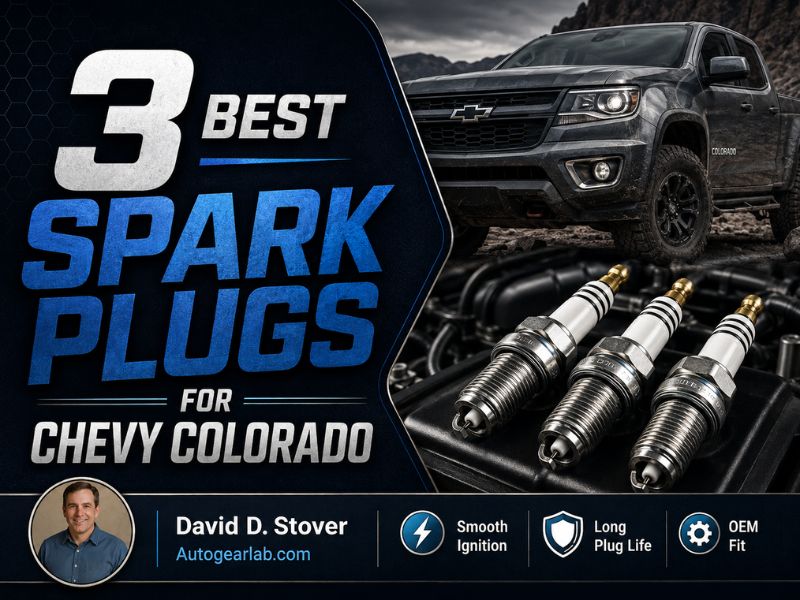
Finding the best spark plugs for Chevy Colorado requires more than choosing a familiar brand or premium electrode material. The Colorado has used several gasoline engines across its three generations, and their spark plugs are not interchangeable. Thread diameter, reach, seat design, heat range, electrode configuration, and factory gap must all match the specific engine.
My primary recommendation is the ACDelco GM Original Equipment 41-130 Iridium Spark Plug for compatible 2017–2022 Colorado models because it combines verified original-equipment fitment with the durability of a fine-wire iridium center electrode. I would choose the ACDelco Professional 41-103 Iridium Spark Plug for compatible first-generation gasoline engines. For cataloged 2023–2026 LT and WT applications, I would consider the ACDelco GM Original Equipment 41-106IP Improved Performance Iridium Spark Plug.
Confirm the truck’s model year, engine, trim, and preferably its VIN before ordering. A 2.8-liter Duramax Colorado uses glow plugs, not spark plugs, and several gasoline configurations require parts that are not among these three selections.
Best Spark Plugs for Chevy Colorado Reviews
| Image | Product Name | Check Price |
|---|---|---|
Best Choice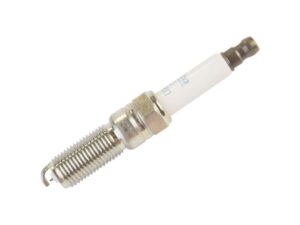 | ACDelco GM Original Equipment 41-130 Iridium Spark Plug | Check Price |
Second Best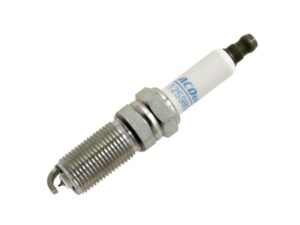 | ACDelco Professional 41-103 Iridium Spark Plug | Check Price |
Third Choice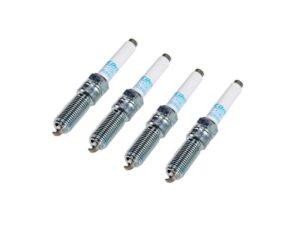 | ACDelco GM Original Equipment 41-106IP Improved Performance Iridium Spark Plug | Check Price |
The products below are arranged by their usefulness across common Colorado applications, but they are not interchangeable alternatives. The correct plug for your engine is always preferable to a higher-ranked plug with incompatible dimensions or heat characteristics.
1. ACDelco GM Original Equipment 41-130 Iridium Spark Plug
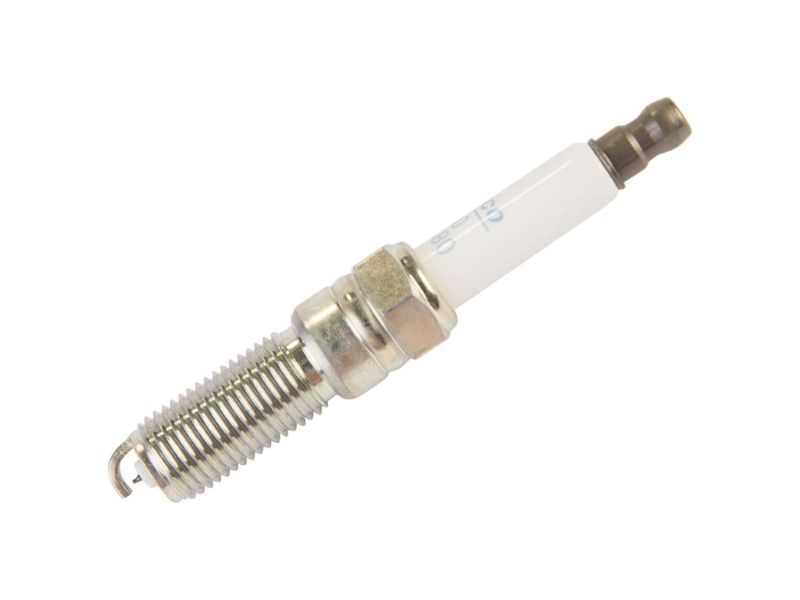
Key Features
- Cataloged for compatible 2017–2022 Colorado LT, WT, and Z71 models
- Iridium center electrode
- Approximately 0.98-inch reach
- 14 mm hex
- Tapered seat without a sealing washer
- Nominal 0.040-inch factory gap
- Built-in resistor and suppressor seal
- Sold individually
The ACDelco 41-130 is my primary recommendation because it is an original-equipment plug for a substantial group of second-generation Chevrolet Colorado applications. It is especially relevant to compatible trucks equipped with the 3.6-liter gasoline V6 used from 2017 through 2022. The factory catalog lists Colorado LT, WT, and Z71 applications within that period, but owners should still confirm the engine and VIN before ordering.
Its fine-wire iridium electrode is well suited to a modern coil-on-plug ignition system. Iridium has a high melting point and strong resistance to electrode erosion, allowing the center electrode to remain comparatively small. A smaller firing tip requires less voltage to initiate a spark than a thick conventional electrode under similar operating conditions. That supports reliable cold starting, stable idle, and consistent ignition as the plug accumulates mileage.
The plug also incorporates a resistor and suppressor seal. These features help control radio-frequency interference that could otherwise affect electronic systems. The seal also manages spark energy and helps resist combustion-gas leakage through the plug assembly.
Physical compatibility is just as important as electrode material. The 41-130 uses a tapered seat, approximately 25 mm of reach, and a 14 mm hex. A plug with a different reach can place the firing end in the wrong part of the combustion chamber. A plug that extends too far may contact internal components or overheat; one that sits too high can create poor combustion and deposits. Likewise, a gasket-seat plug should never be substituted for a tapered-seat design merely because the threads appear to fit.
The listed 0.040-inch gap is another application-specific detail. These plugs are supplied pre-gapped, but shipping or handling can still bend the ground electrode. Inspect each plug with an appropriate wire-style gauge before installation. Do not force a thick wedge gauge between a delicate fine-wire center electrode and the ground strap, and do not adjust a damaged plug.
One package contains one spark plug. A V6 requires six matching plugs for a complete scheduled replacement, so buyers must adjust the quantity accordingly. Replacing the complete set helps maintain consistent firing voltage and wear characteristics across all cylinders.
Installation access on the 3.6-liter V6 can be more involved than the plugs themselves suggest. Intake components may obstruct part of the job, depending on the exact engine layout. New intake seals may therefore be appropriate when the service procedure requires intake removal. The engine should be completely cool before the plugs are loosened because the cylinder heads are aluminum and damaged threads can turn routine maintenance into an expensive repair.
What I Like
- Original-equipment dimensions for the specified applications
- Durable fine-wire iridium center electrode
- Appropriate resistor design for electronically controlled ignition
- Published gap, reach, seat, and hex specifications
- Strong choice for maintaining factory-style ignition behavior
- Available individually for precise purchasing quantities
What I Do Not Like
- Not compatible with every 2017–2022 Colorado engine
- Six individual plugs are required for the compatible V6
- Installation may require removing obstructing intake components
- The application list does not automatically cover every trim using a similar engine
- A damaged pre-gap should not be corrected aggressively
The ACDelco 41-130 is the most practical starting point for owners of a compatible 2017–2022 gasoline Colorado. I would choose it when the VIN or vehicle catalog confirms the part because it preserves the factory plug geometry, heat characteristics, and electrical design without introducing unnecessary performance claims.
2. ACDelco Professional 41-103 Iridium Spark Plug
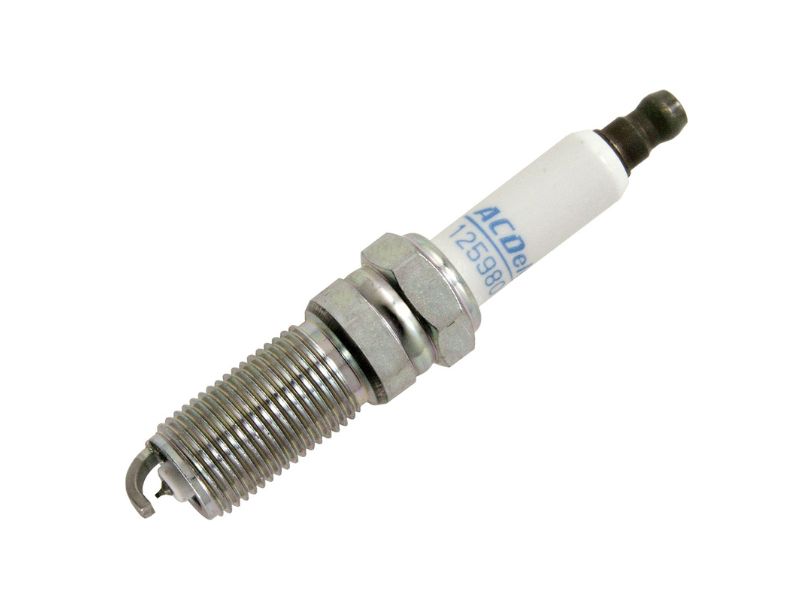
Key Features
- Cataloged for numerous first-generation Colorado gasoline applications
- Iridium center-electrode construction
- Copper core for heat transfer
- One-piece suppressor seal
- Vehicle-specific fit rather than a universal plug
- Supersedes several earlier service numbers
- Sold individually
The ACDelco 41-103 serves a different group of buyers: owners maintaining compatible first-generation Colorado gasoline engines. Catalog information associates this plug with numerous 2004–2012 Colorado applications, including several four- and five-cylinder configurations. However, engine displacement and VIN confirmation remain necessary because the first generation also included multiple engines and a 5.3-liter V8 in selected years.
This plug combines an iridium firing tip with a copper core. The iridium surface resists wear at the firing point, while copper conducts heat away from the electrode and into the cylinder head. The heat path matters because a spark plug must operate within a controlled temperature window. It must become hot enough to burn away normal deposits but not so hot that it contributes to pre-ignition.
The 41-103 also uses a suppressor seal that helps control electrical interference and combustion leakage. That construction is relevant even on older Colorados because their ignition and engine-management systems still depend on clean electronic signals. A spark plug is not simply a threaded electrode; it is also a high-voltage insulator, combustion-chamber seal, heat-transfer path, and electrical-noise suppressor.
An important complication is that first-generation engines do not all require the same number of plugs. A compatible four-cylinder needs four, while an inline-five needs five. A V8 needs eight, but buyers must independently confirm whether this exact part number is specified for their particular V8 application rather than assuming compatibility from brand or electrode material.
Gap specifications also vary by engine and service information. The product may arrive pre-gapped, but “pre-gapped” does not mean universally correct for every vehicle listed in a broad catalog. Compare the measured gap with the emissions label, owner information, service manual, or VIN-based parts catalog. If there is a disagreement, resolve the application before installation instead of modifying the plug to an extreme degree.
The physical condition of an older engine deserves attention when replacing its plugs. Oil in the plug wells can indicate leaking seals. Heavy dry carbon may point to rich operation, weak ignition, excessive idling, or an unsuitable heat range. Wet fuel can indicate a no-spark condition or flooding. An unusually clean or steam-washed plug may suggest coolant entering a cylinder. Installing fresh plugs can temporarily improve operation, but it will not correct the cause of repeated fouling.
Thread condition also matters more as the truck ages. Remove the plugs only when the engine is cool. Blow debris away from the wells before loosening them, wear eye protection when using compressed air, and keep dirt from falling into the cylinders. Start every new plug by hand through an extension or suitable installation hose. If it does not turn smoothly, stop before damaging the aluminum cylinder-head threads.
What I Like
- Covers many compatible first-generation gasoline applications
- Iridium firing tip offers better wear resistance than a conventional nickel tip
- Copper core supports controlled heat transfer
- Suppressor design suits electronically managed ignition systems
- Useful for four- and five-cylinder configurations when catalog-confirmed
- Long-established service part with clear supersession history
What I Do Not Like
- Broad first-generation coverage makes exact engine verification essential
- Required quantity varies by engine
- Gap information must be matched to the specific application
- It is not appropriate for the 2.8-liter Duramax diesel
- Fresh plugs will not solve oil, fuel, coolant, or compression problems
The ACDelco 41-103 is the strongest option here for a compatible first-generation gasoline Colorado. I recommend it only after confirming the engine or VIN because the Colorado’s 2004–2012 engine range is too broad for a model-year-only purchase decision.
3. ACDelco GM Original Equipment 41-106IP Improved Performance Iridium Spark Plug
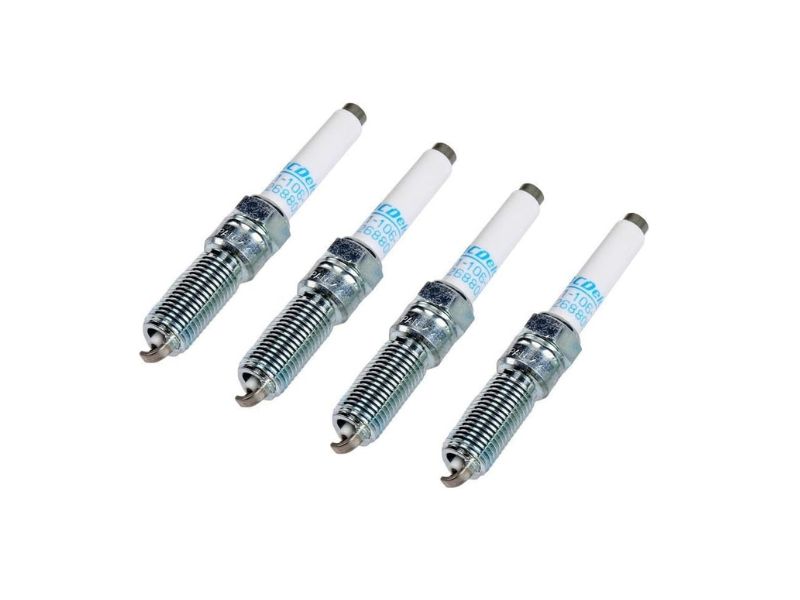
Key Features
- Cataloged for specified 2023–2026 Colorado LT and WT applications
- Designed for modern turbocharged gasoline engines
- Iridium center-electrode tip
- Nominal 0.030-inch gap
- Approximately 0.98-inch reach
- 14 mm hex
- Tapered seat
- Resistor construction
- Sold individually
The ACDelco 41-106IP addresses selected third-generation Colorado applications. Current catalog information lists the plug for 2023–2026 Colorado LT and WT models. Because newer Colorados use different power calibrations and trims, I would not automatically extend that fitment to Trail Boss, Z71, or ZR2 trucks without VIN confirmation, even when the engines appear closely related.
This is an improved-performance iridium plug intended for demanding modern ignition environments. Turbocharged engines operate under higher cylinder pressure when producing boost. Higher pressure makes the air-fuel mixture more resistant to electrical breakdown, increasing the voltage required to create a stable spark. A fine iridium electrode helps concentrate the electric field and supports reliable ignition without needing an unnecessarily large firing tip.
The specified plug uses a 0.030-inch nominal gap, approximately 25 mm of reach, a 14 mm hex, and a tapered seat. Those specifications demonstrate why visual similarity is not enough when selecting spark plugs. The 41-130 and 41-106IP both use iridium and share some physical dimensions, but their heat ranges, gaps, insulator dimensions, calibrations, and approved applications differ. One should not be substituted for the other without authoritative application data.
The narrower gap is particularly relevant to a turbocharged engine because it can help maintain spark stability as cylinder pressure rises. However, reducing the gap on an unrelated plug is not a legitimate substitute for purchasing the correct part. The plug’s heat range, projection, resistor, seat, and electrode design must work together with the engine’s combustion chamber, coil output, boost level, and control strategy.
The 41-106IP is sold individually, so a compatible turbocharged four-cylinder requires four plugs for a complete service. Inspect all four before installation and keep them protected from impact. A hairline crack in the ceramic insulator can cause an intermittent misfire that becomes more noticeable during acceleration or boost.
Newer turbocharged engines are sensitive to incorrect torque. Insufficient torque can reduce heat transfer and allow combustion leakage, while excessive torque can distort the shell, damage the insulator, or strip the cylinder-head threads. Use the service specification for the exact engine and apply it with a calibrated torque wrench. Do not assume that the torque used for an older Colorado applies to the third generation.
What I Like
- Factory-oriented design for specified third-generation applications
- Fine-wire iridium electrode suits high-cylinder-pressure operation
- Clearly published gap, reach, seat, and hex specifications
- Appropriate resistor construction for modern electronics
- Four plugs complete a compatible four-cylinder engine
- Strong choice when VIN-based fitment confirms the part
What I Do Not Like
- Published Colorado fitment is limited to specified LT and WT applications
- It should not be assumed to fit every third-generation trim
- It cannot substitute for the 41-130 despite some similar dimensions
- The plugs require careful torque control in aluminum cylinder heads
- Buyers must purchase the correct quantity of individual plugs
The 41-106IP is the appropriate choice among these three for a catalog-confirmed 2023–2026 Colorado LT or WT. I would avoid assuming broader trim compatibility and would verify the VIN before ordering, particularly for Trail Boss, Z71, or ZR2 models.
Spark Plug Comparison
| Product | Primary Colorado application | Electrode | Listed gap | Reach | Hex | Seat | Quantity needed | Main limitation |
| ACDelco 41-130 | Compatible 2017–2022 LT, WT, and Z71 | Iridium | 0.040 in | 0.98 in | 14 mm | Tapered | Six for compatible V6 | Does not fit every engine or trim |
| ACDelco 41-103 | Numerous compatible 2004–2012 gasoline applications | Iridium with copper core | Application-dependent | Verify application | Verify application | Vehicle-specific | Four, five, or engine-dependent | Broad coverage demands careful verification |
| ACDelco 41-106IP | Specified 2023–2026 LT and WT applications | Iridium | 0.030 in | 0.98 in | 14 mm | Tapered | Four for compatible turbo four-cylinder | Do not assume other trim compatibility |
The main difference is fitment rather than an abstract quality ranking. The 41-130 is the primary recommendation for its combination of verified second-generation coverage and original-equipment construction. The 41-103 serves older gasoline trucks, while the 41-106IP covers specified newer LT and WT applications. None should be installed solely because it has an iridium electrode or appears physically similar to the original plug.
How to Choose Spark Plugs for a Chevy Colorado
Identify the Engine Before Shopping
Model year alone is not enough. The Colorado has been offered with several gasoline engines, plus the 2.8-liter Duramax diesel. Check the emissions label under the hood, the eighth character of the VIN, the owner’s manual, or a VIN-based parts catalog.
Important Colorado engine groups include:
- First-generation four- and five-cylinder gasoline engines
- Selected first-generation 5.3-liter V8 applications
- Second-generation 2.5-liter gasoline four-cylinder
- Second-generation 3.6-liter gasoline V6
- Second-generation 2.8-liter Duramax diesel
- Third-generation 2.7-liter turbocharged gasoline four-cylinder
The diesel does not use ignition spark plugs. It uses glow plugs to assist cold combustion. A product described simply as a “plug for Colorado” may therefore be irrelevant to a diesel truck.
Match the Thread, Reach, and Seat
A spark plug must have the correct:
- Thread diameter and pitch
- Threaded reach
- Seat design
- Hex size
- Insulator projection
- Electrode projection
- Terminal configuration
Reach is the length of the threaded portion extending into the cylinder head. Incorrect reach can position the firing tip improperly or expose unused threads to combustion deposits.
The seat seals the plug against the cylinder head. Some plugs use a flat gasket or crush washer, while others use a tapered metal seat. These designs are not interchangeable.
Use the Specified Heat Range
The heat range describes how quickly a plug transfers heat from its firing end into the cylinder head. It does not measure spark intensity.
A colder plug transfers heat more quickly. A hotter plug retains more heat at the tip. Installing a plug that is too cold may encourage fouling during ordinary driving. A plug that is too hot may contribute to pre-ignition or electrode damage under load. Modified boost, tuning, fuel, and engine hardware can alter requirements, but a stock truck should generally use the specified factory heat range.
Choose the Correct Electrode Material
Iridium
Iridium is hard, wear-resistant, and capable of supporting a small center electrode. It is a practical choice for long service intervals and modern coil-on-plug systems. All three reviewed products use an iridium firing tip.
Platinum
Platinum offers better wear resistance than a conventional nickel-alloy electrode and may be appropriate where specified. It should not replace an iridium factory design simply because it costs less.
Nickel or Copper-Core Conventional Plugs
“Copper plug” usually describes a conventional nickel-alloy electrode built around a copper core. Copper conducts heat well, but the exposed nickel electrode generally wears faster than iridium or platinum. These plugs can work well in engines designed for them, but material alone does not establish compatibility.
Do Not Buy by Marketing Claims
A spark plug cannot create horsepower that the engine was already producing with healthy, correctly specified plugs. Fresh plugs may restore power, idle quality, cold starting, or fuel economy that deteriorated because the old set was worn or fouled. That is restoration, not a guaranteed performance gain.
Claims involving huge horsepower increases, dramatic fuel savings, or universal fit should be treated cautiously. Correct geometry, heat range, gap, and engine compatibility are more important than unusual electrode shapes or promotional terminology.
Spark Plug Gap Explained
The spark plug gap is the distance between the center electrode and ground electrode. The ignition coil must generate enough voltage for electricity to jump this gap and ignite the compressed air-fuel mixture.
A wider gap can expose more mixture to the initial spark kernel, but it requires more voltage. A narrower gap is easier to fire under high cylinder pressure but may produce a smaller initial kernel. Engineers choose a gap that balances coil capacity, combustion pressure, emissions, starting, and durability.
Never assume every Chevy Colorado uses the same gap. The reviewed 41-130 and 41-106IP have different nominal gaps despite sharing iridium electrodes and some similar physical measurements.
Inspect a new plug before installation, but handle fine-wire electrodes carefully. If the gap is dramatically different from the specification, verify the part number and replace a damaged plug instead of forcing it into shape. Do not pry directly against the iridium center electrode.
Installation Guidance
Work on a Cold Engine
Allow the engine to cool completely. Removing or installing plugs in a hot aluminum cylinder head increases the risk of thread damage and makes accurate torque less predictable.
Clean the Plug Wells
Remove loose dirt before extracting the plugs. Compressed air can help, but use eye protection and control the nozzle so debris does not fly toward your face or nearby components.
Disconnect Coils Carefully
Release electrical locks rather than pulling on wires. Twist and lift the coil boot gently. Inspect the boot for cracks, carbon tracking, swelling, oil contamination, or a damaged spring terminal.
Start Every Plug by Hand
Use an extension, spark-plug socket, or short section of rubber hose to start the plug without a ratchet. It should turn smoothly through several threads. Resistance at the beginning can indicate cross-threading.
Follow the Correct Torque Specification
Use the specification for the exact engine and plug design. Do not rely on a universal online torque figure. Tapered-seat plugs and gasket-seat plugs tighten differently, and lubricated threads can produce much greater clamping force than dry threads at the same indicated torque.
Avoid Unapproved Anti-Seize
Many modern spark plugs have plated shells intended for dry installation. Applying anti-seize changes thread friction and can lead to over-tightening. Use it only when the plug or vehicle manufacturer specifically directs it and provides an adjusted procedure.
Apply Dielectric Grease Correctly
A small amount of dielectric grease may be applied inside the coil boot where specified. Do not coat the firing end, electrodes, or threaded shell with dielectric grease.
Signs Your Colorado May Need Spark Plugs
Possible symptoms include:
- Hard starting
- Rough or unstable idle
- Misfire under acceleration
- Hesitation under load
- Reduced fuel economy
- Longer cranking time
- A flashing or steady check-engine light
- Increased exhaust emissions
- Loss of power when towing or climbing
- Visible electrode wear or damaged insulation
These symptoms do not prove that the spark plugs are responsible. A failing ignition coil, injector problem, vacuum leak, low compression, contaminated fuel, wiring fault, or mechanical issue can produce similar behavior.
A flashing check-engine light usually indicates an active misfire severe enough to risk catalytic-converter damage. Reduce load and diagnose the problem promptly instead of continuing to drive normally.
Common Buying and Installation Mistakes
Ordering by Model Name Alone
A plug described as compatible with a Chevy Colorado may fit only one engine or generation. Confirm the year, engine, trim, and VIN.
Assuming All Iridium Plugs Are Equivalent
Iridium describes the electrode material, not the thread, reach, heat range, seat, projection, gap, or calibration.
Buying the Wrong Quantity
Packages often contain one plug. Count the cylinders and confirm how many plugs the engine uses before ordering.
Regapping Aggressively
Fine-wire electrodes can be damaged by rough tools or pressure against the center tip. Replace a plug that arrives bent or far outside specification.
Replacing Only One Worn Plug
A single failed plug may be replaced after correcting the cause, but scheduled maintenance normally calls for replacing the complete matched set.
Installing Plugs in a Hot Engine
This increases the possibility of aluminum-thread damage and inaccurate tightening.
Using Excessive Anti-Seize
Lubricated threads can produce excessive clamping force even when the torque wrench displays the expected value.
Ignoring the Old Plug’s Condition
The removed plug can reveal oil burning, rich operation, overheating, coolant intrusion, detonation, or an ignition fault. Compare plugs by cylinder before discarding them.
Frequently Asked Questions
What are the best spark plugs for Chevy Colorado?
The correct OE-specification iridium plug for the exact engine is usually the safest choice. For compatible 2017–2022 LT, WT, and Z71 applications, the ACDelco 41-130 is my primary recommendation. First-generation trucks and 2023–2026 models require different plugs. Verify the VIN because the Colorado’s gasoline and diesel powertrains do not share one universal plug.
Do all Chevy Colorado models use the same spark plugs?
No, Colorado spark plugs differ by engine, generation, model year, and sometimes trim. Differences can include thread dimensions, reach, heat range, electrode projection, seat design, and gap. A plug that physically threads into the head can still be unsuitable. Always confirm compatibility with engine information or a VIN-based catalog.
Does the 2.8-liter Duramax Colorado use spark plugs?
No, the 2.8-liter Duramax diesel uses glow plugs instead of spark plugs. A diesel ignites fuel primarily through heat generated by compression. Glow plugs provide additional heat for cold starting and initial combustion stability. Spark plugs intended for gasoline engines cannot be substituted.
How many spark plugs does a Chevy Colorado need?
The required quantity normally matches the gasoline engine’s cylinder count. A four-cylinder generally needs four plugs, an inline-five needs five, a V6 needs six, and a V8 needs eight. Confirm the engine because product packages may contain only one plug even when the listing image resembles a multipack.
Are ACDelco spark plugs pre-gapped?
They are generally supplied pre-gapped, but every plug should still be inspected. Shipping damage can bend a ground electrode. Use the correct measuring tool and compare the gap with the specification for the exact engine. Avoid pressing against a fine iridium center electrode.
How often should Chevy Colorado spark plugs be changed?
Follow the maintenance schedule for the truck’s model year and engine. Replacement intervals vary with plug design, engine calibration, operating conditions, and service history. Severe misfires, fouling, damaged insulation, or excessive electrode wear can justify earlier replacement, but repeated failure requires diagnosis.
Will new spark plugs increase horsepower?
New plugs can restore lost performance but rarely add power beyond the engine’s healthy baseline. Worn plugs may cause weak ignition, hesitation, or misfires. Correct replacements can recover smooth operation. Claims of large horsepower gains from spark plugs alone are usually unrealistic on a stock engine.
Can I mix different spark plug brands or models?
A complete engine should normally use one matched plug type. Mixing heat ranges, electrode designs, gaps, or wear levels can create inconsistent ignition demands across cylinders. If replacing a complete scheduled set, use matching plugs approved for the application.
Should I replace the ignition coils with the spark plugs?
Not routinely, unless testing or inspection shows the coils are faulty. Coils can last much longer than one plug interval. Inspect coil boots, springs, electrical connectors, and housings for cracks, corrosion, oil, or carbon tracking. Replace damaged components rather than treating coils as automatic maintenance items.
Should anti-seize be used on spark plug threads?
Only use it when the vehicle or plug manufacturer specifically recommends it. Anti-seize changes thread friction and can cause over-tightening at the normal dry torque value. Many plated modern plugs are designed for dry installation.
What causes new spark plugs to foul quickly?
Rapid fouling usually indicates an engine or ignition problem rather than defective plugs. Possible causes include oil consumption, rich fueling, coolant intrusion, weak coils, excessive idling, poor compression, an incorrect heat range, or repeated short trips. Diagnose the deposit pattern before installing another set.
Can I replace Colorado spark plugs myself?
Yes, if you have correct fitment data, tools, access, and torque specifications. Some engines require removal of intake components, and aluminum cylinder-head threads are easily damaged by cross-threading or excessive torque. If access or specifications are uncertain, professional installation is the safer choice.
What does a flashing check-engine light mean after replacement?
It usually indicates an active misfire that requires immediate attention. Recheck coil connectors, plug quantity, part numbers, boot seating, and any components removed for access. Avoid heavy driving because a severe misfire can overheat the catalytic converter.
Can 41-130 replace 41-106IP because both are iridium?
No, shared electrode material does not make these plugs interchangeable. Their listed gaps, heat ranges, insulator dimensions, and approved applications differ. Use the plug specified for the engine and VIN.
Conclusion
Selecting the best spark plugs for Chevy Colorado begins with identifying the engine, not comparing promotional claims. The Colorado has used multiple gasoline engines and a diesel powertrain, so no spark plug can serve every model year.
The ACDelco GM Original Equipment 41-130 remains my primary recommendation for compatible 2017–2022 LT, WT, and Z71 applications. It offers factory-oriented dimensions, a fine-wire iridium electrode, a tapered seat, and the electrical suppression expected by the engine-management system.
For a compatible first-generation gasoline truck, the ACDelco Professional 41-103 is the more appropriate option. Its broad application history makes VIN and engine verification especially important, and buyers must order the correct quantity for a four-, five-, or other approved engine configuration.
The ACDelco GM Original Equipment 41-106IP is intended for specified 2023–2026 LT and WT applications. I would not assume that it covers other third-generation trims without confirmation, even when the engines appear similar.
Before ordering, verify the year, engine, trim, and VIN. During installation, work on a cold engine, clean the plug wells, start each plug by hand, and use the engine-specific torque specification. My practical recommendation is simple: choose the reviewed plug that is explicitly approved for your Colorado rather than trying to adapt the highest-ranked product to an incompatible engine.