The Chevrolet Traverse has used more than one engine and spark-plug specification. Most 2009–2023 US models have a 3.6L direct-injected V6, while the redesigned model introduced a 2.5L turbocharged four-cylinder. A plug cataloged for the earlier V6 must not be installed in the newer turbo engine unless its exact part number is specifically approved for that application.
The best spark plugs for Chevy Traverse 3.6L models must match the required thread diameter, thread reach, tapered seat, heat range, resistor construction, electrode projection, and ignition gap. Correct fitment matters more than choosing the most expensive electrode material or the product with the strongest performance claims.
My primary recommendation is the ACDelco 41-109 GM Original Equipment Iridium Spark Plug for compatible 2010–2023 Traverse 3.6L applications. I prefer it for an unmodified daily-driven vehicle because it follows the original-equipment specification and is supplied with a factory-set gap.
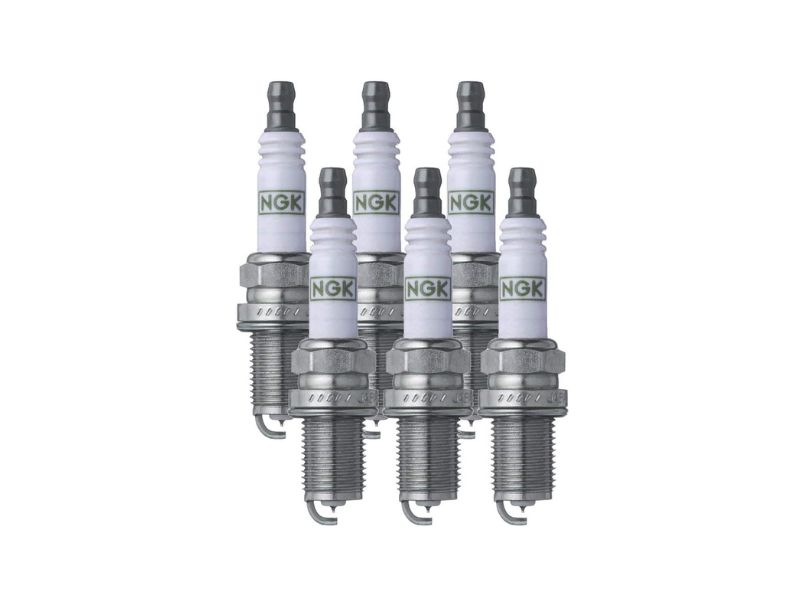
The NGK 6509 LTR6IX-11 Iridium IX Spark Plug 6-Pack is a convenient aftermarket alternative for compatible 2009–2023 3.6L models. Its package already contains the six plugs required by the V6.
I would consider the Denso 4719 ITV20TT Iridium TT Spark Plug when Denso’s current application catalog confirms it for the exact year and engine. Its twin-tip electrode design supports ignitability, but it is sold individually and its supplied gap must be compared with the vehicle specification.
Best Spark Plugs for Chevy Traverse Reviewed
| Image | Product Name | Check Price |
|---|---|---|
Best Choice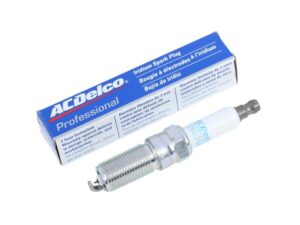 | ACDelco 41-109 GM Original Equipment Iridium Spark Plug | Check Price |
Second Best | NGK 6509 LTR6IX-11 Iridium IX Spark Plug 6-Pack | Check Price |
Third Choice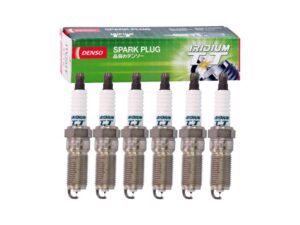 | Denso 4719 ITV20TT Iridium TT Spark Plug | Check Price |
These three products target compatible 3.6L V6 applications. They should not be treated as universal recommendations for every Traverse carrying the same model name. Confirm the year, VIN, engine code, and current manufacturer catalog before ordering.
1. ACDelco 41-109 GM Original Equipment Iridium Spark Plug

Key Features
- GM original-equipment specification
- Cataloged for compatible 2010–2023 3.6L V6 applications
- Iridium center electrode
- Factory-set gap
- Tapered-seat configuration
- Resistor-type construction
- Long-reach design
- Sold individually
- Six plugs required for the V6
The ACDelco 41-109 is the most straightforward replacement for a compatible stock Traverse 3.6L engine. It is designed around the original ignition requirements rather than presented as a universal performance plug.
Its fine-wire iridium center electrode reduces the voltage required to initiate a spark compared with a thick conventional electrode. Iridium also resists erosion at high combustion temperatures, helping the plug maintain its gap through an extended service interval.
The 41-109 is supplied pre-gapped, and application information warns against changing that setting. Catalog references commonly associate compatible Traverse 3.6L applications with a gap around 0.043–0.044 inch, but the correct VIN-specific specification remains the final authority.
Pre-gapped does not mean the plugs should be installed without inspection. Shipping impact can bend a ground electrode or crack the ceramic. Measure the gap gently with a wire-style gauge and reject any plug showing a substantial discrepancy or visible damage.
Do not force a wedge-shaped gauge against the fine iridium center tip. An electrode can be weakened even when it does not break immediately. If adjustment would require considerable movement, exchanging the plug is safer than attempting to reshape it.
Because the ACDelco is generally sold as one plug, six matching units are required. Confirm package quantity carefully; a product image displaying several plugs does not necessarily mean the listing includes a complete set.
This product’s main advantage is application confidence. For a stock engine, retaining the original heat range, reach, projection, and resistor design avoids unnecessary experimentation.
It is not automatically correct for every 2009 model or for the newer 2.5L turbo. The earliest Traverse applications can have different catalog recommendations, and the four-cylinder engine uses four plugs with its own GM part specification.
The ACDelco 41-109 is my primary recommendation for a VIN-confirmed 2010–2023 3.6L Traverse. It provides the closest match to the engine’s original ignition design and is the most practical choice when reliability takes priority over aftermarket features.
2. NGK 6509 LTR6IX-11 Iridium IX Spark Plug 6-Pack
Key Features
- Cataloged for compatible 2009–2023 3.6L V6 models
- NGK stock number 6509
- LTR6IX-11 Iridium IX design
- Fine-wire iridium center electrode
- Tapered-cut ground electrode
- Trivalent shell plating
- Application gap near 0.044 inch
- Six-plug package
The NGK 6509 set is the most convenient aftermarket option because it supplies the correct number of plugs for the Traverse V6 in one package. That removes the risk of ordering four plugs for a six-cylinder engine or receiving units from separate batches.
Its Iridium IX design uses a fine center electrode and tapered ground electrode. Reducing electrode obstruction around the gap can support reliable ignition, cold starting, and stable combustion. These characteristics can restore normal performance when the old plugs are worn, but they should not be interpreted as a guaranteed horsepower increase.
Current application catalogs list the 6509 for 2009–2023 Traverse models with the 3.6L V6 and specify a gap around 0.044 inch. The broad model-year range is helpful, but the VIN should still be checked. The 3.6L engine evolved across Traverse generations, and a database match is safer when it includes the complete vehicle configuration.
NGK’s trivalent shell plating provides corrosion resistance and is intended to reduce thread seizure. NGK generally advises installing its plated plugs without anti-seize unless an application-specific procedure states otherwise.
Adding lubricant changes the relationship between torque-wrench reading and actual clamping force. A plug tightened to a dry-thread specification after lubrication can be over-tightened, potentially stretching the shell or damaging the aluminum cylinder-head threads.
Iridium IX emphasizes ignitability and performance. Depending on the application, an OE-style dual precious-metal plug may be selected specifically for the longest scheduled service interval. Owners should therefore follow the maintenance guidance associated with the chosen plug rather than assuming all iridium designs have identical longevity.
The NGK six-pack is particularly attractive for owners of a 2009 model because the ACDelco 41-109 is not consistently cataloged as the universal starting point for that earliest year. Even then, the exact fitment should be verified rather than inferred from this broader statement.
I recommend the NGK 6509 set for owners who want a recognized aftermarket iridium design and a complete six-plug package. The ACDelco remains first for original-equipment matching, while the NGK is the simplest full-set alternative.
3. Denso 4719 ITV20TT Iridium TT Spark Plug
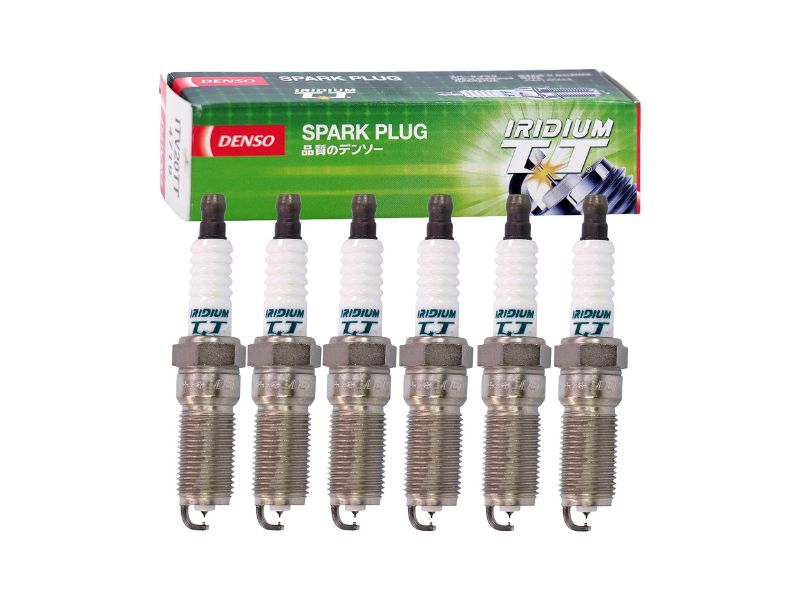
Key Features
- Denso stock number 4719
- ITV20TT Iridium TT construction
- 0.4mm iridium center electrode
- 0.7mm platinum ground tip
- 14mm thread diameter
- 25mm thread reach
- 16mm hex
- Tapered seat
- Approximately 5,000-ohm resistor
- Sold individually
The Denso 4719 ITV20TT is an alternative for selected Traverse 3.6L applications where current catalog data confirms fitment. Its Twin-Tip construction combines a small iridium center electrode with a fine platinum pad on the ground electrode.
The reduced electrode surfaces allow the spark to develop with less shielding around the gap. Denso promotes this construction for ignitability and efficient combustion. In a properly maintained engine, the practical result should be understood as reliable ignition rather than a dramatic change in engine output.
Denso specifications identify a 14mm thread diameter, 1.25mm pitch, 25mm reach, tapered seat, and 16mm hex for the ITV20TT family. These measurements illustrate why a plug must match more than thread diameter. Reach and seat design directly affect sealing and combustion-chamber placement.
Denso commonly supplies the ITV20TT with a gap around 0.040 inch, while many Traverse 3.6L applications are associated with approximately 0.043–0.044 inch. This difference requires careful attention.
Do not assume that a generic supplied gap is automatically correct for every vehicle listed in a cross-reference. Confirm the Traverse service specification and Denso’s current vehicle application. Fine-wire plugs should only be adjusted using the manufacturer-approved method, without applying pressure to the center electrode.
The Denso is sold individually, requiring six units for a V6. Check that every box carries the same part number and inspect the markings on each plug. Mixed heat ranges or similar-looking plugs can create cylinder-to-cylinder inconsistencies.
This product ranks third because its package quantity and potential gap difference add work compared with the ACDelco and NGK choices. It remains a technically credible option when Denso fitment is positively verified and the buyer prefers its twin-tip electrode design.
Chevy Traverse Spark Plug Comparison
| Product | Compatible Engine Focus | Electrode Design | Common Gap Reference | Package Quantity | Main Advantage | Main Limitation |
| ACDelco 41-109 | Compatible 2010–2023 3.6L V6 | Iridium center electrode | Factory-set, commonly around 0.043–0.044 in | 1 | Original-equipment specification | Six individual plugs must be ordered |
| NGK 6509 LTR6IX-11 | Compatible 2009–2023 3.6L V6 | Iridium center, tapered ground | About 0.044 in | 6 | Complete V6 set | Not an automatic substitute for every VIN |
| Denso 4719 ITV20TT | Selected catalog-confirmed 3.6L applications | Iridium and platinum twin tip | Supplied near 0.040 in | 1 | Fine twin-tip construction | Gap and exact fitment need closer verification |
The ACDelco is the conservative original-equipment choice for most compatible 3.6L models. The NGK offers the most convenient complete package and includes the earliest 2009 model in current catalog coverage. The Denso provides a different electrode design but requires six individual purchases and more careful gap confirmation.
Chevy Traverse Engine and Model-Year Compatibility
2009–2017 First-Generation Traverse
First-generation models use a 3.6L direct-injected V6. Although the engine displacement remains consistent, ignition specifications and part supersessions should be checked by VIN.
The NGK 6509 is broadly cataloged across these years. The ACDelco 41-109 commonly appears for 2010 and later applications, while a 2009 vehicle may show another original-equipment number depending on the catalog and supersession history.
Do not use a later part simply because the replacement threads into the head. Confirm the manufacturer’s current cross-reference.
2018–2023 Second-Generation 3.6L Models
Most second-generation Traverse models use the 3.6L LFY V6. ACDelco 41-109 and NGK 6509 are commonly cataloged for these applications.
The engine still requires six identical plugs. Some product pages show compatibility with four-cylinder models from other vehicle lines, so package quantity and actual product number must be checked independently.
Newer 2.5L Turbo Models
The redesigned Traverse uses a 2.5L turbocharged four-cylinder. This engine requires four plugs and has a different original-equipment part specification.
None of the three reviewed 3.6L V6 recommendations should be installed in the 2.5L turbo unless a current manufacturer catalog explicitly identifies that exact product for the VIN.
Because the newer engine operates under turbocharged cylinder pressures and uses different combustion-chamber geometry, physically similar replacement plugs are not acceptable substitutes.
How to Confirm the Correct Traverse Engine
Decode the VIN
The VIN provides a reliable starting point for engine identification. Enter the complete 17-character number into a current vehicle-parts catalog or provide it to a qualified parts professional.
Do not rely solely on the eighth VIN character without consulting the correct model-year decoding information. Codes can have different meanings across vehicle lines and years.
Check the Emissions Label
The underhood emissions label normally identifies engine-family and displacement information. Compare it with the VIN results.
A 3.6L V6 has six cylinders and uses six ignition coils and plugs. The 2.5L turbo has four cylinders and uses four plugs.
Confirm Through the Existing Engine Layout
Engine appearance can support identification but should not be the only method. Covers may be missing or replaced, and inexperienced owners may misidentify intake components.
Use the VIN and official catalog data as the purchasing basis.
Spark Plug Specifications That Must Match
Thread Diameter and Pitch
The spark plug must use the correct thread diameter and pitch. Denso specifications for its Traverse-compatible long-reach family identify a 14mm diameter and 1.25mm pitch, but a buyer should confirm every selected product independently.
Cross-threading an aluminum cylinder head can require an expensive repair. Start plugs by hand and stop immediately if one does not turn smoothly.
Thread Reach
Thread reach is the distance from the seat to the end of the threaded shell. The Traverse 3.6L uses a long-reach design in common applications.
A plug that is too short places the spark in the wrong position and leaves exposed cylinder-head threads. A plug that is too long may protrude dangerously into the combustion chamber or collect carbon on exposed threads.
Seat Design
Compatible plugs typically use a tapered seat rather than a crush washer. The tapered surface seals against the matching cylinder-head surface.
Seat type affects torque. Never transfer a torque value from a gasket-seat plug to a tapered-seat plug simply because they share a thread diameter.
Heat Range
A plug’s heat range describes the rate at which the firing tip transfers heat into the cylinder head. It does not describe the temperature of the electrical spark.
An excessively cold plug can foul during short trips. An excessively hot plug can overheat and contribute to pre-ignition.
Heat-range numbering differs among brands. NGK and Denso numbers cannot be compared directly without an application cross-reference.
Electrode Projection
The center and ground electrodes must extend the correct distance into the combustion chamber. Projection affects flame-kernel position and mechanical clearance.
A projected plug that is wrong for the engine can contact internal components or develop abnormal deposits. A non-projected design can recess the spark away from the intended combustion location.
Resistor Value
Modern ignition and engine-management systems use resistor plugs to control electromagnetic interference. A non-resistor plug can interfere with sensors, modules, audio equipment, and diagnostic signals.
Use the specified resistor configuration even if a non-resistor alternative appears to offer a stronger spark.
Spark Plug Gap for the 3.6L Traverse
The gap determines how far the ignition voltage must travel between the center and ground electrodes.
Compatible Traverse 3.6L specifications commonly fall near 0.043 or 0.044 inch, equivalent to approximately 1.1mm. The exact specification must be verified for the model year, engine code, and selected plug.
A gap that is too wide increases the voltage demand on the ignition coil. This may cause misfires during acceleration or when cylinder pressure is high.
A gap that is too narrow is easier to fire but creates a smaller initial spark kernel. The engine may run, yet combustion quality may not match the intended calibration.
Check Without Damaging the Plug
Use a wire-style gap gauge. The appropriate wire should pass with light resistance without forcing or levering against the center electrode.
Avoid wedge gauges that apply sideways pressure to fine iridium tips. A damaged electrode can fail prematurely even when the plug still produces a spark during initial installation.
Be Careful With the Denso Supplied Gap
The Denso ITV20TT is often supplied near 0.040 inch. If the vehicle requires 0.044 inch, do not assume the difference is irrelevant.
Confirm whether the Denso application expects adjustment and follow Denso’s approved method. The ground electrode—not the iridium center tip—is the only component that should be moved, and only by a small controlled amount.
Iridium, Platinum, and Conventional Spark Plugs
Iridium
Iridium is hard, heat resistant, and suitable for a fine center electrode. The smaller electrode can require less voltage to fire while resisting erosion.
All three reviewed choices use an iridium center electrode. This does not make them interchangeable because geometry and heat range remain different.
Platinum
Platinum resists wear better than conventional nickel. A platinum pad on the ground electrode can extend durability in ignition systems where both electrodes experience erosion.
The Denso Twin-Tip combines an iridium center with a platinum ground tip.
Conventional Nickel
Conventional plugs can operate correctly when they match the engine specification, but their larger electrodes generally wear faster. Frequent replacement is especially inconvenient on a Traverse because rear-bank access can require substantial disassembly.
For that reason, a durable original-equipment-style precious-metal plug is normally the more practical choice.
Why the Traverse Is More Involved Than a Four-Cylinder Plug Change
The 3.6L V6 has two cylinder banks. The front bank is comparatively accessible, while the rear bank sits near the firewall and beneath intake-system components.
On many versions, reaching the rear plugs requires removal of the upper intake manifold or related ducting and connections. This increases labor, introduces gasket considerations, and creates more opportunities for a vacuum leak if reassembly is incorrect.
The amount of labor is one reason to install six matching, high-quality plugs rather than replacing only the visibly accessible front three.
Chevy Traverse Spark Plug Installation
Gather the Correct Parts and Tools
A complete job may require:
- Six verified spark plugs
- Correct spark plug socket
- Extensions and universal joint
- Calibrated torque wrench
- Intake manifold gasket set when required
- Wire-style gap gauge
- Appropriate sockets for intake and ignition components
- Compressed air or another safe cleaning method
- Small amount of dielectric grease
- Scan tool for diagnosing existing misfires
Consult model-year-specific service information before disassembly.
Work on a Cold Engine
Allow the aluminum cylinder heads and intake components to cool fully. Threads are more vulnerable to damage when hot, and torque values are generally intended for a cold assembly.
Disconnect the battery only if the applicable service procedure calls for it, remembering that this can reset certain vehicle settings.
Document Intake Connections
Before removing hoses, wiring, brackets, or intake components, label their locations or take clear reference photographs.
An overlooked vacuum hose or loose electrical connector can create rough running after the plugs are replaced, leading the installer to blame the new parts.
Prevent Dirt From Entering the Engine
Clean the area around the intake and plug wells before opening either system. Cover exposed intake ports immediately with clean, lint-free material.
Never allow hardware, dirt, pieces of gasket, or tools to fall into an intake port. Account for every fastener during reassembly.
Inspect Ignition Coils and Boots
Look for cracked boots, carbon tracking, corrosion, damaged springs, oil contamination, and water intrusion.
A new plug cannot correct a coil that fails under load. If a misfire remains on one cylinder, moving the coil to another cylinder can sometimes help isolate the fault, provided the procedure is performed correctly.
Remove the Old Plugs Carefully
Keep the socket aligned with the plug. If removal resistance is abnormal, stop rather than applying excessive force.
Compare the six removed plugs. A plug that looks substantially different from the others can identify a cylinder-specific injector, compression, oil-consumption, coolant, or ignition issue.
Start New Plugs by Hand
Lower each plug carefully and thread it using the extension without the ratchet. It should rotate smoothly for several turns.
If it binds early, remove it and inspect the threads. Never use an impact tool or powered ratchet to start a spark plug.
Apply the Correct Torque
Use the service specification for the exact engine and the instructions supplied with the selected plug. Do not rely on a generic internet torque value.
Tapered seats require controlled tightening to seal correctly. Under-tightening can allow combustion leakage and poor heat transfer; over-tightening can damage the plug or aluminum head.
Avoid Automatic Anti-Seize Use
Modern plated plug shells are often intended for dry installation. Adding anti-seize lowers thread friction and can cause over-tightening at the published dry torque.
Use it only if the vehicle or plug manufacturer specifically instructs its use and provides an adjusted torque procedure.
Reassemble the Intake Correctly
Replace required intake seals rather than reusing flattened or damaged gaskets. Tighten manifold bolts in the specified sequence and stages.
Reconnect every hose and electrical connector. A vacuum leak after the repair can cause lean codes, rough idle, and misfires.
Diagnosing Traverse Spark Plug Symptoms
Rough Idle
Worn plugs can create uneven combustion, but rough idle also results from intake leaks, purge-valve problems, dirty throttle components, injector faults, coil failure, or low compression.
A new plug set should not be used as a substitute for code-based diagnosis.
Misfire Under Load
An excessive gap raises voltage demand and may cause a weak coil to fail during acceleration. Scan for cylinder-specific misfire codes and inspect plugs, boots, coils, and wiring.
A flashing check-engine light indicates an active misfire that can overheat the catalytic converter. Reduce engine load and seek diagnosis promptly.
Hard Starting
Fouled or worn plugs may lengthen cranking time, especially in cold conditions. Battery condition, fuel pressure, coolant-temperature input, and compression must also be considered.
Reduced Fuel Economy
Poor combustion can reduce efficiency, but tire pressure, driving pattern, thermostat operation, oxygen-sensor data, fuel quality, and vehicle load also affect consumption.
Correct plugs can restore lost performance; they do not normally increase economy beyond the engine’s intended operation.
Reading the Removed Plugs
Normal plugs may have light gray or tan deposits, although modern fuels and direct injection can produce varied appearances.
Dry black soot may indicate rich operation, weak ignition, extended idling, short trips, or a plug that runs too cold.
Wet fuel suggests that a cylinder is receiving fuel without consistently igniting it. Check the coil, injector control, compression, and wiring.
Oily deposits can indicate oil entering the combustion chamber through piston rings, valve seals, or a ventilation-system problem.
A bright white, blistered, or melted firing end can indicate overheating, a lean condition, detonation, incorrect heat range, or another serious combustion issue.
Missing electrode material or a broken insulator requires further investigation before the engine is returned to service.
Replacement Interval and Preventive Maintenance
Follow the maintenance schedule for the exact year and engine. Precious-metal plugs are designed for long service, but driving conditions and engine condition influence their lifespan.
Frequent short trips can promote deposits because the engine spends less time fully warmed. Oil consumption, injector problems, and weak coils can also shorten plug life.
Because rear-bank access involves additional labor, inspect or replace related intake gaskets and examine all ignition boots during the same service.
Do not extend plug service indefinitely simply because the engine still starts. Gap erosion progresses gradually and increases the voltage demanded from the coils.
Common Buying and Installation Mistakes
Buying Four Plugs for the V6
The 3.6L engine requires six plugs. Confirm package quantity rather than relying on the listing image.
Using 3.6L Plugs in a 2.5L Turbo
The newer four-cylinder has a different specification. It is not covered by these recommendations.
Assuming Every Model Year Uses the Same OE Number
Part numbers can vary or be superseded. Verify the VIN and current catalog.
Re-Gapping Factory-Set Iridium Plugs Aggressively
Fine electrodes can be damaged easily. Measure gently and exchange significantly incorrect plugs.
Reusing Damaged Intake Gaskets
A vacuum leak can create rough idle and lean codes after an otherwise correct plug change.
Adding Anti-Seize Without Instructions
Lubricated threads alter torque and can damage the aluminum cylinder head.
Starting Plugs With a Ratchet or Power Tool
Hand-start every plug to prevent cross-threading.
Replacing Only Three Accessible Plugs
A mixed set leaves the rear cylinders with older gaps and wear. Replace all six during scheduled service.
Frequently Asked Questions
What are the best spark plugs for Chevy Traverse models?
ACDelco 41-109 plugs are my primary choice for compatible 2010–2023 3.6L models. NGK 6509 is a convenient six-plug aftermarket alternative. Newer 2.5L turbo models require a different engine-specific plug and are not compatible with these V6 recommendations.
How many spark plugs does a Chevy Traverse have?
A 3.6L V6 Traverse needs six plugs, while the 2.5L turbo needs four. Confirm the engine before ordering. Product listings may sell plugs individually, in four-packs, or in six-packs, so package quantity should always be checked separately from fitment.
What spark plugs fit a 2009 Chevy Traverse?
NGK 6509 is cataloged for the 2009 Traverse 3.6L V6. Original-equipment recommendations for this earliest model year may differ from later 41-109 applications. Verify the VIN and current manufacturer catalog before purchasing six matching plugs.
What spark plugs fit a 2018 Chevy Traverse?
The ACDelco 41-109 and NGK 6509 are commonly cataloged for the 2018 3.6L V6. Confirm that the vehicle has the LFY V6 and check the full VIN-specific application. Six plugs are required.
What is the spark plug gap on a 3.6L Traverse?
Many 3.6L applications specify approximately 0.043–0.044 inch. The exact value must be verified for the model year, engine code, and plug number. Measure fine-wire plugs with a wire gauge and avoid placing sideways force on the iridium center electrode.
Are ACDelco 41-109 plugs pre-gapped?
Yes, they are supplied with a factory-set gap and should not be aggressively adjusted. Inspect the electrodes for shipping damage and measure carefully. If a plug is substantially outside specification, replacing it is safer than forcing the ground electrode through a large adjustment.
Are NGK spark plugs good for a Chevy Traverse?
Yes, NGK 6509 plugs are a reputable aftermarket option for compatible 3.6L models. The available six-pack matches the V6 cylinder count and carries an application gap near 0.044 inch. Fitment must still be confirmed with the year and VIN.
Can I use Denso ITV20TT plugs in a Traverse?
Only when Denso’s current catalog confirms the exact vehicle application. The ITV20TT’s supplied gap may be smaller than the common Traverse specification, so both fitment and required adjustment must be verified. Six individual plugs are needed for the V6.
Is it difficult to replace Traverse spark plugs?
The front bank is manageable, but rear-bank access can require intake removal. The procedure may involve replacing intake gaskets, organizing vacuum connections, and following specific torque sequences. Owners without appropriate tools or experience may prefer professional installation.
Does the intake manifold need to be removed?
Rear-plug access commonly requires removal of upper intake components on the 3.6L V6. The exact procedure varies with model year. Consult applicable service information, prevent debris from entering open ports, and replace any gasket identified as non-reusable.
Should anti-seize be used on Traverse spark plugs?
Usually not unless the applicable service or plug manufacturer specifically requires it. Modern plated threads are commonly installed dry. Anti-seize changes friction and can cause excessive clamping force when the normal dry torque value is applied.
What torque should be used for Traverse spark plugs?
Use the model-year-specific service specification and instructions for the exact plug. Torque depends on seat type, thread condition, cylinder-head material, and whether threads are dry. A calibrated torque wrench should be used instead of a generic value.
Can worn plugs cause a Traverse check-engine light?
Yes, worn or fouled plugs can cause misfire codes and illuminate the warning light. Coils, injectors, wiring, intake leaks, compression problems, and fuel-system faults can produce the same symptom. Diagnose the code instead of replacing parts without testing.
Why does my Traverse misfire after new spark plugs?
Incorrect gap, a loose connector, damaged coil boot, vacuum leak, or wrong plug may be responsible. Recheck every intake connection, ignition coil, part number, torque, and gap. If the intake was removed, inspect for a sealing problem.
How often should Traverse spark plugs be replaced?
Follow the maintenance schedule for the exact year, engine, and installed plug type. Iridium plugs generally last longer than conventional plugs, but misfires, oil consumption, deposits, or coil problems can require earlier service. Do not ignore symptoms until the scheduled mileage.
Conclusion
Finding the best spark plugs for Chevy Traverse models begins with separating the common 3.6L V6 from the newer 2.5L turbocharged four-cylinder. The plugs reviewed here address catalog-confirmed V6 applications and must not be transferred automatically to the newer engine.
The ACDelco 41-109 remains my primary recommendation for a compatible 2010–2023 3.6L Traverse. Its original-equipment geometry, iridium electrode, and factory-set gap make it the lowest-risk option for a stock daily-driven vehicle.
The NGK 6509 six-pack is the most convenient alternative, particularly when a complete set is preferred or a 2009 V6 appears in the current fitment data. The Denso 4719 ITV20TT offers an effective twin-tip design but requires six individual purchases and closer gap verification.
Before ordering, confirm the VIN, engine, model year, part number, and package quantity. During installation, work on a cold engine, protect open intake ports, inspect the coils, start each plug by hand, and follow the correct torque procedure.
For most compatible 3.6L owners, I would install six matching ACDelco 41-109 plugs. For the newer 2.5L turbo, I would use only the exact four-plug specification confirmed through current VIN-based service information.