Choosing the best vw scan tool can be confusing because some readers only clear an engine light, while others need access to ABS, airbag, transmission, battery, or manufacturer-specific service functions. The right choice depends on your Volkswagen’s age, the systems you want to diagnose, and whether you prefer a simple wired code reader or a more advanced bidirectional platform.
My first choice is ANCEL VD700 OBD2 Diagnostic Code Reader Scan Tool. It can scan multiple vehicle systems, perform tasks such as battery registration and throttle adaptation, and provide lifetime software updates, although compatibility is limited to supported vehicles before 2023 and it does not work with BEVs.
My second choice is ANCEL AD310 Classic Enhanced Universal OBD II Scanner Car Engine. Its support for major OBDII protocols, compact wired design, and quick code reading make it practical for a VW owner who mainly needs to understand a check-engine light.
My third choice is ANCEL AD410 Enhanced OBD2 Scanner Vehicle Code Reader. It adds live data, freeze-frame information, readiness checks, sensor tests, and a built-in database of more than 42,000 code definitions in an easy-to-use standalone unit.
This guide compares all five products, explains which type of Volkswagen owner each one suits, and outlines the limitations that matter before purchase. You will also find practical advice about compatibility, setup, diagnostic safety, resets, updates, storage, common mistakes, and choosing between a VAG-focused tool and a universal scanner.
Best Vw Scan Tool
I selected these products according to their relevance to Volkswagen and Audi owners, the depth of their diagnostic functions, compatibility information, usability, and available customer-feedback evidence. The ranking also balances specialist VAG capability against universal OBDII value, so the list includes choices for basic home diagnosis as well as more advanced repair work.
| # | Image | Product | Price on Amazon |
|---|---|---|---|
| 1 |  |
ANCEL VD700 OBD2 Diagnostic Code Reader Scan Tool | Check Price |
| 2 |  |
ANCEL AD310 Classic Enhanced Universal OBD II Scanner Car Engine | Check Price |
| 3 |  |
ANCEL AD410 Enhanced OBD2 Scanner Vehicle Code Reader | Check Price |
| 4 |  |
TOPDON AD900 Lite OBD2 Scanner Bidirectional Scan Tool | Check Price |
| 5 | 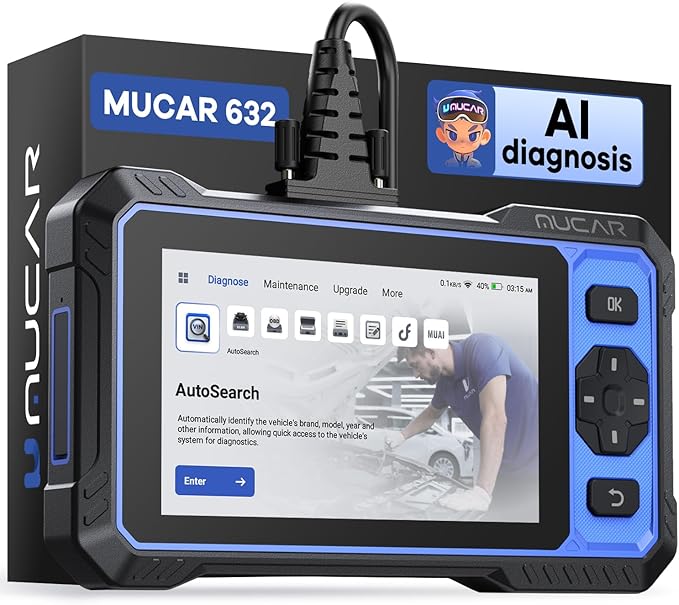 |
mucar 632 Elite AI-Assisted Bidirectional Scan Tool | Check Price |
ANCEL VD700 OBD2 Diagnostic Code Reader Scan Tool
The ANCEL VD700 is the strongest match for a Volkswagen, Audi, Skoda, or Seat owner who wants more than generic engine-code access. It supports full-system diagnostics on supported vehicles, allowing you to check systems such as the engine, transmission, ABS, SRS, ESP, TPMS, immobilizer, steering, and battery. That broader access can help identify whether a warning comes from a simple emissions problem or a separate control module.
Its maintenance functions make the tool more useful after a repair. Depending on the vehicle, it can handle throttle position adaptation, oil service resets, steering angle learning, injector learning, battery registration, TPMS reset, and EPB brake-pad reset. These are valuable conveniences for a careful DIY owner, but the exact functions vary by model year, installed modules, and configuration. TPMS reset does not mean tire-sensor programming or relearning in every situation.
The 2.8-inch screen, automatic vehicle identification, six OBD modes, and 11 display languages keep operation straightforward. There are no subscription charges for the included functions, and lifetime software updates can help address bugs or add parameters. The major limitation is important: the VD700 is listed for supported vehicles before 2023 and does not work with battery-electric vehicles. On other OBDII vehicles, its capability is generally limited to basic engine and emissions diagnosis.
Pros
- VAG-focused full-system diagnostics on supported vehicles.
- Includes useful battery, EPB, throttle, oil, and steering functions.
- No hidden subscription charges for included features.
- Lifetime software updates and automatic vehicle detection.
Cons
- Not compatible with battery-electric vehicles.
- Listed compatibility is limited to supported vehicles before 2023.
- Function availability varies by vehicle configuration.
- TPMS reset is not the same as sensor programming.
My Opinion
The VD700 is the best overall fit when Volkswagen-specific access matters more than the lowest purchase cost. Confirm your exact year, model, and required service functions before buying, then update the unit through ANCEL’s official software process before the first serious diagnostic session.
ANCEL AD310 Classic Enhanced Universal OBD II Scanner Car Engine
The ANCEL AD310 takes a deliberately simple approach. It is a wired OBDII reader for engine and emission-related fault codes, so it is best viewed as a check-engine-light tool rather than a complete Volkswagen diagnostic platform. It can read and clear supported codes, display live data, and help explain why the malfunction indicator lamp has appeared.
Its main appeal is convenience. The scanner weighs about 12 ounces, uses a sturdy 2.5-foot cable, and draws power directly from the vehicle’s diagnostic port. There is no battery to charge, Bluetooth pairing to troubleshoot, or phone application to install. For a driver who wants to keep a scanner in a glove box or backpack, that uncomplicated design is a real advantage.
Compatibility covers major OBDII protocols, including CAN, KWP2000, ISO9141, J1850 VPW, and J1850 PWM. It is intended for 1996 and newer US vehicles, 2000 and newer European and Asian vehicles, and other compatible cars, light trucks, and SUVs. However, the AD310 cannot diagnose non-emissions faults such as many ABS, SRS, transmission, or body-module problems. An adapter cannot turn an OBDI vehicle into a supported OBDII vehicle.
That limitation should guide the purchase. If your Volkswagen has only an engine warning and you need an affordable first look, the AD310 is sensible. If an airbag, ABS, battery, or electronic parking-brake warning is illuminated, choose a scanner with system-specific access instead.
Pros
- Compact, lightweight, and powered through the OBDII port.
- Supports common OBDII communication protocols.
- Reads and clears engine emission codes quickly.
- Durable cable and straightforward operation without an app.
Cons
- Limited to emission-related engine diagnosis.
- Cannot access many ABS, SRS, transmission, or body faults.
- Requires a genuine OBDII vehicle connection.
- Does not provide advanced VW-specific service resets.
My Opinion
The AD310 is a good second-place choice when the goal is basic check-engine troubleshooting and portability. Treat it as a universal entry-level reader, not as a substitute for the VD700 or a professional all-system scanner.
ANCEL AD410 Enhanced OBD2 Scanner Vehicle Code Reader
The ANCEL AD410 occupies a useful middle ground between a basic code reader and a full-service diagnostic tablet. It handles core OBDII tasks such as reading and clearing codes, viewing freeze-frame data, checking MIL status, and displaying vehicle information. For a driver preparing for an emissions inspection, its I/M readiness screen can show whether the required monitors have completed.
Live data makes the AD410 more informative than a simple code-clearing device. Depending on the vehicle, you can view readings such as engine speed, coolant temperature, fuel trims, and oxygen-sensor information. These values do not automatically identify a failed component, but they can reveal patterns and give a repair shop better information than a code number alone.
A built-in database containing more than 42,000 DTC definitions is helpful for beginners who do not want to search every code manually. The 2.4-inch color display, multilingual menus, and direct OBDII power also keep the process approachable. Free software updates help maintain the code database and vehicle coverage, while ANCEL support is available for compatibility questions.
The trade-off is system coverage Like the AD310 the AD410 is primarily an OBDII engine and emissions scanner It should not be purchased on the assumption that it will read every Volkswagen module or reset every maintenance system It suits someone who wants better data and guidance for a check-engine issue especially before a smog check but not someone diagnosing an electronic.
Pros
- Provides live data, freeze frame, readiness, and sensor-test functions.
- Large built-in DTC definition database.
- No app, battery, charger, or Bluetooth connection required.
- Works with many 1996-and-newer OBDII vehicles.
Cons
- Does not offer full Volkswagen module coverage.
- Advanced resets such as EPB or battery registration are not its focus.
- Compatibility still depends on the vehicle’s OBDII implementation.
- Live data requires careful interpretation.
My Opinion
The AD410 is the better universal choice for a beginner who wants to understand engine behavior rather than only erase a warning. Before ordering, verify that your main need is OBDII emissions diagnosis; owners seeking VW-specific maintenance functions should move up to the VD700 or an advanced tablet.
TOPDON AD900 Lite OBD2 Scanner Bidirectional Scan Tool
The TOPDON AD900 Lite is aimed at buyers who want a much more capable diagnostic platform. Its full-system approach can access available modules such as the engine, transmission, airbag, ABS, ESP, TPMS, gateway, steering, radio, and air conditioning. It also supports active tests, meaning the scanner can send commands to certain vehicle components so a user can investigate whether an actuator responds.
Bidirectional control can be valuable in a workshop or for an experienced DIY mechanic. Testing items such as injectors, windows, wipers, headlights, mirrors, or coolant pumps may help narrow down a fault without replacing parts blindly. The feature requires care, however, because commanding a component is not the same as repairing it, and available tests vary by vehicle.
The hardware is tablet-like, with an eight-inch touchscreen, Android 11, Bluetooth 5.0 wireless diagnosis, and a 10,000mAh battery rated for up to 12 hours of continuous operation. It also includes eight commonly used service functions, including oil, throttle, EPB, steering-angle, DPF, ABS-bleeding, BMS, and airbag resets. Coverage is listed for vehicles from 1996 through 2025 across more than 60 makes, with lifetime free upgrades and a one-year warranty.
Its size and complexity are the trade-offs. This is not the tool to buy merely to read one check-engine code. The buyer should confirm Volkswagen coverage for the exact function needed, especially before relying on a reset or active test.
Pros
- Full-system diagnostics and bidirectional testing.
- Large eight-inch screen and wireless diagnostic connection.
- Includes eight useful service and reset functions.
- Lifetime free upgrades and a one-year warranty.
Cons
- More expensive and complex than a basic code reader.
- Active-test availability varies by vehicle.
- Large tablet format is less convenient for glove-box storage.
- Exact VW function coverage should be confirmed before purchase.
My Opinion
The AD900 Lite is a strong choice for a workshop-minded buyer who wants active testing and broad system access. For a typical Volkswagen owner with occasional check-engine concerns, its additional capability may be unnecessary, but it becomes compelling when multiple modules and service procedures are part of the job.
mucar 632 Elite AI-Assisted Bidirectional Scan Tool
The MUCAR 632 Elite offers the broadest reset list in this group, with more than 15 procedures covering areas such as oil, TPMS, EPB, battery matching, steering angle, ABS bleeding, DPF regeneration, throttle adaptation, injector coding, gearbox learning, and anti-theft or key matching. Availability still depends on the vehicle, so the long list should be treated as potential coverage rather than a guarantee for every Volkswagen.
Its AI-assisted DTC analysis is intended to make fault codes easier to understand by presenting possible causes and repair suggestions. That can be useful for a beginner who needs direction, but AI guidance should support—not replace—service information, wiring checks, measurements, and safe mechanical judgment. The scanner also reads engine, ABS, SRS, and transmission codes, displays live data, and supports full bidirectional control on compatible vehicles.
Hardware includes a 6.2-inch touchscreen, Android 8.1, a 1.8GHz processor, 32GB of storage, and an expandable TF card slot. AutoVIN can reduce manual vehicle-entry steps, while CAN FD and AutoAuth support extend coverage to newer FCA vehicles. Lifetime updates cover vehicle and diagnostic feature modules without a subscription fee.
The MUCAR 632 is most attractive to owners who want a serious multi-brand tool and expect to use many service functions over time. Its 4.2 rating from 410 customer ratings provides less feedback volume than the ANCEL AD310 or AD410, so buyers should be especially careful to confirm exact VW compatibility and the desired reset procedure before ordering.
Pros
- More than 15 potential reset and learning functions.
- AI-assisted code explanations and repair suggestions.
- Bidirectional controls and multi-system diagnostics.
- Lifetime updates without subscription fees.
Cons
- Specific functions vary by vehicle and software coverage.
- AI suggestions still require independent verification.
- Customer-feedback volume is lower than several ANCEL alternatives.
- Advanced controls may be excessive for occasional code reading.
My Opinion
The MUCAR 632 is a capable alternative for a buyer who values resets, active tests, and ongoing multi-brand coverage. I would select it over a basic reader only after confirming that its VW software supports the exact battery, brake, coding, or adaptation task required.
How I Selected These Best Vw Scan Tool Options
The ranking starts with the central buying question: does the tool provide useful access to Volkswagen systems, or does it only handle generic OBDII engine codes? The VD700 receives the top position because its stated VAG focus, full-system coverage, and maintenance functions align most directly with the needs of VW, Audi, Skoda, and Seat owners. The remaining products are placed according to the value they offer at different capability levels.
I also considered practical ownership details: whether the device requires an app or subscription, how it receives updates, whether it supports live data or active testing, and how clearly the supplied information defines its limitations. Customer-feedback volume was considered as supporting evidence rather than proof of universal compatibility. A popular basic scanner can still be the wrong purchase for someone needing ABS or battery registration.
The most important selection distinction is system coverage. A scanner that reads the engine computer may not communicate with Volkswagen ABS, SRS, transmission, gateway, or battery modules.
Brand diversity was included where practical so the list would not present five nearly identical tools. ANCEL covers simple and VAG-focused readers, while TOPDON and MUCAR represent more advanced tablet-style choices with bidirectional functions and service resets.
Always match the scanner to the exact vehicle year, engine, market, and repair task. “Works with VW” does not automatically mean every function works on every Volkswagen.
How to Choose the Best Vw Scan Tool for Your Volkswagen
Start with the warning light or maintenance job you need to handle. If the issue is only a check-engine light, a universal OBDII reader may be enough. If the dashboard shows ABS, airbag, electronic parking brake, transmission, or battery warnings, look for full-system VW coverage and confirm the specific reset or adaptation procedure before buying.
- Choose VAG-specific coverage when you need Volkswagen module access.
- Confirm compatibility by year, model, engine, and installed systems.
- Separate code reading from bidirectional testing and coding functions.
- Check whether updates are free, time-limited, or subscription-based.
- Do not assume a listed reset works on every supported vehicle.
Generic OBDII or VW-specific diagnosis?
Generic OBDII tools communicate mainly with the emissions-related engine computer. They are useful for check-engine lights, readiness monitors, freeze-frame data, and some live readings. VW-specific scanners go further by communicating with manufacturer modules and supporting procedures such as battery registration, steering-angle learning, or electronic parking-brake service.
For a second vehicle or a household tool, a universal reader may provide better general usefulness. For a Volkswagen owner who performs maintenance at home, a VAG-focused scanner can reduce dependence on a repair shop for supported procedures. The purchase makes the most sense when you expect to use those extra functions more than once.
Check model-year and vehicle limitations
Compatibility is not simply a matter of the Volkswagen badge. A tool may support one generation but not another, or it may communicate with a module while lacking a particular adaptation. Newer vehicles can also use different communication systems and security access requirements. Look for an official compatibility list and compare it with the VIN, model year, trim, engine, and the exact warning or service task.
The VD700, for example, is stated to support vehicles before 2023 and not battery-electric vehicles. The TOPDON and MUCAR descriptions offer broader year ranges, but their service functions remain vehicle-dependent. These distinctions are more useful than a general claim of “full coverage.”
Understand resets, adaptations, and coding
A reset usually clears or restarts a maintenance reminder. An adaptation teaches a control module a new operating value. Coding or matching can connect a replacement component to the vehicle. These are different operations, and a scanner that performs one may not perform the others.
Battery registration is a good example. Registering a replacement battery may tell the vehicle that a new battery is installed, but battery coding can involve capacity, type, or manufacturer information. Likewise, a TPMS reset may initialize a system without programming a replacement sensor. Read the tool’s function description carefully rather than relying on a short product label.
Decide whether bidirectional control is necessary
Bidirectional tools can command certain components on and off for active testing. This may help isolate a defective actuator, but it also introduces more responsibility. An active test can operate a motor, valve, pump, light, or other component while the vehicle is stationary. It should be performed only when the operating conditions are understood and the area is safe.
If you only need code definitions and live engine data, paying for bidirectional control may not add much value. It becomes more worthwhile for repair shops, advanced DIY owners, or people diagnosing faults across several systems.
Compatibility Checks Before Buying
Before purchasing, write down the exact vehicle details and the job you want to complete. Include the model year, model name, engine, drivetrain if relevant, and the dashboard warning. Then compare those details with the scanner’s official coverage rather than relying on a marketplace title.
Questions to verify
- Does the vehicle use a standard 16-pin OBDII port?
- Can the tool access the module showing the warning?
- Does it support the desired reset, adaptation, or learning function?
- Is the function available in your vehicle’s market and model year?
- Are updates required to access newer vehicles or added parameters?
Some functions may be unavailable because the vehicle does not have the relevant module. For example, a scanner cannot perform an electronic parking-brake reset on a vehicle without that system. A function may also require a specific ignition state, a charged battery, or a completed repair before it can run successfully.
How to Set Up a VW Scan Tool Safely
Park on a stable surface, switch off unnecessary electrical accessories, and make sure the vehicle battery is adequately charged. Low voltage during communication with a control module can interrupt a session and create confusion. Keep the transmission in the correct position, apply the parking brake when appropriate, and follow the vehicle’s safety instructions.
- Locate the 16-pin diagnostic port, usually beneath the dashboard.
- Connect the scanner before turning the ignition on unless its instructions say otherwise.
- Turn the ignition to the required position without starting the engine when prompted.
- Allow automatic identification to finish, or enter the vehicle details manually.
- Record existing codes and freeze-frame information before clearing anything.
- Run only the tests and resets appropriate for the vehicle and repair.
Do not disconnect the tool while it is writing information or updating a module. If the screen freezes, wait according to the manufacturer’s instructions before cycling the ignition or unplugging the connector. Save diagnostic reports or photograph important data when the tool allows it.
Using Diagnostic Codes Correctly
A diagnostic trouble code identifies a detected condition; it does not always identify the failed part. A code for an oxygen-sensor circuit, for example, could involve wiring, power, a connector, an exhaust leak, or the sensor itself. Use the code as a starting point and combine it with symptoms, live data, inspection, and appropriate repair information.
Read the code before clearing it. Clearing codes can erase freeze-frame information and reset readiness monitors, making it harder to understand what happened or causing an emissions inspection failure until the monitors complete again. After a repair, clear the code only when appropriate, then verify whether it returns.
When to Use a Reset or Adaptation Function
Reset functions are most useful after the underlying service has been completed. An oil reset belongs after an oil service, a battery registration after the correct replacement battery is installed, and an EPB service procedure after the brake work is ready for electronic adjustment. Using a reset as a way to hide a warning does not repair the cause.
Some adaptations require stable voltage, a specific temperature, a straight steering wheel, or a particular pedal and ignition sequence. If the tool reports that a procedure failed, do not repeatedly retry without checking the instructions and vehicle conditions. A failed adaptation may reflect an unresolved mechanical problem, an incompatible function, or an incorrect setup.
Updates, Maintenance, and Storage
Software updates can add vehicle coverage, correct bugs, and improve parameter support. Update over a reliable connection and use the official download process for the scanner. Avoid interrupting an update, and keep the device connected to stable power when the instructions call for it.
For wired readers, protect the connector and cable from sharp bends, door hinges, pedals, and moisture. For tablet-style tools, keep the screen clean with a soft, dry cloth and store the unit where it will not slide around the cabin. Do not leave a powered scanner connected for extended periods if the vehicle is parked and unattended.
Keep the tool, connector, and any wireless VCI together. A missing adapter or damaged cable can make a capable scanner appear incompatible. Periodically inspect the connector pins and housing, but do not force the plug into the vehicle port.
Common Mistakes to Avoid
Most scanner frustrations come from buying for a vague purpose, clearing codes too quickly, or assuming that a brand-specific label guarantees every function. A few careful habits can prevent unnecessary parts replacement and failed service procedures.
- Do not buy a generic OBDII reader expecting ABS or airbag access.
- Do not clear a code before recording its description and freeze-frame data.
- Do not treat a code definition as proof that a particular part has failed.
- Do not run active tests around moving parts without proper precautions.
- Do not attempt battery, EPB, or throttle procedures with weak vehicle voltage.
- Do not assume TPMS reset means sensor programming or relearning.
- Do not interrupt a firmware update or module-writing process.
- Do not use an adapter to assume an OBDI vehicle has become OBDII-compatible.
If a warning involves braking, steering, airbags, or loss of vehicle control, use the scanner as an information tool and obtain qualified repair assistance when the cause is uncertain.
Choosing Between a Wired Reader and a Diagnostic Tablet
Wired readers such as the AD310 and AD410 are compact, quick to connect, and less dependent on batteries or wireless communication. They are easy to keep in a vehicle and are usually enough for engine-code checks, live data, or emissions readiness. Their limitation is narrower system access.
Tablet-style tools such as the TOPDON AD900 Lite and MUCAR 632 offer larger displays, wireless operation, active tests, and more service procedures. They take more time to learn and may be more capability than a casual owner needs. Their value improves when the same person maintains several vehicles or regularly performs repairs involving multiple control modules.
The VD700 sits between those categories in a useful way for VAG owners. It retains a dedicated scan-tool format while concentrating on Volkswagen-family functions. That specialization can be more relevant than a large screen if the main goal is battery registration, EPB service, throttle adaptation, or full-system diagnosis on a supported VW.
Which Tool Fits Different VW Owners?
For a check-engine-light beginner
The AD310 is the simplest match when the goal is reading and clearing emissions-related engine codes. The AD410 is better if you want code definitions, live data, freeze-frame information, and readiness checks in the same compact format.
For a Volkswagen DIY maintainer
The VD700 is the most direct fit when the vehicle is supported and the owner expects to use VW-specific service functions. Confirm whether the needed task is a reset, adaptation, registration, or coding procedure before ordering.
For a home workshop or multi-vehicle owner
The TOPDON AD900 Lite or MUCAR 632 makes more sense when full-system access, active tests, and broad service coverage are important. Compare the exact software coverage for your Volkswagen rather than choosing solely by the number of advertised functions.
FAQS About Best Vw Scan Tool
What is the best vw scan tool for full Volkswagen diagnostics?
The ANCEL VD700 is the strongest direct match in this list for supported Volkswagen-family vehicles because it offers full-system diagnostics and VAG-specific maintenance functions. Its coverage is not universal, so verify the exact model year and desired procedure first.
Can the ANCEL AD310 scan Volkswagen ABS or airbag codes?
No. The AD310 is intended for emission-related engine diagnosis through the OBDII interface. It should not be expected to access many ABS, SRS, transmission, or other non-engine modules.
Is the ANCEL AD410 better than the AD310 for a VW check-engine light?
The AD410 provides more information through live data, freeze frame, readiness checks, sensor tests, and a large DTC definition database. Both remain primarily generic OBDII engine and emissions tools rather than full Volkswagen scanners.
Can a VW scan tool register a replacement battery?
Some tools can perform battery registration or matching on supported vehicles. The VD700 and MUCAR 632 list battery-related functions, but availability depends on the vehicle and the required procedure. Battery coding details may still need to be entered separately.
Does a VW scan tool reset TPMS sensors?
A TPMS reset may initialize the vehicle’s monitoring system, but it does not necessarily program or relearn replacement sensors. The VD700 specifically distinguishes TPMS reset from programming or relearning, so confirm the required function for your vehicle.
Do advanced VW scan tools require subscriptions?
Several products in this list state that included updates or functions do not require subscription fees. Always check the current terms and whether a particular feature is included, because free updates do not guarantee that every function works on every vehicle.
Final Thoughts
The best vw scan tool depends on the job: choose the ANCEL VD700 OBD2 Diagnostic Code Reader Scan Tool for supported VAG-specific diagnostics, the ANCEL AD310 Classic Enhanced Universal OBD II Scanner for simple engine-code checks, or the ANCEL AD410 Enhanced OBD2 Scanner for richer generic OBDII data. For active testing and tablet-level capability, TOPDON AD900 Lite and MUCAR 632 are powerful alternatives, but exact Volkswagen compatibility should always come first.