
Yes, you can use a ladder rack with a tonneau cover if the rack and cover are designed to fit together on your truck. Some combinations share the bed rails, while others use separate mounting points or a specific rack-and-cover system.
Are you trying to keep tools dry while carrying ladders or lumber? Or have you already got one piece of equipment and don’t want to buy a second one that won’t fit? Those are good questions to sort out before you spend money.
I once rushed a rack installation because the mounts looked like they cleared the cover. After tightening everything, I found that one clamp blocked the cover’s rail, and the cover wouldn’t close flush. It was a small, avoidable hassle, and a common mistake, not a dumb one.
I wrote this to help you work out what can fit, what to measure, and which details are worth checking before ordering. You’ll get a practical way to compare rack styles and cover types without relying on a product photo that hides the mounting hardware.
Get the match right, and you can carry long cargo while keeping the bed usable and covered. Skip the fit check, and you could end up with a cover that binds, a rack that shifts, or a return that’s a pain to arrange.
This takes about 9 minutes to read. By the end, you’ll know how to:
- Tell which rack mounting styles can work with your cover.
- Check truck fit, rail space, and load limits before buying.
- Spot common clearance problems before they become installation problems.
- Choose a compatible setup when you’re starting from scratch.
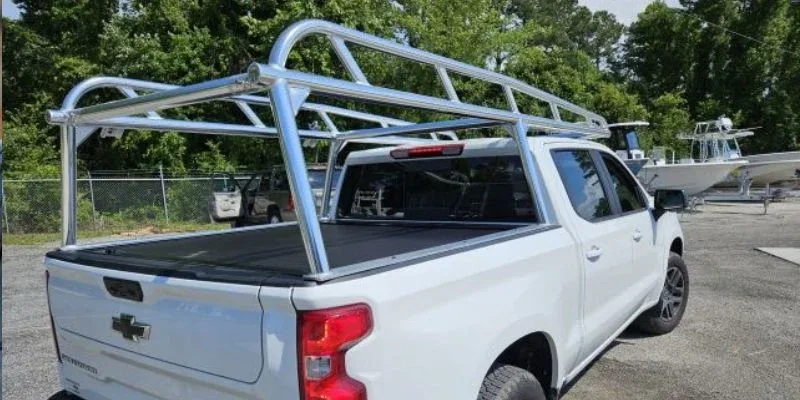
Can You Use A Ladder Rack with A Tonneau Cover?
Yes, a ladder rack can work with a tonneau cover when the rack’s mounting system is compatible with the cover’s rails and the truck’s bed. A rack made for a particular cover-and-truck combination is usually the simplest match; a universal rack isn’t automatically a fit.
The details matter because tonneau covers attach in different ways. Some use bed-rail clamps, some sit in tracks, and others have rails or canisters that take up space where a rack might need to mount.
| Rack or cover setup | How it may fit | What to check |
|---|---|---|
| Rack designed for a specific tonneau cover | Uses mounting points made to work with that cover | Exact cover model, truck bed, and rack instructions |
| Rack with separate stake-pocket mounts | May leave cover rails alone on trucks with accessible pockets | Pocket access, mount fit, and rack clearance |
| Track-mounted rack | Attaches to compatible tracks on or near the bed rails | Track location, cover hardware, and approved load limit |
| Clamp-on rack | Clamps to a bed rail, which may conflict with cover clamps | Shared rail space and clamp placement |
| Cover with a tall canister or bulky rail | May limit where uprights or crossbars can sit | Canister clearance and access to the full cover |
The safest starting point is the manufacturer’s fit list for both products. Check the truck’s year, make, model, bed length, and the exact cover or rack model; two covers with similar names can have different rail hardware.
Pay attention to how the cover opens, too. A rack can clear the cover while still blocking a folding panel, retractable lid, or removable section from moving the way it should.
Pro Tip: Ask the seller or manufacturer to confirm compatibility between the exact rack model, cover model, and truck bed. A general claim like “fits most pickups” doesn’t answer whether your particular rails and clamps will interfere.
Which Ladder Rack Mounting Styles Work with Tonneau Covers?
Rack mounting style often determines whether a tonneau cover can stay in place. The right setup leaves the cover’s hardware alone, supports the rack as directed, and gives the cover room to open or retract.
A stake-pocket rack uses openings built into the tops of some truck bed walls. This can avoid shared clamp space, but the cover’s rails or seals may still block access to the pockets.
A track-mounted rack attaches to tracks installed on the truck or to a compatible cover system. The track has to be approved for that rack and load, not just close enough to accept the hardware. A rail that fits a bolt doesn’t automatically have the strength or design needed to carry cargo.
A clamp-on rack grips the bed rail. It can be a poor match for covers that also clamp to that rail, since two pieces of hardware may compete for the same narrow space.
Some rack systems are built to pair with a specific tonneau cover. Those kits may cost more than a basic rack, but they can save you from mixing parts that don’t share mounting points. If you’re shopping for both at once, compare the best tonneau cover and rack combos and confirm that the listed setup fits your truck.
| Tonneau cover type | Common fit concern | Useful check |
|---|---|---|
| Soft roll-up | Side rails and clamps may share space with rack mounts | Confirm rail clearance and whether the cover can roll fully open |
| Hard roll-up | Side rails or a housing may limit rack placement | Check crossbar and canister clearance |
| Folding hard cover | Panels need room to fold or stack | Confirm the rack doesn’t block the fold path |
| Retractable cover | Rails or a canister can take up bed-rail space | Check rack compatibility with the exact cover system |
| Hinged hard cover | The lid needs room to lift | Check lid travel, cab clearance, and rack position |
These are common fit concerns, not rules for every product. A specific soft cover may work with a rack that won’t fit a different soft cover, so the product model matters more than the broad category.
Important Tip: Don’t remove or relocate cover clamps to make room for a rack unless the cover or rack maker allows it. Changing the mounting points can weaken the hold or cause water leaks.
What Should You Measure Before Buying?
Measure the truck and compare the product instructions before placing an order. A tape measure helps with physical clearance, but it can’t tell you whether a mounting point is approved for the rack’s load.
Start with the truck’s bed details. Check the bed length, rail shape, stake-pocket locations if present, and any factory tracks or accessories that might occupy a mounting area.
Next, check the cover. Find its full model name and note where its rails, clamps, seals, and canister sit. If the cover is already installed, check whether its hardware can move without hitting the proposed rack mounts.
Then compare the rack dimensions and instructions. Look for the upright locations, crossbar height, allowed mounting points, and the maker’s stated capacity. Clearance means enough open space for parts to move without rubbing or blocking each other, not just a gap you can squeeze a finger into.
- Write down the truck year, make, model, and bed length.
- Find the exact tonneau cover model and its fit instructions.
- Find the rack model and its compatible truck or cover list.
- Measure rail space and check the cover’s full opening path.
- Confirm the rack’s mounting points and load limits.
- Ask the manufacturer about any detail the instructions don’t answer.
When you’re still picking a cover, use a buying guide that compares truck fit, cover styles, and useful features, such as how to choose a tonneau cover. That can help you avoid choosing a cover first and discovering later that its rails occupy the rack’s only workable mounting area.
Are the measurements close but not exact? Don’t treat that as a green light. Bed dimensions, rail shapes, and accessory placements can vary by truck configuration, and the manufacturer’s fit instructions should settle the question.
How Do You Check Fit, Load Limits, and Safety?
A rack and cover need to fit together, but the rack must also be mounted and loaded within its stated limits. Check the rack and truck instructions before hauling anything, since the lowest applicable rating may limit what you can carry.
Look for the rack’s load rating, which is the maximum load its maker allows under stated conditions. The rating may distinguish between a moving vehicle and a parked vehicle, so don’t assume a rack’s standing-load figure applies while driving.
The truck has limits of its own. Cargo, passengers, and accessories all contribute to the vehicle’s payload, and load placement can affect handling. Check the truck’s owner’s manual and the rack instructions rather than guessing from the rack rating alone.
When I first started using a bed rack, I focused on whether a long piece of material fit between the bars and barely checked how it was tied down. I learned to make a dry run with the load secured before setting off, because a good-looking rack doesn’t make loose cargo safe.
Before driving, check that:
- Every rack fastener is installed and tightened as directed.
- The load stays within the rack, cover, and truck limits.
- Cargo is secured against sliding, lifting, and shifting.
- Long items don’t block lights, the license plate, or your view.
- The cover still opens and closes without rubbing or binding.
- Nothing can hit the cab, rear window, or cover during a turn or bump.
Tie-downs should suit the cargo and the rack’s approved attachment points. Don’t assume a cover rail or a decorative bed accessory is a cargo anchor.
Pro Tip: After your first short drive, park and recheck the fasteners and cargo straps. A strap can settle as a load shifts, so a quick stop can catch looseness before it turns into a road hazard.
What Common Problems Can You Avoid?
Most trouble comes from treating the rack and cover as separate purchases rather than one combined fit. A little checking before installation can prevent blocked access, damaged seals, or hardware that won’t seat properly.
Watch for these warning signs:
- The cover won’t close evenly: A rack clamp or upright may be pressing against the cover rail.
- The cover binds while opening: A bar, support, or load may be blocking the cover’s movement.
- A seal has a new gap: Mounting hardware may have shifted or pinched the rail.
- The rack rocks or shifts: The mount may not be seated correctly, or the setup may not be approved for that bed.
- The rear window or cab is at risk: Cargo may extend too far forward or sit too high for safe clearance.
Stop using the setup if a mount shifts, a fastener loosens repeatedly, or the cover rail bends. Don’t try to fix a fit problem by forcing the cover shut or adding unapproved brackets; get guidance from the product maker or a qualified truck accessory installer.
A BACKRACK-style cab guard is a separate accessory, and its mounting location can affect how a cover fits near the cab. If that’s the setup you’re considering, check the product-specific details in this guide to using a tonneau cover with a BACKRACK before assuming the rack and cover clear each other.
If water starts getting into the bed after installation, check whether the cover rail or seal has shifted. A tonneau cover may not make a truck bed completely waterproof, but a new gap or crushed seal deserves attention.
- Match the exact truck, cover, and rack models before ordering.
- Treat shared rail space and cover movement as part of the fit check.
- Follow the rack, cover, and truck instructions for mounting and cargo limits.
FAQs About Can You Use A Ladder Rack with A Tonneau Cover
Can any ladder rack work with a tonneau cover?
No, ladder racks aren’t all compatible with tonneau covers. Rack clamps, tracks, and uprights may compete with cover rails or block the cover’s movement. Check the exact rack and cover models against the fit information for your truck, rather than relying on a broad product description.
Can I install a ladder rack without removing my tonneau cover?
Yes, if the rack is designed to mount without using hardware occupied by the cover. Some systems use separate mounting points or a compatible track, while others need the cover removed first. Follow the installation instructions, and don’t shift cover clamps unless the maker permits it.
Does a ladder rack work with a retractable tonneau cover?
Sometimes. Retractable covers can have side rails and a storage canister that limit rack placement, so compatibility depends on the cover and rack models. Check whether the rack is approved for those rails and whether the cover can retract fully after the rack is installed.
Can a ladder rack damage a tonneau cover?
Yes, a poorly matched or incorrectly installed rack can press on cover rails, pinch seals, or block moving panels. Damage is less likely when the rack uses approved mounts and keeps clear of the cover’s opening path. Stop using the setup if a rail bends or the cover starts binding.
Can I carry ladders over a tonneau cover?
Yes, if the rack supports the load and the ladder is secured as directed. The cover itself usually isn’t a cargo support unless its maker specifically rates it for that purpose. Check the rack and truck limits, tie the ladder to approved points, and confirm that it can’t slide into the cab.
Choose the Setup That Fits Your Truck
A ladder rack and tonneau cover can work together, but the right answer comes from the exact mounting hardware, truck bed, and cover design. A rack that clears one cover may block another, even when both products are advertised for the same pickup.
I’d choose a matched system when you’re buying both parts at once, since the fit is easier to confirm before the boxes arrive. If you already own a cover, start with its model number and ask the rack maker to verify that exact setup.
Your next step is straightforward: check the fit information for your truck, cover, and rack, then confirm any unclear mounting or load detail with the manufacturer. A few minutes spent on that check can save you a frustrating install and leave you with a setup that carries cargo without fighting the cover.