
Yes, you can use a tonneau cover with a toolbox, but the cover and box must fit together. The key checks are toolbox height, mounting position, bed-rail space, and whether the cover is made to work with that setup.
Have you found a toolbox you like, then realized it may block the cover you already own? Or are you trying to keep rain out without giving up quick access to your tools?
I once rushed through a truck-bed setup and assumed a low-profile box would leave enough room for the cover. The box sat just high enough to catch the cover hardware, and I had to take it back off and start over. That kind of mismatch is common, not a dumb mistake.
I wrote this to help you sort out what fits before you spend money or wrestle heavy parts in and out of the bed. You’ll get a clear way to check your truck, compare toolbox and cover styles, and spot the fit problems that tend to show up after installation.
Get the fit right and you can keep tools organized, protect more of the bed, and avoid buying parts twice. Skip the measurements and you could end up with a cover that won’t close, a toolbox that blocks the rails, or gaps that let water and dust in.
This should take about 8 minutes to read. By the end, you’ll know how to:
- Check whether your existing toolbox and cover can work together.
- Choose a compatible setup if you’re buying both.
- Measure for clearance before ordering.
- Tell when a different cover style is the better choice.
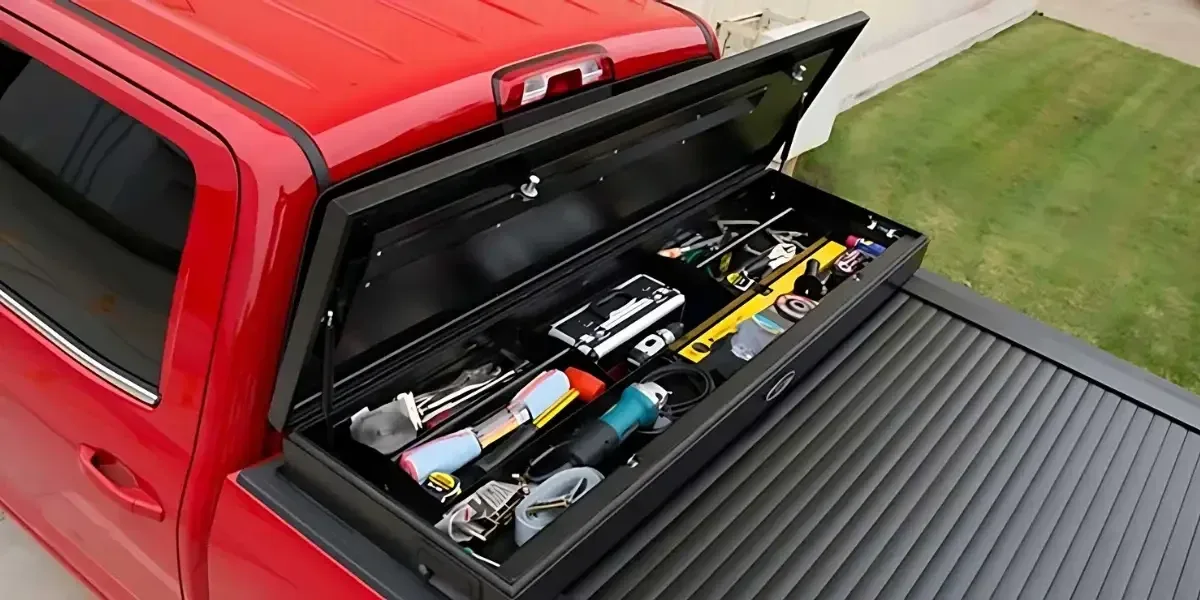
Can You Use a Tonneau Cover with a Toolbox?
Yes, a toolbox and tonneau cover can share a truck bed if their mounting systems and dimensions are compatible. A low-profile toolbox with a cover designed to clear it is a common setup; a tall cross-bed box paired with a cover that occupies the same space usually won’t fit.
The details depend on your truck’s bed rails, the raised edges along the top of the bed, and the way each accessory attaches to them. Some covers clamp onto the rails, while some toolbox mounts use that same area, so two individually suitable products can still compete for space.
Start by identifying the toolbox style and cover style. A cross-bed toolbox sits across the bed near the cab, while an under-cover toolbox is built low enough or positioned in a way that leaves room for a cover to close over it.
Before buying or installing, work through these checks:
- Find your truck’s year, make, model, bed length, and cab configuration. A cover listed for a similar truck may still have different rail or bed dimensions.
- Check how the toolbox mounts. Note whether its brackets clamp to the rails, bolt to the bed, or use another mounting point.
- Measure the toolbox’s height and position, including handles, lids, and any hardware that sticks up.
- Check the cover’s required clearance and mounting location in its installation instructions.
- Confirm the cover can open and close without hitting the box, and that the tailgate can still close as intended.
- After installation, check that all clamps are secure and that the cover seals evenly.
A fit check needs more than the box’s advertised height. Measure from the bed floor to the highest point of the installed toolbox, then compare that with the clearance below the closed cover. Also check the side-to-side space where rails, clamps, and seals meet.
| Toolbox setup | Cover style that may work | Main fit check |
|---|---|---|
| Low-profile box near the cab | A compatible folding, rolling, or retractable cover | Lid and cover clearance |
| Box designed to sit below the cover plane | A cover made for that toolbox arrangement | Mounting space and seal contact |
| Tall cross-bed box | A cover with a matching toolbox cutout or design | Box opening and cover access |
| Toolbox using the same rail area as the cover | A compatible rail or mounting system | Clamp and bracket interference |
| Side-mounted toolbox | Many cover types, depending on rail placement | Side rail clearance and cover travel |
Product names like “low profile” don’t guarantee a match. The actual shape and mounting hardware matter, so compare measurements and installation diagrams rather than relying on the label alone.
- A toolbox and cover work together only when their height, rail space, and opening paths are compatible.
- Check the exact truck fit and mounting instructions before ordering.
- Measure installed hardware, not just the toolbox body.
Which Toolbox and Tonneau Cover Styles Fit Together?
A cover designed around a toolbox, or a low-profile box that stays clear of the cover, gives you the best chance of a clean fit. The right combination depends on how often you need full-bed access and whether the toolbox must remain easy to reach.
A soft roll-up cover rolls toward the cab, and a hard folding cover stacks in sections when opened. Either may work with a toolbox if the cover’s rails and opening path clear the box; a box that sits too high can stop a folding panel from laying flat or keep a roll-up cover from sealing.
A retractable cover slides into a canister near the cab. That canister takes up bed space, so check whether it conflicts with a cross-bed toolbox or limits access to items stored against the front wall.
A one-piece hard cover lifts as a single panel and may need room to swing upward. If your toolbox lid also opens toward the cab, the two lids can collide even when the cover closes normally.
A toolbox-compatible cover is made with a cutout, special rail arrangement, or other design intended to accommodate a toolbox. The exact fit still depends on your truck and box, so “toolbox compatible” is a starting point, not a promise that every model will fit.
The body and placement of the toolbox matter just as much as the cover type. A side-mount box may leave the center of the bed open, while a cross-bed box can take up the full width near the cab. Check lid swing and handle access before settling on either.
If you’re choosing the cover first, compare bed fit, cover type, and features with a practical tonneau cover selection guide. If the cover is already installed, start with its rail location and clearance requirements; those are harder to work around than a toolbox you haven’t bought yet.
How to Measure and Install a Compatible Setup
Measure the truck, toolbox, and cover as a system before you order anything. A tape measure and the product instructions are more useful here than a guess based on how similar another truck looks.
Take these measurements with the truck parked on level ground:
- Bed length: Measure the bed from the inside of the front wall to the inside edge of the tailgate, then verify the listed bed size in the truck’s manual or fit guide.
- Bed width: Measure inside the bed at the points where the toolbox and cover rails will sit.
- Toolbox height: Measure from the bed floor to the tallest installed part, including a lid handle or bracket.
- Rail clearance: Note how much clear rail space remains after the toolbox brackets are placed.
- Opening clearance: Open the toolbox lid and cover as far as their designs allow, and check whether either one blocks the other.
When you’re shopping for a box that must sit beneath a cover, compare designs meant for that arrangement. A guide to the best tool boxes for under a tonneau cover can help you focus on low-profile and under-cover options, but use the listed measurements to confirm the fit on your specific truck.
Install in an order that lets you inspect the mounting points before they become hard to reach:
- Lay out the cover rails and toolbox brackets without tightening them.
- Confirm that the clamps and brackets don’t occupy the same space.
- Position the toolbox and check that its lid and handle move freely.
- Install the cover rails according to the maker’s instructions.
- Close the toolbox, then open and close the cover through its full travel.
- Tighten the hardware as directed, then check the seals and tailgate operation.
I once had to shift a box after its brackets crowded the cover rail, even though the box itself seemed low enough. The lesson stuck: check the hardware’s footprint before tightening anything, because a small clamp can cause a big headache.
What if the cover touches the toolbox only when opening? Treat that as a fit problem, not a harmless quirk; repeated contact can damage the cover, scrape the box, or stop the cover from latching.
Pro Tip: Use a piece of painter’s tape to mark the planned toolbox and rail positions before installation. It makes bracket overlap easier to spot while everything is still loose.
Common Fit Problems and What to Do
Most fit problems come from a height conflict, crowded rails, blocked lid movement, or a seal that can’t sit flat. Check the contact points before changing or forcing any part.
| Problem | Likely cause | Practical next step |
|---|---|---|
| Cover won’t latch | Toolbox or handle is too high, or the cover rail is out of position | Recheck the clearance and mounting instructions |
| Cover bows upward | Box or hardware pushes against the cover | Stop forcing it and confirm the intended fit |
| Toolbox lid hits the cover | The opening paths overlap | Check whether the box can be repositioned safely |
| Rail clamps won’t fit | Toolbox brackets occupy the same rail area | Use a compatible mounting arrangement or different products |
| Water gets in near the box | Seal is pinched, uneven, or interrupted | Inspect the seal contact and installation alignment |
| Tailgate won’t close normally | Box or cover position interferes with the tailgate | Recheck the accessory placement and truck fit |
Don’t bend rails, remove clamps, or drill new holes just to make incompatible parts cooperate. Those changes can weaken a mount, damage the truck bed, or affect a product warranty.
If your existing box blocks the cover, you may have options: reposition the box if its instructions allow it, choose a cover made for that toolbox, or replace one accessory. I’d favor a compatible mounting setup over a workaround that leaves a rail loose or a seal uneven.
What to Check Before Buying Both
If you haven’t bought either accessory yet, choose them as a pair rather than shopping by appearance alone. A slim box and a compact cover can still clash if their brackets or opening paths overlap.
Truck fit comes first. Check the exact bed length and truck configuration in the manufacturer’s fit information, and confirm whether the product is intended for a factory bedliner, spray-in liner, or other equipment on your truck. Those details can change how a rail or clamp seats.
Then decide what matters most in daily use:
- Choose a box-first setup if you need frequent access to tools and want a lid that opens without moving the cover.
- Choose a cover-first setup if you regularly use the full bed and want a clear opening.
- Look for a matched toolbox-and-cover system if you want the accessories to share space by design.
- Check whether you need a weather seal, and how much protection the product claims to provide.
A weather seal is the strip or barrier that limits water and dust at a joint. A tonneau cover can reduce exposure, but seams and tailgate gaps may still let in some moisture, so don’t treat a covered bed as airtight or waterproof.
If you need both pieces, compare the toolboxes designed for tonneau covers with the cover’s exact fit notes. I’d pick a setup with clear measurements and straightforward installation instructions over a cheaper pair that depends on guesswork.
Important Tip: Keep the product instructions after installation. If you later change the toolbox position or replace the cover, those instructions can show which clamps and mounting points are approved.
FAQs About Can You Use a Tonneau Cover with a Toolbox
Can I keep my existing toolbox and add a tonneau cover?
Yes, if the toolbox leaves enough clearance for the cover and doesn’t block its rails, clamps, or opening path. Measure the installed box, including its lid and hardware, then compare those dimensions with the cover instructions. If the two products use the same mounting space, you may need a different mounting setup.
Will a toolbox make a tonneau cover leak?
Not by itself, but a toolbox can stop a cover seal from sitting flat or push the cover out of alignment. Check the seal along the rails and near the toolbox after installation. A tonneau cover can limit weather exposure, but the seams and tailgate area may still allow some water or dust inside.
Can I install a toolbox over a tonneau cover?
Usually, a toolbox needs to mount to the bed or its rails, so installing it over a cover isn’t a standard arrangement. Don’t clamp through the cover or use it as a load-bearing surface unless the product instructions specifically allow that setup. Choose a compatible toolbox and cover system instead.
What kind of toolbox works best with a tonneau cover?
A low-profile or under-cover toolbox is often a practical choice because it can leave space for the cover to close. The best match depends on the truck’s bed, the toolbox’s mounting brackets, and the cover’s clearance. Check measurements and lid movement rather than relying on a style name alone.
Can I use a cross-bed toolbox with a roll-up tonneau cover?
Sometimes, if the cover is designed to clear the box and its rails have room to mount. A tall cross-bed box can block the cover’s front edge or prevent a proper seal. Confirm the cover maker lists a compatible toolbox arrangement, then check the box lid and cover travel before tightening the hardware.
Choose the Pair That Fits Your Truck
A toolbox and tonneau cover can make a truck bed more useful, but only when the parts fit together without fighting over space. Start with the truck’s exact bed dimensions, then check the box height, mounting brackets, cover rails, and lid movement. Those checks take a few minutes and can save you from a return, a scratched cover, or a setup that never closes right.
My preference is to choose the cover and toolbox as a matched pair when both are still on the shopping list. If you already own one, use its measurements and installation instructions to guide the second purchase. Your next step is simple: measure the tallest point of the toolbox and compare it with the cover’s stated clearance before placing an order.