
A tonneau cover can improve an electric pickup’s range in some conditions, especially at highway speeds, but the gain varies by truck, cover, weather, and driving habits. It isn’t a guaranteed range upgrade, and a cover that adds weight or changes airflow in an unhelpful way may make little difference.
Have you watched your battery percentage drop faster on the highway than it does around town? Or are you trying to decide whether a cover is worth buying when every extra mile of range matters?
I once rushed through a pickup setup change before a long drive, then spent the trip wondering whether the small change in energy use was from the accessory or the wind. I hadn’t kept a good baseline, so I couldn’t tell, and that uncertainty was more annoying than the result. It’s a common mistake, not a dumb one.
I wrote this for electric truck owners who want a useful answer without a sales pitch or a claim that one accessory will fix every range problem. You’ll learn why a tonneau cover can affect efficiency, how to compare your own results, and what to weigh before choosing a cover.
Get the comparison right, and you can avoid buying a cover for range gains you may not notice, while still enjoying its other benefits. Skip the details, and you might mistake a cold, windy day for proof that the cover worked, or didn’t.
Plan on about a nine-minute read. By the end, you’ll know how to:
- Judge whether a cover is likely to help on your usual routes.
- Compare energy use without letting weather or speed fool you.
- Pick a cover that fits your truck and how you use the bed.
- Spot other changes that may matter more than the cover.
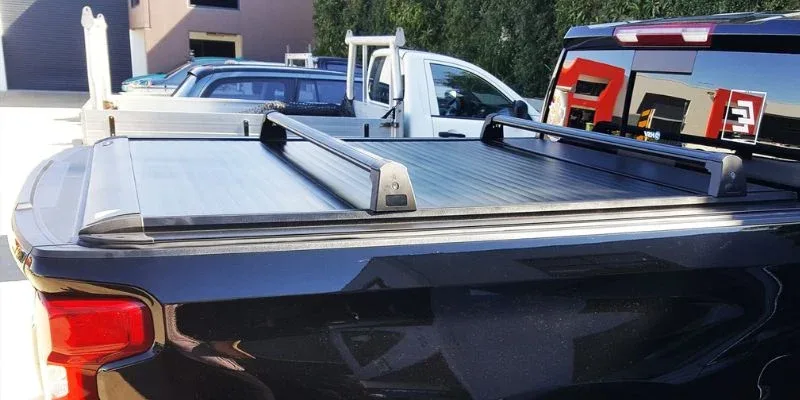
Does Tonneau Cover Improve EV Range? the Practical Answer
A tonneau cover may reduce aerodynamic drag, the air resistance that pushes against a moving truck, but the effect varies by vehicle and conditions. Expect a possible improvement, not a promised number of extra miles.
An open pickup bed can create complicated airflow, and covering the bed changes how air moves over and behind the truck. That change can reduce drag on some setups, but a tonneau cover doesn’t turn a pickup into a smooth, low-drag vehicle. The cab, mirrors, tires, underbody, and overall shape still matter.
At highway speeds, air resistance takes more energy to overcome than it does at low speeds. That makes a cover more likely to show a difference during steady highway driving than during short, slow trips with frequent stops. Even then, wind, traffic, temperature, and speed can hide or outweigh a small change.
| Driving or setup condition | What it may mean for range |
|---|---|
| Steady highway driving | A cover has a better chance of affecting energy use because air resistance matters more. |
| Low-speed city driving | The effect may be small compared with stopping, starting, and cabin heating or cooling. |
| Strong headwind or crosswind | Wind can change energy use enough to muddy a cover comparison. |
| Heavy cover or added bed cargo | Extra weight can offset some aerodynamic benefit, especially in stop-and-go driving. |
| Different cover designs | Results can vary with how each cover fits and changes airflow. |
A truck’s energy consumption is often shown as kilowatt-hours per 100 miles (kWh/100 mi) or miles per kilowatt-hour (mi/kWh). Lower kWh/100 mi is better; higher mi/kWh is better. Use the same display and unit for each comparison so you don’t accidentally compare apples to the truck’s charging cable.
If you’re also weighing a cover’s effect on a gas-powered pickup, the airflow question overlaps, but fuel economy isn’t the same measurement as EV range. tonneau cover and gas mileage explains that related comparison.
Why the Range Change Can Be Hard to Spot
A cover’s effect can be real and still be difficult to separate from everyday driving changes. A short test on a breezy afternoon won’t tell you much if the comparison drive happened in calm weather.
Speed is one of the biggest variables you control. A small increase in cruising speed can raise air resistance, so driving a little faster with the cover may use more energy than driving slower without it. Wind direction, rain, road surface, traffic, and elevation can also change the result.
Temperature can muddy the comparison, too. Cold weather can reduce battery efficiency and increase energy used for heating; hot weather can raise cooling demand. Tire pressure, payload, roof accessories, and towing also affect consumption, so keep those as steady as you can.
Does a cover help equally on every route? No. A predictable highway commute gives you a better chance of noticing a change than a mix of short errands, hills, and stop-and-go traffic.
I once treated a single trip’s efficiency reading as a clear answer after changing a truck setup. A gusty stretch and a different cruising pace were enough to make the comparison shaky. I learned to repeat the same route under similar conditions instead of trusting one tidy-looking screen.
The battery’s usable energy is what the truck can draw for driving, but the displayed range estimate is still a prediction, not a direct measurement of a cover’s benefit. The estimate may shift as the vehicle responds to recent driving, temperature, and other conditions. Focus on repeated energy-use readings rather than a one-time range estimate.
A helpful comparison asks whether the truck used less energy over similar drives, not whether the dashboard showed a bigger number after one installation. If the change is smaller than the usual variation between your trips, you may not be able to confirm a gain in everyday use.
How to Test a Tonneau Cover on Your Truck
The best home test compares repeated drives with and without the cover while keeping the route and conditions as similar as practical. A careful test won’t produce laboratory precision, but it can tell you whether a difference is consistent enough to matter to you.
- Choose a repeatable route. A familiar highway loop or commute is easier to compare than a different destination each time. Avoid routes with major construction or regular traffic backups.
- Keep your driving similar. Match your cruising speed, drive mode, climate-control setting, and use of accessories as closely as you can. Don’t tailgate or drive unsafely to make a test look consistent.
- Keep the truck’s load steady. Remove or add cargo only if you can repeat the same setup in each test. Check tire pressure against the vehicle’s door-jamb placard, not a guess or the maximum printed on the tire.
- Record the conditions. Note whether the road was wet, the wind felt strong, and the temperature changed a lot. You don’t need a weather station; a few simple notes can help explain a strange result.
- Repeat the comparison. Collect several comparable drives with the bed open and with the cover installed. Compare average kWh/100 mi or mi/kWh rather than leaning on the best or worst trip.
Your truck’s trip computer, energy-use screen, or charging records may help, depending on the vehicle. Reset a trip meter at the same point for each run if that makes the readings easier to compare. Use the same method throughout.
If you can’t remove the cover easily, compare a steady set of drives before and after installation, then repeat them under similar conditions. That test is less controlled because weather and season can change, so treat the result as a practical clue rather than proof.
Pro Tip: Keep a simple note on your phone with date, route, speed range, temperature, wind, load, and energy-use reading. After several drives, patterns are easier to spot than they are from memory.
Don’t read too much into a tiny difference. If your results bounce around from trip to trip, the cover’s effect may be smaller than normal variation, or your test may need more consistent conditions.
Choosing a Cover Without Chasing a Range Promise
Pick a tonneau cover for the way you use your truck first; any range benefit is a possible bonus. A good fit, sensible access, and a design that suits your cargo needs matter more than a seller’s broad claim about efficiency.
Covers come in different styles, including soft roll-up, hard folding, retractable, and one-piece designs. They differ in bed access, security, installation, weight, and how much space they take up. There isn’t one style that fits every owner, and product details can change by truck model.
A heavier cover may add load, while a poorly fitting cover may leave gaps or create a shape that doesn’t behave as expected in airflow. Those details don’t let you predict a precise range change, but they’re good reasons to check fit and installation guidance for your specific truck.
If you’re still comparing styles, truck-bed fit, opening method, and features are useful starting points for choosing a tonneau cover. A cover that’s easy to open may be a better everyday choice than one you avoid using because it’s awkward.
Before buying, check the cover maker’s fit information and the truck’s owner’s manual for relevant limits or installation guidance. Pay attention to any effect on bed access, cargo height, rack compatibility, and the way the tailgate closes. If you carry tall cargo often, a cover that blocks your usual load may not be worth the trade.
Are you buying mainly for extra range? I wouldn’t choose a cover on that promise alone. I’d look at the truck’s day-to-day needs first, then treat any measured efficiency change as a welcome extra.
A cover can still be worthwhile even if the range change is hard to measure. It may keep rain off cargo or make the bed more convenient to use, depending on the design and how it fits. Those benefits are separate from energy efficiency, so decide whether they justify the cost and upkeep on their own.
FAQs About Does Tonneau Cover Improve EV Range
How much range can a tonneau cover add to an electric truck?
There’s no single dependable number for how many miles a tonneau cover adds. The result depends on the truck’s shape, cover design, speed, wind, temperature, and load. Compare repeated drives using the same energy-use measure; a dashboard range estimate from one trip can’t isolate the cover’s effect.
Does a tonneau cover help more on the highway?
Often, a tonneau cover is more likely to affect efficiency during steady highway driving than during slow city trips because air resistance grows more significant at higher speeds. The result still depends on wind, speed, and the truck’s design. A highway test is most useful when you repeat the route under similar conditions.
Can a tonneau cover reduce electric truck range?
Yes, a cover could reduce range if its added weight or airflow effect outweighs any drag reduction. A poorly suited design may also fail to help at all. Since the result varies by truck and cover, compare energy use rather than assuming that every covered bed improves efficiency.
Should I install a tonneau cover just to save battery?
Usually, don’t buy a cover solely on the assumption that it will add a predictable amount of range. The efficiency effect can be small or hard to separate from weather and driving changes. If bed protection or easier cargo handling is useful to you, consider range savings a possible extra.
How can I tell if my tonneau cover improved efficiency?
Repeat similar drives with the same route, speed, truck load, climate settings, and energy-use display. Record conditions such as wind and temperature, then compare several readings instead of one trip. A consistent drop in kWh/100 mi suggests better efficiency, though changing weather can still affect the result.
Make the Cover Earn Its Place
A tonneau cover can help an electric truck use less energy, especially on steady highway drives, but there’s no universal range boost to count on. Truck design, cover fit, weather, speed, and added weight all matter, and everyday variation can make a small change hard to spot.
My practical view is simple: buy a cover because it suits your bed, cargo, and daily routine. Then test its efficiency effect with repeat drives before giving it credit for extra miles. That way, you can separate a genuine pattern from a lucky tailwind or a slower commute.
Your clearest next step is to check which cover styles fit your truck and how you use its bed. If range is the main reason you’re considering one, plan a consistent before-and-after comparison rather than trusting a promise on the box.