
White vinegar can clean many car floor mats when diluted with water, used after vacuuming, and followed by thorough drying. Vinegar works best on light grime and odors, while heavy oil, grease, or set-in stains need a different cleaner.
Are your mats dusty on top but still smell sour underneath? Have salt rings, muddy footprints, or spilled coffee turned the footwell into a small crime scene?
I once soaked a carpeted mat too heavily and tossed it back into the car before the backing had dried. The next morning, the cabin smelled like a damp towel, and I had to repeat the whole job beside an open garage door. That’s a common mistake, not a dumb one.
I wrote this guide for anyone who wants a cleaner car without buying a shelf full of specialty products. You’ll learn when vinegar is a good choice, when it isn’t, and how to clean rubber and carpet mats without wrecking the backing.
Done right, you’ll cut odors, loosen surface dirt, and avoid sticky residue. Skip the drying step, use too much vinegar, or mix cleaners, and you can trade one mess for mildew, discoloration, or a sharp chemical smell.
This takes about 9 minutes to read, and you’ll come away knowing how to:
- Match the cleaning method to rubber, carpet, or fabric mats.
- Mix vinegar safely without making the solution too strong.
- Lift common stains while protecting the mat backing.
- Dry mats properly so moisture doesn’t linger in the car.
- Know when vinegar should stay in the kitchen cabinet.
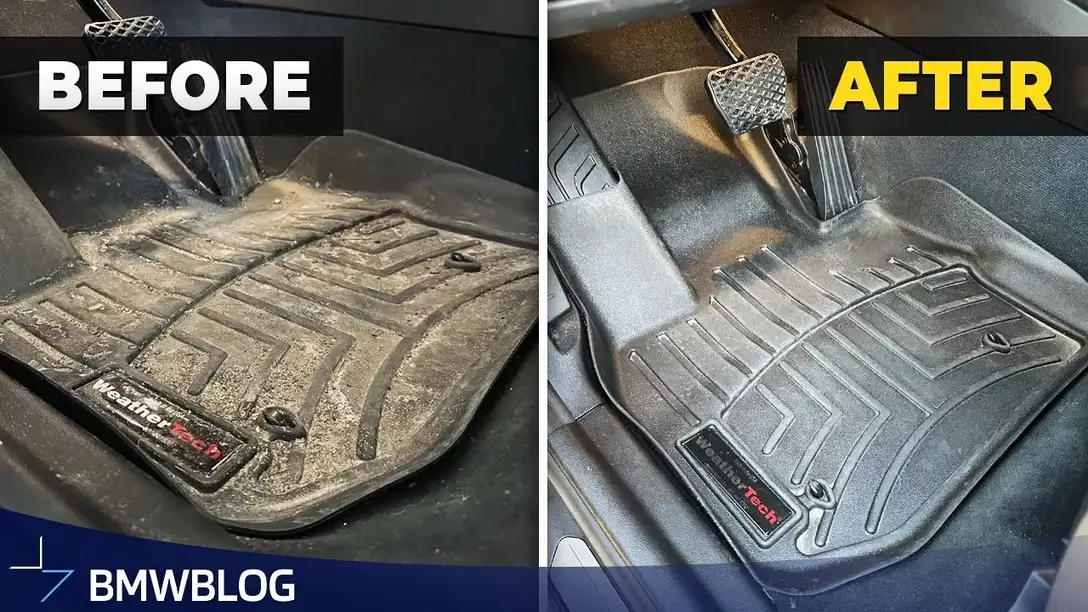
How to Clean Car Floor Mats with Vinegar Safely
The safest method is to vacuum the mats, test a diluted vinegar solution, scrub gently, rinse away residue, and dry the mats completely before reinstalling them.
White distilled vinegar is the best type for this job because it has a mild acid content and no added color. Mix 1 cup of white vinegar with 1 cup of warm water in a spray bottle, then add 1 teaspoon of mild dish soap only when the mats have greasy road film.
The cleaning process changes slightly based on the mat material:
- Remove every mat from the vehicle, including the cargo-area mat if you’re cleaning the whole interior.
- Shake each mat outside, then vacuum both sides. Use the crevice tool around raised edges and molded grooves.
- Check the label or material. Rubber and all-weather mats can handle more water than carpet-backed mats.
- Test the diluted solution on a hidden corner. Wait several minutes and check for color transfer, fading, or a tacky feel.
- Mist the mat lightly instead of soaking it. A damp surface gives vinegar room to work without flooding the backing.
- Scrub with a soft nylon brush, moving in several directions across the tread or carpet fibers.
- Wipe or rinse with clean water until the vinegar smell and soap film are gone.
- Hang the mat or lean it at an angle in a shaded, well-ventilated spot.
- Reinstall the mat only after the top and underside feel fully dry.
Never mix vinegar with bleach, ammonia, or a strong alkaline cleaner. Those combinations can create irritating fumes, so rinse away other products before using vinegar and work where fresh air can move freely.
For rubber mats, spray the diluted mixture across the surface and let it sit for about 3 to 5 minutes. Scrub the grooves with a brush, rinse with a hose or bucket of clean water, and wipe the mat with an old towel.
Carpet mats need a lighter touch. Mist the surface, blot with a microfiber towel, and repeat small sections instead of pouring liquid across the whole mat.
Can you use straight vinegar to save time? I wouldn’t, because undiluted vinegar can leave a stronger smell and may affect dyes, protective coatings, or delicate backing materials.
Pro Tip: Put a dry towel under a carpet mat while you scrub the top. The towel catches runoff and helps you notice when you’re using too much liquid.
A clean mat should smell neutral after drying, not like a pickle jar. Vinegar’s sharp scent usually fades with ventilation, but lingering odor often means the mat or backing still holds moisture.
- Use white vinegar diluted 1:1 with warm water.
- Spray lightly, scrub gently, and rinse away residue.
- Treat rubber mats more freely than carpet-backed mats.
- Dry every surface before putting the mats back in the car.
Choosing Vinegar for Rubber, Carpet, and Fabric Mats
Vinegar is most suitable for rubber and washable synthetic mats with light dirt or odors, while carpet mats need less liquid and more blotting.
Rubber floor mats have a nonporous surface, so dirt sits in grooves rather than soaking deeply into fibers. A diluted vinegar solution can loosen road salt, muddy film, and stale smells without much trouble.
Carpet mats are less forgiving because water can travel into the backing, the layer underneath the visible fibers. Some backings contain rubber, foam, or a bonded fabric that can curl, crack, separate, or stay damp for a long time.
| Mat type | Vinegar suitability | Best method | Main concern |
|---|---|---|---|
| Molded rubber | Good for light grime and odors | Spray, brush, rinse, dry | Slippery residue |
| Thermoplastic all-weather | Good for surface dirt | Scrub grooves, rinse well | Cleaner trapped in channels |
| Carpet with rubber backing | Fair with light misting | Blot and air-dry | Saturated backing |
| Carpet with fabric backing | Fair to poor | Spot-test and use little liquid | Shrinkage or color bleed |
| Natural fiber or specialty mat | Poor unless the maker allows it | Use approved cleaner | Fiber or dye damage |
Synthetic carpet fibers, such as nylon or polyester, usually tolerate careful spot cleaning. Natural fibers and custom mats can react differently, so the care label matters more than a one-size-fits-all recipe.
If a rubber mat has a white, chalky film after cleaning, the problem usually isn’t dirty rubber. Soap or mineral residue has dried on the surface, and a second rinse with plain water should remove it.
My preferred setup is simple: a vacuum, two microfiber towels, a soft brush, a bucket of clean water, and a labeled spray bottle. Fancy equipment can help, but a pressure washer is overkill for most car mats and can push water into seams or backing.
For a stronger odor caused by spilled milk, food, or pet mess, vinegar may not reach the source. An enzyme cleaner breaks down organic residue more directly, but the product label should confirm that the cleaner is safe for the mat material.
What if the mat has a waterproof coating? Use less vinegar solution and avoid aggressive brushing, because a worn coating can leave uneven dark patches that are hard to blend.
A mat that still smells after two full drying cycles may have contamination below the visible surface. At that point, a professional interior cleaner can save time and prevent repeated wet-dry cycles.
Removing Stains Without Spreading Them
Vinegar can loosen some fresh stains, but stain removal depends on the spill, the mat material, and how quickly you blot before scrubbing.
I once attacked a dark drink mark with a stiff brush and a heavy splash of cleaner. The stain spread into a pale ring, which looked worse than the original spot. The fix was slow blotting from the outside edge inward, not more scrubbing.
Before using vinegar on a stain, lift solid debris with a spoon or dull card. Press a dry towel onto liquid spills, then work around the outer edge so the wet area doesn’t grow.
For many ordinary stains, use this order:
- Vacuum loose grit without grinding it into the fibers.
- Blot wet residue with a dry towel.
- Mist a small amount of diluted vinegar solution onto the stain.
- Wait 2 to 3 minutes.
- Dab with a clean towel, turning to a dry section as color transfers.
- Rinse the spot with a small amount of plain water.
- Press the area dry and let the mat air out.
For salt stains, a 1:1 vinegar and water mixture can soften the crust left by winter roads. Brush gently after the solution dampens the area, then rinse so the salt and vinegar don’t dry back into the fibers.
For coffee or soda, vinegar may reduce odor and loosen surface residue, but sugar can leave a sticky film. A plain-water rinse matters because dried sugar attracts more dirt.
For grease, motor oil, or tar, vinegar is a weak choice. Use an absorbent powder or a material-safe degreaser first, then follow the product directions and rinse fully before trying vinegar.
The same careful method works alongside stain removal for car mats, especially when a mark has a hard edge or dark halo. Vinegar is a helper for some stains, not a magic eraser.
Important Tip: Never scrub a fresh stain hard before blotting. Pressure can drive the spill deeper and spread the color across a larger section.
Avoid hydrogen peroxide, bleach, strong solvents, and vinegar cocktails unless the mat maker specifically allows them. Mixing several cleaners can damage dyes, weaken rubber, or create fumes that make a small cleanup much more unpleasant.
A stain that turns orange, green, or purple after cleaning may be a dye reaction rather than leftover dirt. Stop adding products, rinse with clean water, and let the spot dry before deciding on the next step.
Drying, Odor Control, and Safe Reinstallation
Complete drying is the step that decides whether vinegar cleaning leaves a fresh interior or a damp, musty one.
After rinsing, press towels against carpet mats to pull out water. Don’t twist or wring mats with rubber backing, since bending can create cracks or cause the backing to separate from the carpet.
Place rubber mats upright against a wall or railing so air reaches both sides. Carpet mats dry faster when they’re suspended or leaned with a gap underneath, especially on a warm day with low humidity.
Avoid putting wet mats in direct, intense sunlight for hours if the material is dark or rubberized. Heat can curl edges, fade dyes, or make rubber smell stronger.
A fan pointed across the mat works better than blasting hot air at one spot. A hair dryer on high heat can warp synthetic fibers and soften adhesive layers.
Use your hand to check more than the top surface. Run your fingers across the underside, press near the edges, and smell the backing area because trapped moisture often hides there.
If the mat still feels cool, heavy, or clammy, give it more time. Reinstalling a damp mat can fog the cabin with moisture and encourage mildew in the carpet below.
Could you speed up drying by leaving the car doors open? Yes, if the vehicle is parked in a secure, dry place, but keep the mats outside the vehicle whenever possible so evaporation doesn’t raise cabin humidity.
Before reinstalling each mat, check that:
- The underside is dry at the edges and center.
- No vinegar or soap film feels slippery.
- The mat sits flat without curled corners.
- Retention clips or hooks line up correctly.
- The driver’s mat cannot slide toward the pedals.
A loose driver’s mat is a safety problem, not a cosmetic annoyance. If a mat bunches under the brake or accelerator, remove it and correct the fit before driving.
Mats that are badly worn, cracked, or curled may be past cleaning. I’d replace a driver’s mat with damaged retention points rather than gamble on movement under the pedals.
Other Cleaning Options and Common Mistakes
Vinegar makes sense for light odors, road salt, and ordinary surface grime, but it isn’t the best cleaner for every mat or spill.
Many owners reach for too much product because the mat looks dirty. More liquid rarely means cleaner results; it often means longer drying and more residue.
The most common mistakes are:
- Skipping the first vacuum, which turns grit into muddy paste.
- Using apple cider vinegar, which can add color and sugar-like residue.
- Spraying until the mat is soaked.
- Scrubbing carpet in one direction until a patch looks different.
- Leaving soap behind after the final rinse.
- Reinstalling the mat while the underside is damp.
- Using a stiff wire brush on rubber or carpet.
- Cleaning over an interior surface that may be damaged by runoff.
A small wet-dry vacuum can pull water from carpet mats, but avoid pressing the nozzle so hard that fibers flatten. A soft brush lifts dirt more evenly and costs less than replacing a warped mat.
Some rubber mats have a textured finish that becomes slippery after oily dressing products. Skip tire shine and glossy protectants on floor mats because foot pressure can turn them into a skating rink.
Machine washing can work for certain fabric mats, but the care label decides the matter. If the mat has rubber backing, a bonded edge, or a rigid insert, follow the manufacturer’s cleaning directions before using a washer, as covered in safe washing machine methods.
A pressure washer can blast mud from heavy rubber mats, yet the spray may force water into seams and damage raised lettering. Keep the nozzle back, use moderate pressure, and avoid the underside unless you can dry the mat right away.
For routine maintenance, shake or vacuum mats once a week during wet or sandy seasons. A quick cleanup prevents gritty particles from grinding into carpet fibers and keeps the vinegar treatment occasional rather than constant.
Vinegar also has limits with mold. If black or green growth keeps returning, the moisture source needs attention, and a professional may be safer than repeated home treatment.
FAQs About How to Clean Car Floor Mats with Vinegar
Can vinegar damage car floor mats?
Yes, vinegar can damage some car floor mats if used undiluted, left sitting too long, or applied without a color test. White distilled vinegar diluted with equal parts water is safer for many rubber and synthetic mats, but delicate fibers, coatings, and old backing materials need extra caution.
How long should vinegar sit on car mats?
Two to five minutes is usually enough for a diluted vinegar solution on ordinary dirt or odor. Longer contact rarely improves cleaning and can increase the chance of color change or residue, especially on carpet mats. Mist, wait briefly, scrub gently, then rinse.
Can vinegar remove mold from car floor mats?
No, vinegar isn’t a dependable answer for established mold inside car floor mats. Surface odor may improve, but porous backing can hold contamination and moisture. Discard badly affected mats or ask an interior-cleaning professional to assess the material and the moisture source.
Should car mats be rinsed after using vinegar?
Yes, car mats should be rinsed or wiped with clean water after vinegar cleaning. Rinsing removes loosened dirt, soap film, and leftover acid. Rubber mats can receive a fuller rinse, while carpet mats need controlled water and towel blotting to protect the backing.
Can baking soda and vinegar be used together on floor mats?
No, combining baking soda and vinegar mostly cancels their cleaning action and creates foaming that can spread moisture. Use one product at a time, rinse the mat, and let the surface dry before trying another approved treatment.
How often can vinegar clean car floor mats?
Vinegar can clean car floor mats occasionally when light odor or road film returns, but weekly wet cleaning is unnecessary. Regular vacuuming and prompt blotting handle most dirt, while repeated vinegar use may leave residue or wear finishes if rinsing and drying are rushed.
A Cleaner Mat Without A Bigger Problem
Vinegar is a useful, low-cost option for light odors, road salt, and surface grime when the solution stays diluted and the mat gets fully dry. Rubber mats can take a more generous rinse, while carpet mats need light misting, blotting, and patience.
My practical choice is to start with vacuuming and plain water, then use diluted white vinegar only when odor or residue remains. Test a hidden spot first, keep vinegar away from bleach and ammonia, and replace any driver’s mat that no longer stays firmly in place.
The next step is simple: remove one mat, identify the material, and clean a small hidden corner before treating the full surface. That short test can save you from a faded patch, a curled backing, or a car that smells like a wet basement.