
Yes, you can wash some car floor mats in a washing machine, but only flexible, machine-safe carpet mats with a sound backing. Rubber, vinyl, thick molded, metal-trimmed, and badly cracked mats should be cleaned by hand instead.
Have you ever pulled a mat from the car and found coffee, road salt, and mystery crumbs packed into the fibers? Are you worried that one wash will leave the backing curled, the washer clogged, or the whole garage smelling like a wet dog?
I learned that lesson after tossing a worn carpet mat into a washer without checking the underside. The backing came out in soft black flakes, and those bits stuck to the drum like pepper on a dinner plate. It was a careless shortcut, not a dumb mistake, and plenty of people make the same one.
I wrote this guide for anyone who wants clean car mats without guessing at materials, settings, or drying time. You’ll get a simple method that works for washable carpet mats, plus clear alternatives for mats that should stay out of the washer.
Getting the process right can save a replacement mat, protect your washing machine, and keep moisture from soaking into your vehicle’s carpet. Skipping the material check can leave you with a warped mat, loose backing, or a sour smell that hangs around for days.
This article takes about 11 minutes to read, and it will help you:
- Identify which car mats can safely go into a washing machine.
- Choose the right cycle, water temperature, detergent, and spin setting.
- Remove stubborn salt, mud, grease, and odors before washing.
- Dry the mats fully without shrinking, curling, or trapping moisture.
- Fix common problems when a mat comes out dirty, stiff, or smelly.
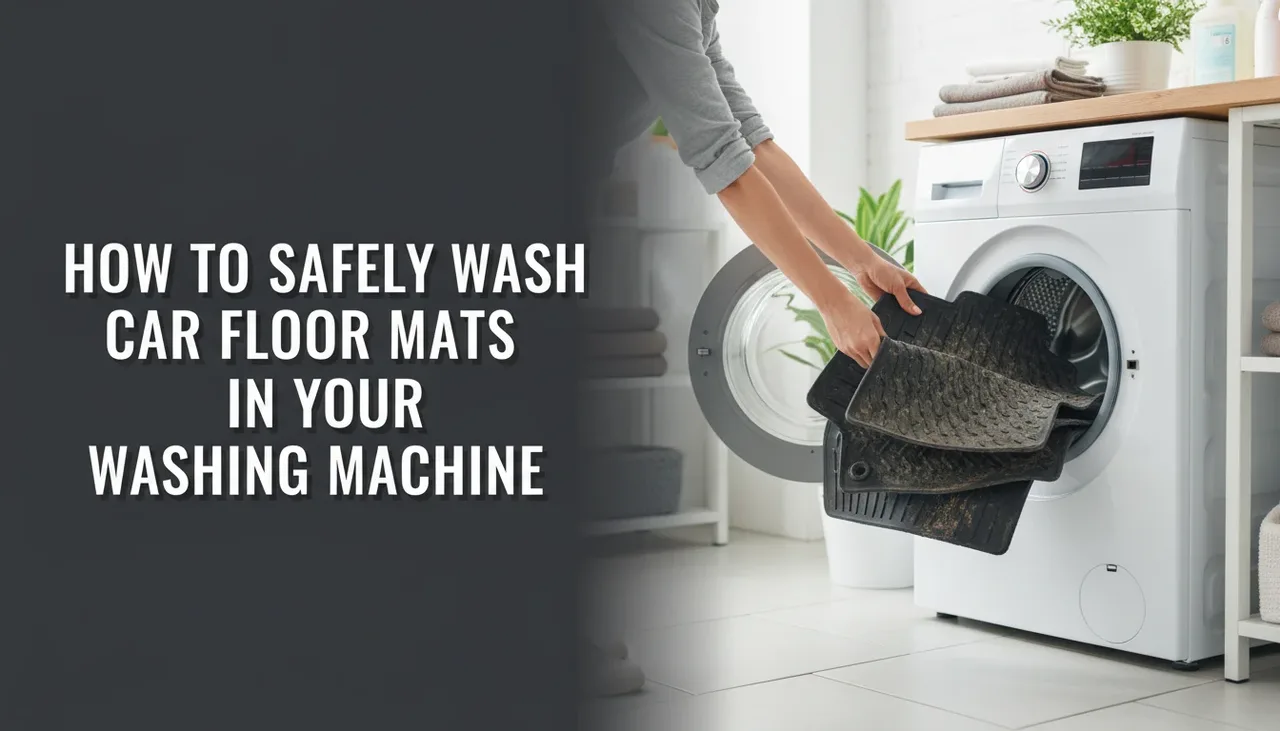
How to Wash Car Floor Mats in Washing Machine
Wash only flexible, labeled machine-washable carpet mats, using a cold gentle cycle, mild detergent, low spin, and complete air drying. A clean 2020s-style fabric mat with a rubberized underside can usually handle this method when the backing is intact, while a thick molded rubber mat cannot.
Start by checking the care label or the manufacturer’s cleaning instructions. If the label says hand wash, spot clean, or air dry only, follow that direction instead of gambling on the washer.
- Remove the mats from the vehicle. Never wash a mat while it’s still clipped, hooked, or resting over the car’s carpet.
- Shake and vacuum both sides. Knock loose gravel, sand, hair, and dried mud outside before the mat reaches the washer.
- Inspect the backing and edges. Reject any mat with peeling foam, crumbling rubber, exposed fabric, metal hooks, sharp trim, or a heavy layer of grease.
- Pre-treat visible stains. Dab a small amount of mild liquid laundry detergent onto coffee, food, or salt marks, then work the spot gently with a soft brush.
- Load the washer carefully. Wash two lightweight mats together if they balance well, or add a few old towels to cushion the load.
- Choose cold water and a gentle cycle. Select low or medium spin when the washer offers that choice.
- Use a small amount of mild detergent. Too much soap can stay trapped in dense fibers and make the mat feel sticky.
- Run an extra rinse if needed. This helps when the mat has a strong detergent smell or a thick pile.
- Remove the mats right away. Shake out the fibers, reshape the edges, and hang the mats where air can move around both sides.
- Wait until the mats are fully dry. A mat can feel dry on top while the backing remains damp underneath.
A front-load washer often handles flat fabric mats more gently because there’s no center agitator pulling at the edges. A top-load washer can still work, but balance matters because one heavy, wet mat may thump against the tub.
Do you need hot water to cut road grime? Usually, no. Cold water is kinder to rubberized backing and helps reduce shrinking, while a proper pre-treatment handles most everyday dirt.
A normal household detergent is fine for washable carpet mats, but skip bleach, fabric softener, strong degreasers, and powdered soap. Bleach can fade fibers and weaken backing, while fabric softener may leave a slick film that attracts dirt.
What Can Go In The Washer?
The safest candidates are thin or medium-weight carpet floor mats made from nylon, polyester, or similar synthetic fibers. The underside should feel flexible and firmly attached, with no cracking, flaking, or sticky patches.
A manufacturer’s machine-washable label carries more weight than the mat’s appearance. Two mats can look nearly identical while one has a stable woven backing and the other has foam that breaks apart after one wet cycle.
| Mat type | Washing machine? | Better cleaning choice | Main concern |
|---|---|---|---|
| Thin synthetic carpet mat with intact backing | Usually yes | Cold gentle cycle | Shrinkage or edge curling |
| Thick carpet mat with foam backing | Usually no | Hand wash or professional cleaning | Backing can crumble |
| Flexible rubber mat | Usually no | Hose, brush, and mild soap | Warping and washer imbalance |
| Heavy molded all-weather mat | No | Rinse and scrub outdoors | Too heavy when wet |
| Vinyl mat | No | Hand wash with mild cleaner | Surface damage or bending |
| Mat with metal clips or sharp trim | No | Hand clean carefully | Drum and clothing damage |
| Mat with peeling or cracked backing | No | Replace or hand clean briefly | Loose material can clog the washer |
A mat that passes the material check can still be too dirty for a washing machine. Wet oil, tar, road salt paste, and thick mud belong outside first because the washer isn’t a magic dirt eraser.
If you need a broader method for different materials, clean car floor mats by matching the tool to the mat instead of forcing every type into the washer.
- Machine wash only flexible carpet mats with an intact, labeled-safe backing.
- Use cold water, mild detergent, gentle action, and low spin.
- Air dry completely before putting a mat back in the vehicle.
- Hand clean rubber, vinyl, molded, damaged, and metal-trimmed mats.
Preparing Car Floor Mats Before the Wash
Most washing-machine problems start before the cycle, so loose dirt, stains, and damaged backing should be handled before loading the drum. A few minutes of preparation keeps grit out of the washer and gives the detergent a fair shot at the fibers.
Begin outdoors or over a trash bag. Hold each mat by one corner, shake it firmly, and brush the underside with a stiff nylon brush if dried mud has formed a crust.
Vacuum the top, bottom, seams, and grooves. A crevice tool helps pull sand from the edge binding, where it can hide until the mat becomes wet and heavy.
Treat stains based on what caused them:
- Road salt: Rinse or blot with cool water before washing.
- Coffee or soda: Dab with mild detergent and cool water.
- Grease: Blot first, then use a small amount of a fabric-safe degreasing cleaner.
- Mud: Let the mud dry, brush off the loose material, and wash the remaining mark.
- Pet mess: Remove solids, blot moisture, and use an enzyme cleaner labeled safe for synthetic fabric.
- Odor: Air the mat out before washing rather than covering the smell with perfume.
Never pour a strong cleaner directly onto a backing you haven’t tested. Apply a small amount to a hidden corner, wait several minutes, and check for color transfer, stickiness, or surface damage.
Can you put a heavily greasy mat in the washer after a quick wipe? I wouldn’t. Grease can spread through the wash water, cling to the drum, and land on the next load, so outdoor hand cleaning is the smarter move.
I once tried to rescue a mat covered in thick winter slush by washing it before brushing it clean. The washer shook so hard that a nearby bottle rattled off the shelf, and the mat still had gritty streaks afterward. Since then, I remove every loose particle first, because five minutes outside beats an angry spin cycle.
The same pre-cleaning rule applies to a pressure washer. If you need stronger outdoor rinsing, clean mats with a pressure washer from a safe distance and keep the spray away from peeling edges.
Vinegar can help with some light mineral residue and mild odors, but it isn’t a universal stain remover. If the mat’s care instructions allow it, a diluted vinegar solution may suit a small spot, while grease, biological stains, and heavy grime call for a cleaner made for that job, as explained in cleaning mats with vinegar.
Tools And Supplies That Help
You don’t need a cabinet full of specialty products. Set out these basic items before starting:
- Vacuum cleaner with a crevice attachment.
- Soft brush for carpet fibers.
- Old towels for balancing the washer load.
- Mild liquid laundry detergent.
- Clean bucket or hose for pre-rinsing.
- Drying rack, clothesline, or sturdy hanger.
- Rubber gloves if the mats contain pet mess or harsh road residue.
A soft brush is safer than a wire brush because wire can pull carpet loops and scratch rubber. Old towels also help absorb loose grime, though you shouldn’t use valuable white towels with a dark, dirty mat.
Pro Tip: Photograph the mat’s position before removing it if the driver and passenger mats have different shapes. It’s easy to put a left-side mat on the wrong side after cleaning, especially in a dim garage.
Machine Settings That Protect The Mat
A gentle cycle reduces twisting, which is what tends to curl edges and stress bonded layers. Use cold or cool water, low spin, and the smallest detergent dose that can clean the load.
Avoid a sanitize cycle, steam setting, heavy-duty cycle, or long hot wash unless the care label specifically approves it. Heat and aggressive movement can loosen adhesive and make a once-flat mat look like a potato chip.
Wash mats separately from regular clothes whenever possible. If the mats need extra balance, add old towels, but don’t fill the drum tightly because the mats need room to move through the water.
Drying and Troubleshooting Washed Car Mats
Drying is as important as washing because trapped moisture causes odor, mildew growth, backing damage, and damp vehicle carpet. The safest method is slow air drying in a shaded, well-ventilated place with both sides exposed.
Take the mats out as soon as the cycle ends. Shake each one, press it gently between towels if it’s dripping, and reshape the corners while the fabric is still flexible.
Hang the mat from a wide support or lay it flat on a clean drying rack. A narrow wire hanger can leave a deep crease, while laying a wet mat directly on concrete can trap water against the underside.
Air movement matters more than high heat. A box fan aimed across the mat can shorten drying time, but leave space between the fan and the mat so the setup stays stable.
Never return a damp mat to the car. The moisture can soak into the carpet pad, fog nearby windows, and create a sour odor that’s much harder to remove than the original stain.
Can you put car floor mats in the dryer? Some fabric mats may tolerate a no-heat tumble setting, but most car mats are safer outside the dryer because heat can shrink fibers, curl edges, or damage rubberized backing, as covered in dryer risks for car mats.
For a detailed air-drying routine, dry wet car floor mats with the underside exposed and plenty of airflow. A mat that feels cool is not always wet, so press a dry paper towel against the backing before reinstalling it.
How Long Should Mats Dry?
Drying time depends on thickness, humidity, airflow, and how much water the mat retained during the spin cycle. Thin synthetic mats may dry in several hours, while thick mats can need a full day or longer.
Use these checks instead of guessing:
- Press a dry towel against the top and underside.
- Feel the backing near the corners and stitched seams.
- Bend the mat lightly and check for a cool, damp sensation.
- Smell the backing for any sour or musty odor.
- Wait longer if any section feels heavier or colder than the rest.
Sunlight can help, but strong heat may fade dark carpet and dry rubber unevenly. A shaded spot with moving air is usually gentler, especially for mats with a glued or laminated underside.
Fixing Common Washing Problems
A clean mat can still come out with a problem. The table below points you toward the likely cause without sending you through a dozen random fixes.
| Problem after washing | Likely cause | What to do |
|---|---|---|
| Sour or musty smell | Backing stayed damp | Air dry longer with airflow |
| White crust remains | Road salt was not pre-rinsed | Blot or rinse, then wash again gently |
| Mat feels sticky | Too much detergent or softener | Rinse with plain cool water |
| Edges curl upward | Heat, hard spin, or drying over a narrow support | Reshape while damp and dry flat |
| Backing flakes off | Old foam or rubber broke down | Stop machine washing and replace the mat |
| Dirt remains in the pile | Loose grime was not removed first | Vacuum, brush, and spot clean |
| Washer thumps | Wet load was unbalanced | Stop the cycle and redistribute the load |
| Color fades | Hot water, bleach, or strong cleaner | Use cold water and test cleaners first |
Don’t force a damaged mat back into service. A loose backing can catch under a pedal, bunch beneath your feet, or shed material into the vehicle carpet.
Important Tip: Check the driver’s mat after reinstalling it. The mat must sit flat, lock onto its original anchors, and stay clear of the accelerator, brake, and clutch pedals.
Cleaning Carpet Mats Without A Washing Machine
Some carpet mats need a gentler method, especially thick mats, luxury mats, and mats with foam or layered backing. Vacuum thoroughly, blot stains with a damp cloth, scrub lightly with diluted cleaner, and remove soap with a clean damp cloth instead of soaking the entire mat.
A wet carpet mat should never sit folded in a pile. Lay it flat or hang it wide enough for air to reach the backing, and rotate it during drying if one side stays damp.
If the mat is delicate or expensive, clean carpet car floor mats with controlled moisture rather than a full soak. That approach takes longer, but it protects adhesives and reduces the chance of a warped backing.
When Replacement Makes More Sense
Cleaning can’t repair a backing that has turned brittle, cracked, or gummy. Replacement is usually the sensible choice when the mat no longer lies flat, the anchor hole is torn, or the carpet has separated from the underside.
A bad mat can become a driving hazard if it slides forward or bunches beneath a pedal. No fresh scent is worth risking pedal movement.
Check the replacement mat’s shape and anchor points before buying. A mat that looks close in a product photo may still leave an exposed footwell or interfere with the factory clips.
FAQs About How to Wash Car Floor Mats in Washing Machine
Can all car floor mats go in a washing machine?
No, only flexible carpet mats labeled or clearly rated for machine washing should go into a washing machine. Rubber, vinyl, thick molded, metal-trimmed, cracked, and peeling mats are safer when cleaned by hand because wet weight, heat, and spinning can damage the mat or washer.
What detergent should I use for car floor mats?
Use a small amount of mild liquid laundry detergent for machine-washable carpet mats. Avoid bleach, fabric softener, and strong solvent cleaners because those products can fade fibers, leave residue, weaken the backing, or create a slick surface that attracts new dirt.
What temperature should I wash car floor mats on?
Cold or cool water is the safest choice for most washable car floor mats. Lower temperatures reduce the chance of shrinking carpet fibers, loosening adhesive, or warping a rubberized backing, while pre-treating handles stains better than hot water alone.
Can I wash car floor mats with clothes?
It’s better to wash car floor mats separately or with old towels rather than regular clothing. Mats can release grit, hair, detergent residue, and loose backing material, while towels help balance a light load without risking your everyday clothes.
How do I stop washed car mats from smelling?
Remove the mats promptly, rinse away excess detergent, and dry both sides completely with moving air. A musty smell usually means moisture remains in the backing or seams, so more drying time works better than adding perfume or extra soap.
Can I machine wash floor mats with rubber backing?
Sometimes, but only when the care label specifically permits machine washing and the rubber backing is flexible, intact, and firmly attached. Thick or aging rubber-backed mats should be hand cleaned because spinning can crack the backing, shed pieces, or throw the washer off balance.
A Safer Cleaning Routine for Your Car
Washing-machine cleaning works well when the mat is a washable carpet type with a healthy backing. Cold water, gentle movement, mild detergent, and patient air drying give you the clean result without asking the washer to handle materials it wasn’t meant to handle.
My practical choice is simple: machine wash thin, sound carpet mats, and hand clean everything thick, rubbery, damaged, or uncertain. Start by checking the label and the underside, then remove loose grit before the mat gets anywhere near the washer.