
The fastest safe fix is to remove the mats, wash them with mild soap and cool water, rinse well, and air them outside in the shade for several hours. Most new rubber floor mat odors fade as trapped manufacturing chemicals release, but cleaning and fresh air can shorten the process.
Does the smell hit you the second you open the car door? Are you worried that the odor will cling to the carpet, make passengers nauseous, or turn every drive into a headache?
I once rushed a set of new mats into a customer’s freshly detailed car because rain was moving in. The next morning, the cabin smelled like a hot tire shop, and I had to pull the mats back out and air the whole car again. That’s a common mistake, not a dumb one.
I wrote this guide for anyone who wants a clean-smelling car without guessing at harsh chemicals or scrubbing rubber until it looks tired. You’ll get a simple process, realistic airing times, safer cleaning choices, and signs that a mat may not be worth keeping.
Get this right, and you’ll protect the vehicle carpet, avoid headaches, and stop the rubber odor from spreading through the cabin. Skip the drying step, and moisture can create a musty smell that’s even harder to remove.
This takes about 9 minutes to read, and you’ll learn how to:
- Wash new rubber mats without damaging their surface.
- Reduce rubber odor with air, shade, and absorbent materials.
- Tell normal off-gassing from a product that should be returned.
- Keep the smell from soaking into the car’s carpet and upholstery.
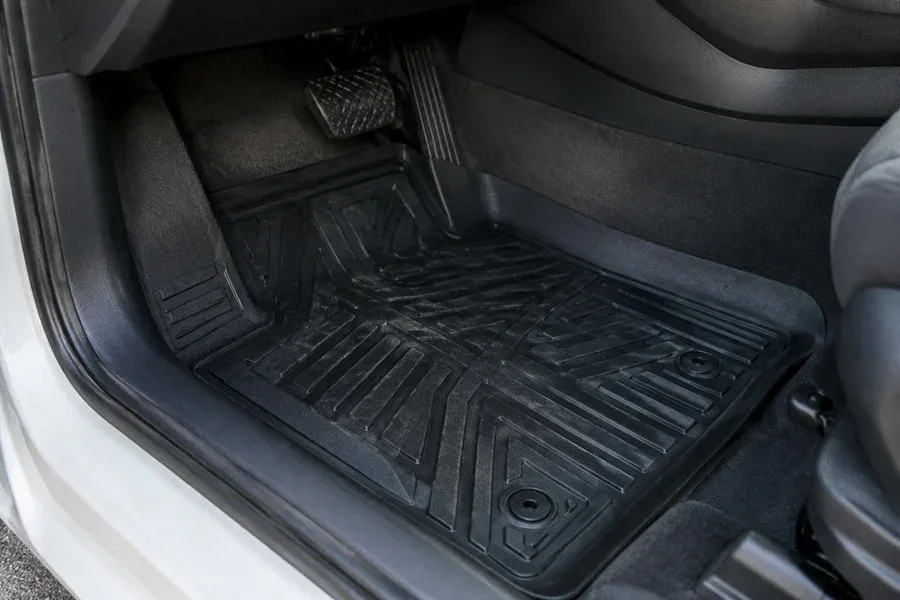
How to Get Rid of Rubber Smell from New Car Floor Mats
Remove the mats, wash them gently, rinse away all soap, and let them dry completely in moving outdoor air before putting them back in the car. A light odor often improves after one cleaning and one or two days of airing.
Follow these steps in order:
-
Take every mat out of the vehicle. Include the cargo mat if it has the same odor. Leaving one mat inside can keep the cabin smelling like rubber, even after you clean the others.
-
Shake off loose dust and inspect the surface. Look for oily film, powdery residue, stickers, or packaging material. A sticky coating can hold odor against the rubber.
-
Rinse the mats with cool or lukewarm water. A garden hose works well, but don’t use a high-pressure nozzle close to the mat. Strong pressure can force water into molded edges, clips, or fabric-backed areas.
-
Wash with a small amount of mild dish soap. Use a soft nylon brush or microfiber cloth and work across the top, grooves, underside, and raised edges. The goal is to lift residue, not grind the rubber.
-
Rinse until the water runs clear and feels slick-free. Leftover soap can attract dust and leave a sharp scent of its own.
-
Dry the mats fully in shade with good airflow. Stand each mat at an angle so water drains from the channels. A covered porch, open garage, or shaded outdoor spot works better than a sealed bathroom.
-
Check the odor after drying. Place the mats near the car, not inside it, and give them a quick smell. If the scent is mild and fading, install them.
If the odor is still harsh, repeat the airing process before using the car.
The smell comes from off-gassing, which means small airborne chemicals are slowly leaving the rubber or plastic mixture. Heat speeds up that release, but hot temperatures can also make the odor much stronger and may cause some mats to warp.
A clean mat can still smell for a few days. That doesn’t automatically mean the product is defective, especially if the scent drops each day and doesn’t cause irritation.
How long should new rubber mats air out?
Most new rubber floor mats need 24 to 72 hours of outdoor airing after washing, though dense mats or strong odors can take a week. Temperature, humidity, rubber thickness, and packaging time all affect the schedule.
Fresh air matters more than simply leaving the mats in a closed garage. Air movement carries odor away instead of trapping it around the surface.
If you need to use the vehicle sooner, run the car outside with the doors open for 10 to 15 minutes after the mats are fully dry. Never run the engine in a closed garage, and don’t leave children or pets inside during the airing process.
- Wash the mats before trying stronger odor treatments.
- Dry every groove and underside completely.
- Shade and airflow are safer than intense heat.
- A fading smell is usually less concerning than a sharp, irritating odor.
Cleaning Methods That Reduce Rubber Odor
Mild soap, fresh air, and dry absorbents are the safest starting tools for most rubber floor mats. Strong solvents can damage the rubber, leave a second odor, or create fumes inside the car.
Start with the least aggressive method that matches the problem:
| Method | Best use | How to use it | Main caution |
|---|---|---|---|
| Mild dish soap and water | New-mat residue and oily film | Scrub gently, rinse fully, air-dry | Don’t leave soap trapped in grooves |
| Baking soda | Light odor after washing | Dust a thin layer on dry mats, leave overnight, then brush off | Keep powder out of vehicle vents |
| Activated charcoal | Odor lingering in the cabin | Place a charcoal pouch near the mats for several days | Charcoal absorbs odor in the air, not heavy residue |
| Outdoor shade and airflow | General rubber smell | Stand mats upright in a breezy shaded area | Avoid sealed bags or damp storage |
| Diluted white vinegar | Mild odor on some washable surfaces | Test a hidden spot first, wipe lightly, rinse | Vinegar can affect coatings or backing |
| Solvent cleaners | Grease, tar, or heavy contamination | Use only if the manufacturer allows it | Many solvents damage rubber and create strong fumes |
Baking soda works best after washing, not as a replacement for washing. A dry mat can receive a light dusting, sit overnight, and get brushed or vacuumed the next day.
For the strongest cabin odor, place activated charcoal near the cleaned mats while they air. Charcoal helps with airborne odor, but it won’t remove oily residue from the mat itself.
What if the rubber mat has a fabric backing? Use less water and avoid soaking the backing for a long period, because trapped moisture can create mildew or a sour smell. Blot the backing with towels, then stand the mat upright until no cool or damp areas remain.
Products to avoid on rubber floor mats
Avoid gasoline, paint thinner, acetone, brake cleaner, strong degreasers, chlorine bleach, and ammonia-based cleaners. These products can dry, swell, discolor, or soften rubber, and their fumes can remain inside a closed vehicle.
Skip scented sprays that only cover the smell. A pine or citrus fragrance layered over rubber odor usually creates a chemical mix that feels stronger, not cleaner.
I once used a heavy citrus cleaner on a rubber mat that had picked up grease near a workshop entrance. The grease came off, but the mat stayed tacky and smelled like solvent for days, so the shortcut cost more time than a mild soap wash would have.
Pro Tip: Test any cleaner on a small hidden corner first, then wait until the spot dries. A product can look harmless while wet and still leave a pale mark or sticky finish after drying.
Can sunlight remove the smell faster?
Mild outdoor warmth can help, but direct midday sun can make the odor spike and may warp thin mats. Shade, moving air, and moderate temperatures give you a steadier result.
Never place rubber mats on a hot vehicle hood, asphalt driveway, or metal roof. Heat from those surfaces can soften the backing and leave a bent edge that no longer sits flat.
A shaded area with a breeze is the sweet spot. Rotate the mats halfway through the drying period so the underside gets equal airflow.
Fixing Odor That Has Reached the Car Interior
If the mats have already made the cabin smell, clean the mats first, then air and wipe the nearby carpeted areas. Treating the car before removing the odor source wastes time.
Remove the mats and leave the doors or windows open in a safe outdoor location. While the mats are outside, vacuum the carpet under each mat and wipe hard plastic trim with a barely damp microfiber cloth.
Don’t soak automotive carpet. Press a dry towel into any damp area, then use moving air to dry it. Wet carpet under a rubber mat can hold moisture for days, especially in the rear footwells.
For a lingering cabin odor, place activated charcoal or an odor-absorbing pouch inside the vehicle for several days. Keep the pouch away from pedals, seat tracks, vents, and any location where it could interfere with driving.
Readers often search for ways to remove car mat odors when the smell isn’t limited to new rubber. That broader problem can come from spilled drinks, wet carpet, mildew, food, smoke, or old fabric mats, and each source needs a different cleaning approach.
A simple interior airing routine
- Park outdoors in a secure, dry area.
- Remove the mats and open the doors or windows.
- Vacuum the exposed carpet and seat edges.
- Wipe hard surfaces with a clean, damp microfiber cloth.
- Let the interior air for 15 to 30 minutes.
- Close the vehicle and check the odor later, when the cabin has cooled.
Don’t leave the car open in rain, strong dust, or direct heat. A clean interior can pick up a new problem quickly when the weather turns.
The car’s cabin air filter may also hold odors, especially if the smell has been present for many days. A filter usually isn’t the first thing to replace for new-mat odor, but checking the filter makes sense if the cabin smells musty with the mats removed.
When should you stop using the mats?
Stop using the mats if the odor causes headache, burning eyes, coughing, dizziness, nausea, or throat irritation. Move the mats outside, air out the vehicle, and contact the seller or manufacturer about a return or replacement.
Check the fit before putting any mat back into the driver’s footwell. A mat must sit flat, lock into its factory anchors when provided, and stay clear of the accelerator and brake pedals.
Important Tip: Never trim a mat by guesswork to make it fit. A poorly altered mat can curl, slide, or catch under a pedal, which creates a driving hazard unrelated to the smell.
Some odors point to a bigger issue:
- A sharp chemical odor that doesn’t fade after several days of airing.
- Oily residue that keeps returning after washing.
- A sticky, greasy, or powdery surface.
- Warping, shrinking, cracking, or peeling backing.
- Strong fumes that return immediately after the mats enter the car.
A replacement may be smarter than repeated cleaning when the rubber keeps releasing a harsh odor or the mat no longer lies flat.
Choosing Lower-Odor Replacement Mats
A lower-odor floor mat usually has clean molding, a stable backing, and clear material information from the seller. Price alone doesn’t tell you how strongly a mat will smell.
People looking at replacement options often compare durable rubber car mats because thicker all-weather mats can offer better coverage and easier cleanup. The best choice still depends on vehicle fit, anchor design, edge height, climate, and how much mud or snow reaches your floor.
Check these details before buying:
- Vehicle-specific fit: The mat should follow the floor shape without curling at the pedals.
- Retention system: Factory clips, hooks, or anchors help prevent movement.
- Raised edges: Tall borders hold water, slush, and spilled drinks.
- Material information: Thermoplastic rubber and similar compounds can vary in odor and flexibility.
- Backing design: A textured or grippy backing should stay in place without leaving residue.
- Return policy: A return option matters if the odor stays harsh after proper airing.
A thinner universal mat may cost less, but gaps around the edges can let salt, muddy water, and melted snow reach the carpet. A thick mat with poor fit creates a different headache, so fit beats thickness by itself.
New mat storage before installation
Leave new mats out of sealed plastic for a while if the packaging allows it. Store them flat or in the position recommended by the manufacturer, away from fuel, paint, heaters, and damp floors.
Don’t stack wet mats together. Trapped moisture between rubber surfaces can create a sour smell that gets mistaken for manufacturing odor.
If the mats arrive cold and stiff, allow them to reach room temperature before checking fit. Forcing a folded mat into place can create permanent creases along the edges.
FAQs About How to Get Rid of Rubber Smell from New Car Floor Mats
How long does the rubber smell from new car floor mats last?
A mild rubber smell often fades within a few days to a week after washing and airing. Dense mats, sealed packaging, hot weather, and poor airflow can extend the odor. A smell that stays sharp or causes irritation after several days deserves a return or manufacturer review.
Can I use baking soda on rubber car floor mats?
Yes, baking soda can help with light odor on fully dry rubber floor mats. Sprinkle a thin layer, leave it overnight, then brush or vacuum it away outdoors. Baking soda won’t remove oily manufacturing residue, so wash the mat first when the surface feels slick.
Can I put rubber floor mats in the washing machine?
No, a washing machine is a poor choice for most rubber car floor mats. The weight and stiff edges can damage the machine, while agitation can bend the mat or tear a fabric backing. Hand washing with mild soap gives you better control and a cleaner rinse.
Does vinegar remove the smell from new rubber mats?
Diluted white vinegar may reduce mild odor on some washable rubber surfaces, but vinegar isn’t a guaranteed fix. Test a hidden area first, avoid soaking the backing, and rinse afterward. Never mix vinegar with bleach or other cleaners because the combination can create dangerous fumes.
Should I leave new rubber mats in the sun?
Brief mild sunlight may help, but strong direct sun can make rubber smell much stronger and can warp thin mats. Outdoor shade with steady airflow is the safer choice. Keep mats away from hot asphalt, metal surfaces, and enclosed areas where fumes can collect.
When should I return new rubber car mats?
Return new rubber car mats when the odor remains harsh after washing and several days of airing, or when the mats cause headaches, nausea, coughing, or eye irritation. Return them also if the mats warp, stay greasy, shed residue, or fail to fit securely around the pedals.
A Cleaner-Smelling Car Starts with Patience
New rubber floor mats usually need cleaning, airflow, and time more than aggressive chemicals. Wash them gently, dry every groove, air them in the shade, and keep them out of the vehicle until the odor has clearly softened.
My pick is the simple route because it protects the rubber and gives you a clean answer about the product itself. If the smell keeps hitting hard or makes you feel unwell, stop trying to cover it and replace the mats. A few extra days of airing is a small trade for a car that feels fresh every time you open the door.