
A tonneau cover can work with a BACKRACK if the rack, mounting brackets, and cover are designed to fit together on your truck. Some setups need specific adapter brackets, and others won’t fit without changing the cover or rack.
Are you trying to keep gear dry without giving up the ability to carry ladders or lumber? Or have you found a rack and cover you like, only to wonder whether their mounting hardware will fight over the same bed rails?
I once lined up a rack with a cover already on the truck and found that the mounting feet landed right where the cover’s side rail needed to sit. The extra fitting work was a pain, and I had to take the cover back off before I could sort it out. That’s a common mistake, not a dumb one.
I wrote this for anyone who wants covered bed storage and the open carrying space a BACKRACK gives you. The short version is that compatibility depends on your exact truck, rack, cover, and mounting hardware, not just the name of the cover style.
Get the fit right and you can protect cargo, carry long materials, and avoid buying hardware twice. Get it wrong and you may wind up with a cover that won’t close, a rack that doesn’t sit square, or clamps pressing on parts they shouldn’t.
This should take about 9 minutes to read. You’ll come away knowing how to:
- Check whether your rack and cover can share the bed rails.
- Spot the details that affect fit before buying brackets.
- Install the setup without blocking the tailgate or cover.
- Know when a different cover or rack arrangement makes more sense.
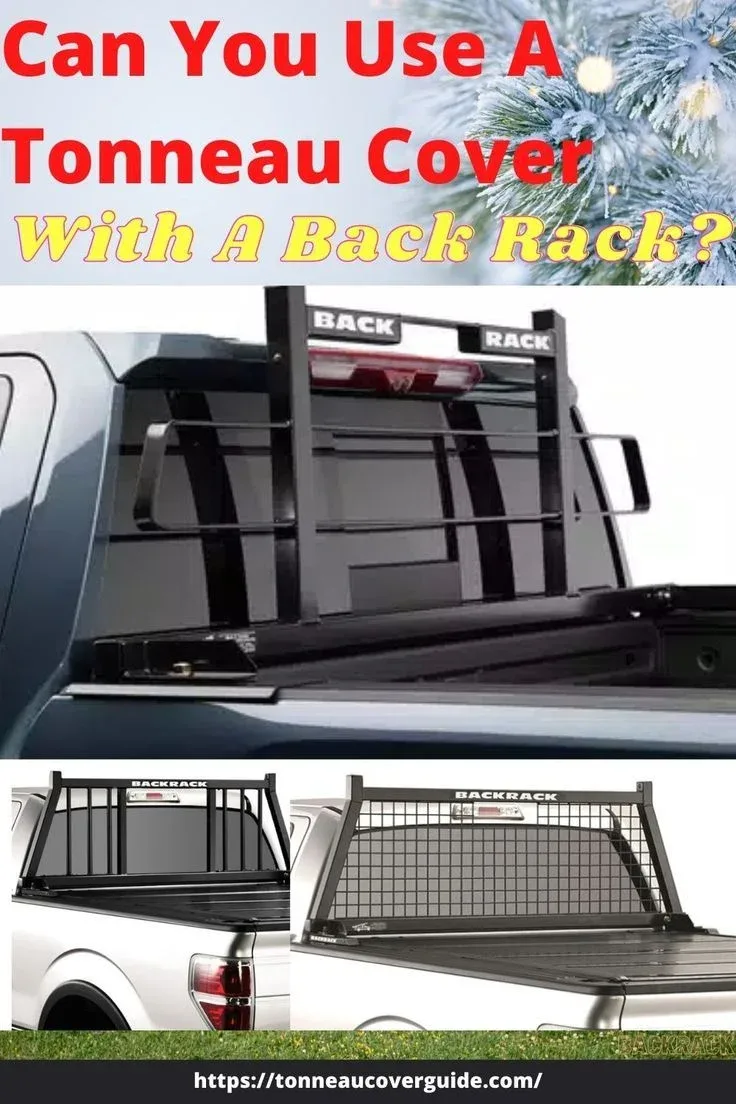
Can You Use A Tonneau Cover with A BACKRACK?
Yes, you can use a tonneau cover with a BACKRACK when the specific rack and cover can share your truck’s mounting points, often with the right adapter brackets. Check the truck year, make, model, bed length, rack part number, cover part number, and installation instructions before ordering.
A rack’s mounting feet may occupy the same space as a cover’s side rails or clamps. An adapter can change where or how the rack mounts, but “adapter” doesn’t mean universal compatibility. The parts need to be approved for your exact combination.
Start with the fitment information for both products. Look for a compatibility statement that names your truck and cover, not just a product photo showing a similar pickup.
- Write down your truck’s year, make, model, cab style, and bed length.
- Find the exact BACKRACK model and mounting kit you plan to use.
- Find the tonneau cover’s brand, model, and rail or clamp style.
- Check the rack and cover instructions for approved combinations and required adapters.
- Confirm that the cover can open, close, and latch with the rack installed.
If the maker’s fit information is unclear, ask the manufacturer or a dealer to confirm the parts together before you buy. A few minutes with the part numbers can save you from returning a heavy rack or drilling holes you didn’t need.
Here’s a quick way to think about common setups. These are general tendencies, not a promise that any particular pair will fit.
| Tonneau cover style | What can affect BACKRACK fit | What to check |
|---|---|---|
| Roll-up cover | Side rails, clamps, and roll-up clearance | Whether the rack feet clear the rails and rolled cover |
| Folding cover | Panel hinges, rails, and folded-panel space | Whether the panels fold fully with the rack in place |
| Retractable cover | Canister and track location | Whether the rack mounts clear the tracks and canister |
| Hinged or one-piece cover | Lift path, hinges, and rear mounting points | Whether the lid opens without hitting the rack |
| Snap-on or rail-free cover | Edge attachment and access to bed rails | Whether the rack’s mounting hardware has a secure approved location |
The cover style by itself doesn’t settle the question. Two roll-up covers can use different rail shapes, clamps, and mounting locations, so check the product model rather than relying on a broad label.
Which Mounting Details Decide Compatibility?
The mounting system usually decides whether a cover and rack can share a bed. Pay special attention to where each product attaches, how much space its hardware takes, and whether the cover’s opening path reaches the rack.
A bed rail is the upper edge along each side of the truck bed. Many covers clamp to the rail or use rails that sit inside it, while a rack may also need space near the rail for its feet or mounting plates. When those parts overlap, the rack can push a cover rail out of position or stop a clamp from gripping properly.
A stake pocket is an opening near a bed corner that some accessories use for mounting. It may offer a different mounting point, but don’t assume a rack can use it unless the rack’s instructions list that mounting method for your truck. The truck bed and the accessory hardware need to support the arrangement as designed.
Compatibility can turn on small details that are easy to miss in a product listing:
- Inside-mount and top-mount rails: A cover that sits inside the bed rail may leave different space than one that sits on top.
- Clamp position: A clamp placed under a rack foot may not hold the cover rail securely.
- Bed-rail caps: Plastic or other bed-edge trim can affect how certain hardware seats.
- Tailgate seal: A rack or cover rail may change how the cover meets the tailgate.
- Opening clearance: A folded panel, raised lid, or rolled cover still needs room to move.
- Bed liner: A thick liner or bed cap can change the clearance available to mounting hardware.
If you’re choosing the cover now, compare its mounting layout with the rack before picking a style. A good tonneau cover fit guide can help you weigh truck fit, cover types, and features, but the rack maker’s part-specific information still needs to confirm the pairing.
How can you tell whether a cover is only rubbing or actually mounted wrong? Don’t judge by appearance alone; check that every rail sits in its intended position, every clamp grips as directed, and the cover opens and latches without force. If a panel binds or a rail shifts when you press it, stop and correct the fit before driving.
I once tried to save time by leaving a cover rail in place while shifting a rack mount around it. The rack looked close to straight, but the parts didn’t sit as the instructions showed, so I backed up and reset the layout. A neat-looking fit isn’t worth it if the hardware can’t hold the way it was built to.
How to Install and Use the Combined Setup Safely
Install the cover and BACKRACK according to their instructions, using only the approved brackets and mounting points. Don’t force parts together, trim rails, or drill new holes unless the manufacturer specifically allows that change.
Before you start, park on level ground and remove loose cargo from the bed. Keep small hardware together, use the right tools, and ask someone to help lift bulky pieces; a rack can be awkward even when it isn’t especially heavy.
- Lay out the parts. Match each bracket and fastener to the instructions, and check that the kit is intended for your truck and rack.
- Set up the cover rails. Install the rails and clamps as directed, leaving them loose only where the instructions call for adjustment.
- Position the rack mounts. Put each rack foot and adapter where the instructions show. Don’t place a clamp under a foot or improvise a sandwich of hardware.
- Square the rack. Check that the rack sits evenly behind the cab and that its feet rest flat against their intended mounting surfaces.
- Tighten in the stated order. Use the torque value and tightening sequence in the product instructions if they provide one. Don’t guess at a torque setting.
- Test the cover. Open and close it through its full range, then check the tailgate, seals, latches, and any moving panels.
- Recheck after installation. Inspect the fasteners and rails after the first drive and follow the maker’s guidance for later checks.
Important Tip: Keep your hands clear of folding panels, spring-loaded covers, and pinch points while testing the cover. If a panel suddenly shifts or a rail moves, stop before adjusting the hardware.
A cover that opens only when you loosen a rack bolt isn’t a finished installation. Neither is one that leaves the tailgate unable to close or the cover’s latch partly blocked. Make those checks before loading the truck, while the bed is empty and the problem is easy to spot.
Pro Tip: Take a few photos of the hardware layout before you tighten everything. If you need to check the instructions again or move a bracket, those photos can help you tell which part belongs where.
What if you also need to carry ladders above the bed? A BACKRACK may be part of a larger carrying setup, but a second rack or support system can add more mounting conflicts and load limits to check. The same fitment questions apply to using a ladder rack with a tonneau cover: confirm the exact parts, clearances, and approved mounting points rather than assuming all rack systems work together.
What to Do If the Cover and Rack Don’T Fit
If the cover and rack interfere, stop before forcing the parts into place. The safest fix is usually to identify the conflict and select an approved mounting kit or a different compatible component.
Use the symptom to narrow down what’s wrong:
| What you notice | Likely issue | Sensible next step |
|---|---|---|
| Cover rail won’t sit flat | Rack foot or bracket overlaps the rail | Compare the mounting layout with the instructions |
| Cover clamp won’t reach or grip | Hardware occupies the clamp location | Check for an approved adapter or alternate cover |
| Folding panel hits the rack | Panel travel lacks clearance | Check whether the setup is listed as compatible |
| Retractable cover stops short | Rack hardware interferes with a track or canister | Confirm clearances with both product makers |
| Rack sits crooked | Mounts may be in the wrong position or on an uneven surface | Stop and reinstall according to the instructions |
| Tailgate won’t close or seal | Cover position or rear edge may be out of place | Reset the cover and check its fit instructions |
Don’t use extra washers, longer bolts, or home-made plates to bridge a gap unless the manufacturer approves them. Changing the hardware stack can affect how securely the rack is held, and the fix may hide a poor fit rather than solve it.
If no approved setup works with your parts, choose a different cover, rack, or mounting arrangement. That can feel like a setback, but it beats putting time into a setup that won’t open cleanly or hold as intended.
How Much Weight Can the Setup Carry?
The allowed load depends on the rack, mounting kit, truck, and the way the load is carried. Use the lowest applicable limit in the product instructions, and don’t treat a tonneau cover as a support surface unless its maker says it can carry a load.
A rack’s capacity and your truck’s payload rating are separate limits. Payload is the weight the truck can carry, including passengers and cargo; a rack may have its own limit for cargo carried on or supported by the rack. The truck’s limit can still matter even when the rack itself allows more.
Long items need care, too. A ladder that extends beyond the rack can shift in wind or during braking, so follow the rack maker’s rules for tie-down points and load placement. Don’t attach straps to cover panels or rails unless the cover maker allows it.
Before driving, check that:
- The rack is firmly mounted and sits square.
- The cover latches and moves as intended.
- Cargo is secured at approved points and can’t slide forward, backward, or sideways.
- The load stays within every applicable limit.
- No item blocks your view, lights, or license plate.
If you can’t confirm the correct load limit or mounting method, pause and ask the product maker or a qualified installer. Guessing is a lousy way to find out which part was carrying more than it should.
FAQs About Can You Use a Tonneau Cover with a Backrack
Do I need a special BACKRACK adapter for a tonneau cover?
Sometimes. A special adapter may be required when a cover rail or clamp uses the same bed-rail space as the rack mount, but the correct hardware depends on your truck and exact product models. Check the BACKRACK and cover fit information together before ordering, since an adapter for one setup may not fit another.
Can I keep my existing tonneau cover when adding a BACKRACK?
Possibly, if the rack’s mounting system clears the cover rails and clamps and the cover still opens and latches properly. Find the cover’s model number and compare it with the rack’s approved fit information. If the combination isn’t listed, ask the manufacturers before assuming your existing cover will work.
Will a BACKRACK stop my tonneau cover from opening?
It can if the rack blocks the cover’s opening path or takes up space needed by a folding panel, lid, or rolled cover. Test the cover through its full movement after installation. Don’t force a panel past the rack, since pressure can bend a part or damage a latch.
Can I drill the bed rail to make a BACKRACK and cover fit?
Don’t drill the bed rail or change the rack hardware unless the product instructions specifically approve that modification. A new hole can affect the truck bed, mounting strength, or warranty terms. If the listed brackets don’t fit the parts you have, use an approved mounting option or choose compatible equipment.
Can I carry cargo on a tonneau cover with a BACKRACK installed?
Only if the tonneau cover maker specifically allows cargo on that cover. A rack nearby doesn’t make the cover a load platform, and each product has separate limits and mounting rules. Check the cover, rack, and truck ratings before carrying anything, and secure cargo only at approved tie-down points.
Make the Fit Check Before You Buy
A tonneau cover and BACKRACK can share a truck when their mounting systems are made to work together. The part numbers, bracket layout, and cover movement matter more than the general style of either product.
I’d confirm compatibility before buying rather than rely on a clever workaround after the boxes arrive. That’s the easiest way to avoid a cover that binds, a rack that sits wrong, or a bed rail crowded with hardware.
Your next step is simple: write down the truck details and exact product numbers, then confirm the pairing with the manufacturers’ fit information. If the match is approved, install it as directed and test the cover before loading the bed.