Finding the best mobile car battery charger is useful when you want something compact enough to move between vehicles, store on a garage shelf, or carry with your automotive tools without dealing with a large old-fashioned charging station.
Portability alone is not enough, though. A good mobile charger also needs the correct charging current, compatibility with your battery chemistry, automatic overcharge protection, dependable clamps, and a maintenance mode that can safely keep a vehicle ready during long periods of storage.
My primary recommendation is the NOCO GENIUS1 1A Smart Car Battery Charger. It is exceptionally compact, supports both 6V and 12V systems, handles several lead-acid chemistries plus compatible LiFePO4 batteries, and can even initiate charging on extremely low-voltage batteries using Force Mode. The 1A output is intentionally slow, so I consider it especially attractive for maintenance, small batteries, seasonal vehicles, and buyers who value minimum size over fast charging.
For drivers who mainly need to keep a normal 12V lead-acid car battery healthy during storage, the Battery Tender Plus 1.25A Battery Charger and Maintainer is another proven option. Its 1.25A four-stage charging process, 14–80Ah recommended battery range, automatic float maintenance, and simple connection system make it easy to move between cars, motorcycles, boats, and other equipment.
If faster charging matters more than having the smallest possible charger, I would step up to the NOCO GENIUS10 10A Smart Car Battery Charger. Its 10A output is much better suited to recovering full-size automotive batteries in a practical amount of time, while Force Mode, 12V Repair, temperature compensation, AGM and lithium modes, and a battery-capacity range up to 230Ah make it the most capable charger among these five.
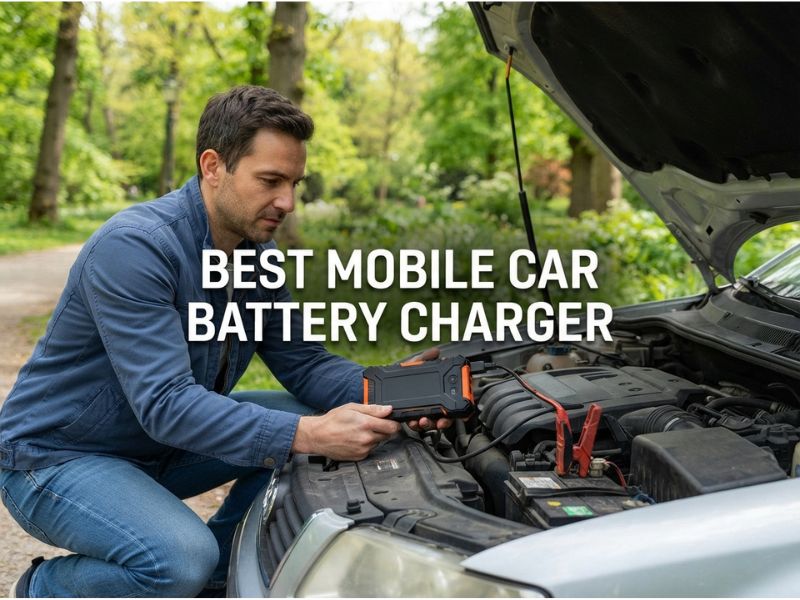
Best Mobile Car Battery Charger
| Image | Product Name | Check Price |
|---|---|---|
Best Choice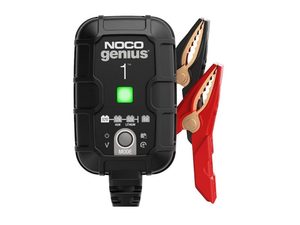 | NOCO GENIUS1 1A Smart Car Battery Charger | Check Price |
Second Best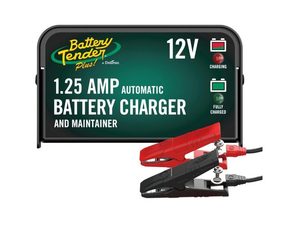 | Battery Tender Plus 1.25A Battery Charger and Maintainer | Check Price |
Third Choice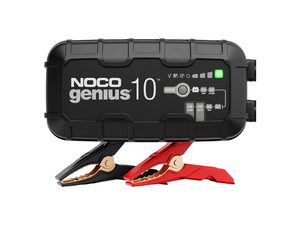 | NOCO GENIUS10 10A Smart Car Battery Charger | Check Price |
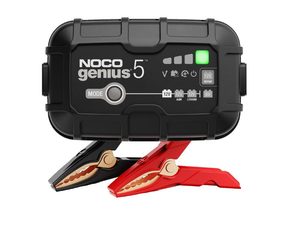 | NOCO GENIUS5 5A Smart Car Battery Charger | Check Price |
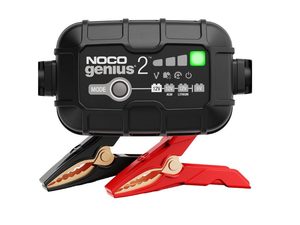 | NOCO GENIUS2 2A Smart Car Battery Charger | Check Price |
1. NOCO GENIUS1 1A Smart Car Battery Charger – Best Compact Overall Pick
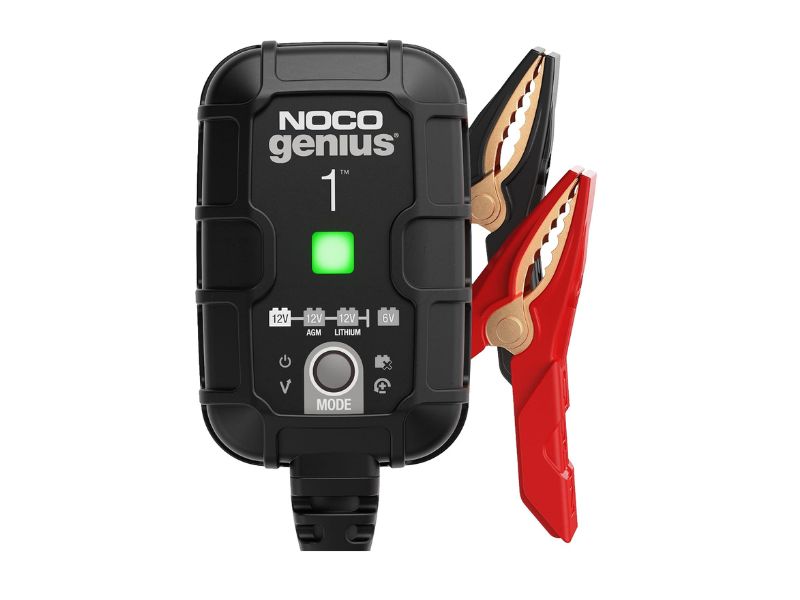
Key Features
- 1A charging current
- 6V and 12V operation
- Up to 30Ah recommended charging capacity
- Maintains larger batteries after charging
- Flooded, AGM, gel, EFB, maintenance-free, and calcium support
- Compatible 12V lithium/LiFePO4 charging mode
- Force Mode for batteries below 1V
- Automatic temperature compensation
- Reverse-polarity protection
- Spark-proof protection
- Automatic maintenance mode
- Compact 0.77-pound construction
The NOCO GENIUS1 is my first selection because portability is the main reason most people search for a mobile car battery charger, and few genuine automotive smart chargers are easier to move and store.
At less than a pound, it fits easily into a small automotive-tool drawer, cabinet, trunk organizer, or RV storage compartment. That is a major difference from traditional transformer-based chargers that can be awkward to carry between vehicles.
Despite its compact dimensions, the GENIUS1 is considerably more sophisticated than a simple trickle charger.
It supports both 6V and 12V batteries, allowing it to work with modern cars as well as motorcycles, powersports equipment, classic vehicles, lawn tractors, and other applications.
Battery chemistry support is also broad.
For lead-acid applications, it can accommodate common flooded, AGM, gel, EFB, calcium, and maintenance-free designs. It also has a dedicated mode for compatible 12V lithium-ion batteries, including LiFePO4 batteries equipped with an appropriate battery-management system.
One of its most valuable features is low-voltage recovery.
Automatic smart chargers often need to detect a minimum battery voltage before they begin charging. If a battery has been severely discharged, the charger may interpret the low voltage as if no battery were connected.
The GENIUS1 can normally detect a battery down to approximately 1 volt. Its Force Mode can manually initiate charging below that level.
That can be useful for a vehicle that has been parked for an extended period or a battery that was accidentally drained by lights or accessories.
Force Mode should be used carefully, however. When manually forcing a charge, some automatic safety detection is bypassed. Confirm the battery’s voltage, chemistry, polarity, and physical condition before using it.
The integrated thermal sensor is another meaningful feature.
Lead-acid batteries do not require exactly the same charging voltage in every temperature. Cold batteries can be undercharged when voltage is too low, while excessive charging voltage in hot conditions can accelerate gassing and deterioration.
Temperature compensation allows the charger to adjust automatically as ambient conditions change.
The biggest limitation is charging speed.
At 1 amp, this is not my preferred charger for restoring a large 70Ah or 90Ah automotive battery from a deep discharge. Its recommended charging-capacity range is up to approximately 30Ah, although it can maintain larger batteries after they are charged.
For a normal full-size vehicle battery that needs substantial energy restored, the GENIUS5 or GENIUS10 makes more sense.
Where the GENIUS1 excels is compact, intelligent maintenance.
Connect it to a seasonal car, motorcycle, small vehicle, generator battery, or other compatible battery and allow the charger to automatically transition into maintenance after charging.
What I Like
I like how much charging intelligence fits into such a small package. Battery-chemistry selection, temperature compensation, low-voltage charging, Force Mode, automatic maintenance, reverse-polarity protection, and lithium compatibility give it substantially more versatility than its 1A rating suggests.
The compact dimensions also make it genuinely mobile. Moving it from one vehicle to another requires almost no effort.
What I Do Not Like
One amp is slow for a large automotive battery.
If your main objective is recovering deeply discharged car and truck batteries rather than maintaining them, the GENIUS10 is a more practical choice.
The LED interface is functional but does not provide the detailed voltage and amperage information found on chargers with a full LCD screen.
Verdict
The NOCO GENIUS1 is my best mobile car battery charger for portability and maintenance. It is ideal when you want an extremely compact smart charger and do not require fast high-amperage charging.
2. Battery Tender Plus 1.25A Battery Charger and Maintainer – Best for Long-Term Vehicle Storage
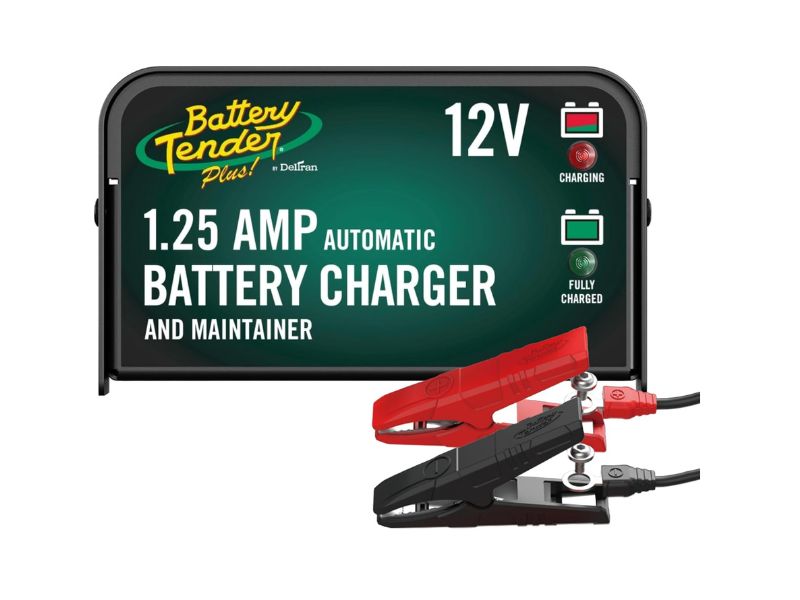
Key Features
- 1.25A charging current
- 12V operation
- Recommended for approximately 14–80Ah batteries
- Flooded lead-acid compatibility
- AGM compatibility
- GEL compatibility
- Sealed maintenance-free battery support
- Four-stage charging process
- Automatic float maintenance
- Reverse-polarity protection
- Temperature-compensated charging
- Quick-connect harness system
The Battery Tender Plus is one of the better choices when your primary concern is not emergency charging but keeping a car battery healthy while the vehicle sits.
Its 1.25A charging rate is modest, but the recommended range extends from approximately 14Ah to 80Ah. That covers many passenger-car batteries more appropriately than extremely low-output motorcycle maintainers.
The charging process uses multiple stages.
During initialization, the charger evaluates the connected battery and connection. It then moves into bulk charging, where full available current is used to restore capacity.
As the battery approaches full charge, the charger enters an absorption phase and reduces current.
Finally, it switches to float maintenance.
That last stage is important for vehicles that spend weeks or months parked. A traditional unregulated trickle charger can continue applying current unnecessarily and potentially contribute to battery deterioration.
A proper maintainer monitors voltage and supplies energy only as needed.
This makes the Battery Tender Plus particularly suitable for:
- Classic cars
- Weekend vehicles
- Convertibles stored during winter
- Second cars
- Seasonal SUVs
- Collector vehicles
- Motorcycles
- Boats
- Lawn equipment
Portability is another advantage.
The charger is small enough to move easily between vehicles, and the quick-disconnect system allows you to install ring terminals permanently on a battery.
Instead of opening the battery compartment and attaching clamps every time, you can simply connect the charger harness.
For a frequently stored vehicle, that convenience encourages regular battery maintenance.
Its 1.25A rate remains the primary limitation.
If a 70Ah battery is seriously discharged, replenishing tens of amp-hours at only 1.25A requires patience. Real charging time will be longer than the simple capacity/current calculation because charging efficiency is not 100 percent and current decreases near full charge.
The Battery Tender Plus therefore works best when you prevent severe discharge rather than waiting until the vehicle cannot start.
What I Like
The simple automatic charging process is ideal for drivers who do not want to constantly adjust settings.
The 14–80Ah range also makes the Plus appropriate for many compact and normal automotive batteries, while the quick-connect harness makes repeated use convenient.
What I Do Not Like
Charging speed is slow when a car battery is deeply depleted.
It is also primarily a lead-acid charger, so buyers with modern lithium starting batteries should select a charger specifically designed for their battery chemistry.
Verdict
The Battery Tender Plus is my preferred mobile charger for seasonal vehicle storage and long-term battery maintenance.
3. NOCO GENIUS10 10A Smart Car Battery Charger – Best for Fast Automotive Charging

Key Features
- 10A charging current
- 6V and 12V operation
- Up to 230Ah charging capacity
- Maintains batteries of larger capacities
- Flooded, AGM, gel, EFB, calcium, and maintenance-free support
- Compatible LiFePO4 charging
- Force Mode for extremely discharged batteries
- Dedicated 12V Repair Mode
- 12V Supply Mode
- Automatic temperature compensation
- IP65-rated housing protection
- Approximately 3.33-pound unit weight
Although the GENIUS10 is physically larger than the GENIUS1, I consider it the most practical choice here for drivers who actually need to recharge full-size car batteries regularly.
Ten amps dramatically changes charging time.
Imagine a 70Ah battery that has dropped to approximately 30 percent state of charge. Roughly 49Ah of capacity may need to be replaced.
A 1A charger can require several days once charging losses and current tapering are considered.
A 10A charger can restore the bulk of that missing energy within several hours, although the final absorption phase will extend total charging time.
NOCO rates the GENIUS10 for batteries up to approximately 230Ah, giving it enough capacity for much more than passenger cars.
It can serve:
- Cars
- SUVs
- Pickup trucks
- RV batteries
- Marine batteries
- Deep-cycle batteries
- Powersports batteries
- Lawn equipment
- Auxiliary battery systems
Its battery-chemistry support is similarly broad.
Dedicated charging modes cover conventional lead-acid batteries, AGM batteries, and compatible lithium batteries.
The Force Mode feature adds usefulness when a battery is severely depleted. If terminal voltage drops below the normal detection threshold, Force Mode allows charging to be initiated manually.
There is also a dedicated 12V Repair Mode.
Repair mode is intended for certain old, idle, sulfated, or stratified lead-acid batteries. It uses a specialized high-voltage conditioning cycle in an attempt to improve battery performance.
This feature needs realistic expectations.
A charger can sometimes improve electrochemical problems such as sulfation. It cannot rebuild a physically damaged plate, repair an internal short, or restore a battery that has permanently lost most of its capacity.
The GENIUS10 also provides a 12V Supply Mode, which allows it to operate as a regulated DC power source for compatible applications.
One practical use is maintaining vehicle electrical power during certain battery-service procedures, provided the vehicle and service procedure allow it.
Temperature compensation adjusts the charging process in changing ambient temperatures.
The IP65-rated housing offers useful resistance to dust and water jets, although the charger should still be used and stored according to its electrical-safety instructions.
The trade-off for all of this capability is size.
At more than three pounds, the GENIUS10 is not nearly as tiny as the GENIUS1. It is still highly portable compared with older heavy-duty shop chargers, but this is the model you carry because you want charging power, not minimum dimensions.
What I Like
The 10A output is the major advantage. It gives the GENIUS10 enough charging performance to be genuinely useful with large automotive batteries.
I also like the 230Ah range, Force Mode, Repair Mode, lithium compatibility, temperature compensation, and 12V supply capability.
What I Do Not Like
It is more expensive and significantly larger than low-output maintainers.
The LED status interface is also less informative than a full numerical screen showing exact voltage and current.
Verdict
If “mobile” means you want a portable charger you can carry around the garage but still need serious automotive charging performance, the GENIUS10 is the strongest option among these five.
4. NOCO GENIUS5 5A Smart Car Battery Charger – Best Balance of Size and Charging Speed

Key Features
- 5A charging current
- 6V and 12V operation
- Up to 120Ah battery capacity
- Flooded lead-acid charging
- AGM charging mode
- GEL, EFB, calcium, and maintenance-free support
- Compatible LiFePO4 mode
- Force Mode below normal detection voltage
- 12V Repair Mode
- Temperature compensation
- Automatic maintenance
- IP65-rated enclosure
The GENIUS5 may actually be the easiest model to recommend when you want to balance portable dimensions with enough current for normal automotive charging.
Its 5A output sits directly between low-output maintainers and high-output garage chargers.
Five amps is enough to recover many passenger-car batteries overnight without making the charger large or cumbersome.
For example, if a 60Ah battery needs approximately 30Ah restored, the mathematical minimum at 5A is six hours. Real charging will take longer because of efficiency losses and current tapering, but an overnight charging window is realistic in many situations.
NOCO specifies a charging-capacity range up to approximately 120Ah.
That comfortably covers many:
- Compact-car batteries
- Sedan batteries
- Crossover batteries
- SUV batteries
- Light-truck batteries
- Marine batteries
- RV auxiliary batteries
The same broad charging modes found on the larger GENIUS10 are available.
That includes conventional 12V lead-acid, AGM, compatible lithium, and 6V operation.
Force Mode allows charging to begin when a compatible battery has fallen below 1 volt.
A separate 12V Repair Mode attempts to condition old, idle, sulfated, or stratified lead-acid batteries.
Again, repair should not be interpreted as guaranteed restoration.
If a battery cannot retain a full charge or fails a proper battery test after charging, replacement may be more appropriate.
For me, the strongest argument for the GENIUS5 is convenience.
The charger is powerful enough that using it does not feel like an all-weekend project, but small enough to move easily between a family car, motorcycle, lawn tractor, boat, or recreational vehicle.
Automatic temperature compensation also helps when the charger moves between a heated garage, cold winter driveway, and warmer seasonal conditions.
What I Like
Five amps is an excellent practical output for home automotive use.
The 120Ah battery range means it is not limited to small batteries, and the combination of Force Mode, Repair Mode, AGM support, lithium compatibility, and automatic maintenance gives it excellent versatility.
What I Do Not Like
It charges approximately half as quickly as the GENIUS10 under comparable conditions.
If large dead batteries are common in your garage, paying for the 10A model may save considerable time.
Verdict
The GENIUS5 is my favorite middle-ground mobile charger, combining compact storage with enough power for most normal automotive batteries.
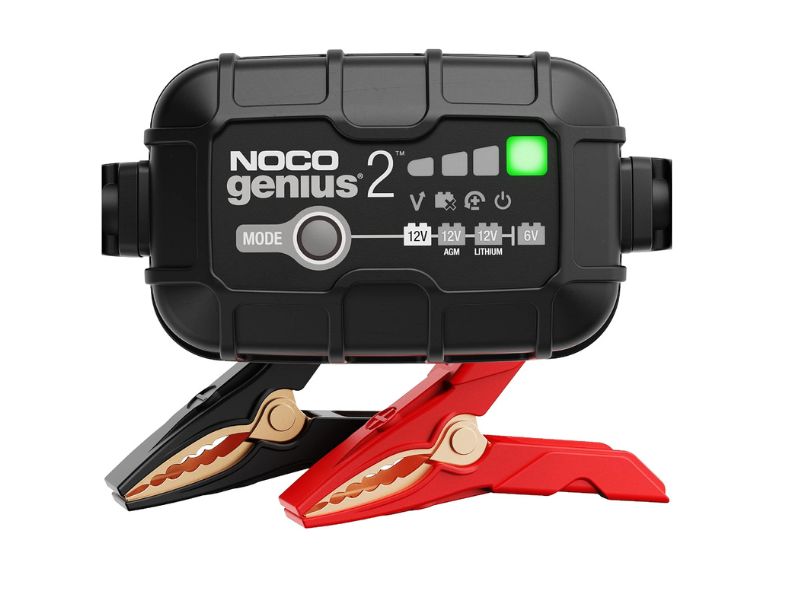
5. NOCO GENIUS2 2A Smart Car Battery Charger – Best Lightweight Multi-Vehicle Charger
Key Features
- 2A charging output
- 6V and 12V compatibility
- Up to approximately 40Ah recommended charging capacity
- Flooded, AGM, GEL, EFB, calcium, and maintenance-free support
- Compatible lithium/LiFePO4 mode
- Force Mode for very low-voltage batteries
- Automatic temperature compensation
- Reverse-polarity protection
- Automatic maintenance
- Compact portable housing
The GENIUS2 makes sense when 1 amp feels unnecessarily slow but you still want a charger significantly smaller than a typical 5A or 10A automotive unit.
Its 2A charging output is particularly useful for:
- Motorcycles
- Small automotive batteries
- ATVs
- UTVs
- Lawn tractors
- Generator starting batteries
- Powersports batteries
- Seasonal vehicles
NOCO specifies approximately 40Ah as the normal charging-capacity limit.
That means I would not make this my first choice for quickly recovering a large 80Ah truck battery.
It can still be useful as a maintainer for larger batteries, but charging a substantial capacity deficit at two amps takes time.
Like the other current GENIUS models, it supports several battery chemistries.
That flexibility is valuable in a household where the same charger moves between a motorcycle in summer, a lawn tractor in winter, and a car that occasionally sits for several weeks.
The charger also supports Force Mode.
A battery can sometimes become so discharged that its voltage falls below the threshold an automatic charger expects to see.
After verifying that the battery is safe and compatible, Force Mode gives the user a method of manually initiating the charging process.
Temperature compensation is another important feature for a small mobile charger because a portable product is likely to experience varying environments.
It might be used in an unheated garage during January and then on lawn equipment in a hot garage during July.
Automatically adjusting charging behavior improves consistency through these changes.
The GENIUS2 does not offer the same dedicated 12V Repair Mode available on the GENIUS5 and GENIUS10.
That is one reason I would spend more for the 5A version if battery recovery is an important part of your intended use.
What I Like
The 2A output remains compact while offering noticeably more charging capability than a 1A maintainer.
The broad chemistry selection, low-voltage charging capability, temperature compensation, and automatic maintenance make it useful across many types of equipment.
What I Do Not Like
The 40Ah recommended charging range is smaller than the battery capacity in many modern cars and trucks.
For normal full-size automotive batteries, the GENIUS5 is generally a better fit.
Verdict
The GENIUS2 is a good mobile option when you want a small multi-vehicle charger for lighter charging and maintenance duties.
Mobile Car Battery Charger Comparison
| Product | Charging Current | Voltage | Charging Capacity | AGM | Lithium | Low-Voltage Recovery | Main Strength |
| NOCO GENIUS1 | 1A | 6V/12V | Up to 30Ah | Yes | Yes | Force Mode | Maximum portability |
| Battery Tender Plus | 1.25A | 12V | 14–80Ah | Yes | No | Low-voltage initialization | Long-term maintenance |
| NOCO GENIUS10 | 10A | 6V/12V | Up to 230Ah | Yes | Yes | Force Mode | Fast full-size charging |
| NOCO GENIUS5 | 5A | 6V/12V | Up to 120Ah | Yes | Yes | Force Mode | Size/power balance |
| NOCO GENIUS2 | 2A | 6V/12V | Up to 40Ah | Yes | Yes | Force Mode | Small multi-vehicle use |
Quick Comparison
The NOCO GENIUS1 is the easiest to carry and store, making it my primary recommendation when compactness and maintenance are the priority.
The Battery Tender Plus is particularly good for vehicles that spend weeks or months parked because its 1.25A four-stage system is designed around charging and long-term maintenance.
For genuine full-size automotive charging, the NOCO GENIUS10 is substantially faster and supports batteries up to 230Ah.
The GENIUS5 provides the best compromise between physical size and charging time, while the GENIUS2 is a useful lightweight choice for smaller batteries and multi-vehicle maintenance.
How I Chose the Best Mobile Car Battery Chargers
A charger does not become “mobile” simply because it has a carrying handle.
For this guide, I prioritized models that are compact enough to move easily between vehicles and store without dedicating a large area of the garage to battery equipment.
I also considered:
- Charging amperage
- Battery-capacity range
- 6V and 12V compatibility
- AGM support
- Flooded lead-acid compatibility
- Lithium support where available
- Low-voltage charging capability
- Automatic charging stages
- Maintenance mode
- Temperature compensation
- Reverse-polarity protection
- Clamp quality
- Weight
- Storage convenience
- Established ownership history
Current buyer-feedback volume was particularly important for ranking.
That produces several products from the same manufacturer because those models currently have exceptionally large feedback bases. Rather than replacing them with less-established products solely to create brand variety, I prioritized the requested review-volume order.
What Is a Mobile Car Battery Charger?
A mobile car battery charger is generally a compact battery charger that can be carried easily from one vehicle to another.
Most products in this category still require household AC electricity.
“Mobile” or “portable” therefore does not automatically mean cordless.
This distinction is important.
A traditional portable smart charger converts household AC power into controlled DC charging current.
A cordless jump starter contains an internal lithium battery and can provide starting current without an electrical outlet.
A true cordless battery charger contains enough internal stored energy to transfer charge into the vehicle battery, but these products are much less common.
For home-garage use, portable plug-in smart chargers normally provide the best combination of size, charging capability, safety, and value.
Mobile Battery Charger vs Jump Starter
These tools are frequently confused.
Mobile Battery Charger
A charger restores energy to the battery over time.
It typically:
- Plugs into AC power
- Supplies controlled charging current
- Takes several hours
- Can fully recharge the battery
- Can maintain the battery during storage
Portable Jump Starter
A jump starter contains its own battery.
It:
- Works without an outlet
- Delivers very high current briefly
- Helps crank the engine
- Does not normally fully recharge the car battery
If your vehicle will not start in a parking lot, a jump starter is more useful.
If your battery is discharged in your driveway and you have several hours available, a proper charger provides a more complete solution.
How Many Amps Should a Mobile Car Battery Charger Have?
Charging current is one of the most important specifications.
1A Charger
One amp is excellent for:
- Maintenance
- Small batteries
- Motorcycles
- Seasonal equipment
- Slow overnight or multi-day charging
It is less convenient for deeply discharged full-size automotive batteries.
2A Charger
Two amps provides somewhat faster recovery while remaining compact.
It suits:
- Powersports batteries
- Small car batteries
- Seasonal vehicles
- Light maintenance
5A Charger
Five amps is one of the best general-purpose rates for home automotive use.
It can recharge many car batteries overnight while still allowing the charger to remain relatively small.
10A Charger
Ten amps is preferable when:
- Batteries frequently become deeply discharged
- You own trucks or SUVs
- Charging speed matters
- Battery capacity is high
- Several vehicles share one charger
For a typical modern passenger car, I consider 5A to 10A the most useful range for actual charging.
How Long Does It Take to Charge a Car Battery?
Charging time is influenced primarily by:
- Battery capacity
- State of charge
- Charging current
- Battery chemistry
- Temperature
- Battery age
- Charging efficiency
- Current taper near full charge
A rough calculation is:
Missing amp-hours ÷ charger amps = approximate bulk charging time
Suppose a 60Ah battery is at approximately 50 percent charge.
About 30Ah needs to be restored.
Approximate theoretical times would be:
| Charger | Basic Calculation |
| 1A | 30 hours |
| 1.25A | 24 hours |
| 2A | 15 hours |
| 5A | 6 hours |
| 10A | 3 hours |
Actual charging takes longer because chargers reduce current near full charge and the process is not perfectly efficient.
This illustrates why output matters so much.
A 1A charger and 10A charger may both be intelligent and safe, but they are designed for different jobs.
How to Match Charger Size to Battery Capacity
Battery capacity is normally measured in amp-hours (Ah).
A compact car might use a battery around 40–60Ah.
Larger SUVs and trucks may use substantially greater capacities.
Before choosing a charger, check the battery label or manufacturer specifications.
This matters because the models in this guide cover very different ranges.
The GENIUS1 is designed for charging batteries up to approximately 30Ah.
The GENIUS2 increases that to about 40Ah.
Battery Tender Plus covers approximately 14–80Ah.
GENIUS5 reaches approximately 120Ah.
GENIUS10 handles batteries up to approximately 230Ah.
A lower-rated charger may still maintain a larger battery after it is full, but that does not make it the ideal tool for restoring a large deeply discharged battery.
Understanding Battery Chemistry
Flooded Lead-Acid
This is the traditional automotive battery design.
Liquid electrolyte surrounds lead plates inside the case.
A modern automatic charger usually includes a normal 12V mode suitable for conventional flooded batteries.
AGM
Absorbent Glass Mat batteries hold electrolyte in fiberglass separators.
AGM batteries are increasingly common in:
- Start-stop cars
- Luxury vehicles
- SUVs
- Trucks
- Vehicles with high electrical demand
Choose a charger with an explicit AGM mode whenever the manufacturer recommends it.
EFB
Enhanced Flooded Battery technology is commonly used in entry-level start-stop vehicles.
Many modern multi-chemistry chargers can accommodate EFB batteries.
GEL
Gel batteries use a gelled electrolyte.
Charging-voltage requirements differ, so use a charger that explicitly supports this chemistry.
Lithium Iron Phosphate
LiFePO4 batteries require a charging profile different from conventional lead-acid batteries.
Never select a lead-acid repair or desulfation mode when charging lithium.
Only use lithium charging on batteries equipped with the required battery-management system and when both battery and charger instructions permit it.
Why AGM Mode Matters
AGM batteries can require a charging voltage slightly different from conventional flooded batteries.
Using the proper charging profile helps ensure the battery reaches the correct state of charge without unnecessary stress.
If your vehicle uses an AGM battery, models such as the GENIUS1, GENIUS2, GENIUS5, and GENIUS10 provide dedicated AGM modes.
The Battery Tender Plus also supports AGM batteries within its recommended capacity range.
Why Temperature Compensation Matters
Charging voltage requirements change with temperature.
Cold batteries can need a higher charging voltage, while excessive voltage during hot weather can contribute to overcharging.
An integrated temperature sensor allows a smart charger to adjust automatically.
This is useful in the United States because garage temperatures can vary enormously.
A charger might be operating near freezing during a Minnesota winter and in significant heat inside an Arizona garage.
Temperature compensation helps the same charger adapt to these conditions.
What Is Force Mode?
Force Mode is designed for batteries that have discharged below the charger’s normal automatic detection threshold.
Most smart chargers check battery voltage before current begins flowing.
This is an important safety feature because the charger needs to know that a battery is actually connected.
If the battery voltage becomes extremely low, however, the charger may interpret the connection as an open circuit.
Force Mode allows the user to manually start charging.
On compatible GENIUS models, this can allow charging to begin even below 1 volt.
Force Mode Requires Extra Care
Do not activate it simply because normal charging will not start.
First check whether the battery is:
- Correct voltage
- Correct chemistry
- Connected with correct polarity
- Physically intact
- Not frozen
- Not leaking
- Not severely swollen
A battery that cannot be detected may be deeply discharged, but it may also be defective.
What Is Battery Repair Mode?
Repair mode is different from Force Mode.
Force Mode helps the charger begin charging an extremely low-voltage battery.
Repair mode attempts to improve particular problems in a lead-acid battery.
These may include:
- Sulfation
- Acid stratification
- Long periods of partial charge
- Battery inactivity
The GENIUS5 and GENIUS10 provide dedicated 12V Repair modes.
Repair modes sometimes use elevated voltage or special conditioning cycles.
For that reason, read the charger and vehicle instructions carefully before using them while the battery remains electrically connected to sensitive vehicle electronics.
Can a Smart Charger Restore a Dead Battery?
Sometimes.
The important question is why the battery is dead.
Recoverable Situation
A relatively healthy battery may simply be discharged because:
- Headlights were left on
- The vehicle sat unused
- A door remained open
- A dash camera drained it
- Cold weather reduced available capacity
Charging can often restore normal operation.
Potentially Recoverable Degradation
A battery that remained partially discharged may develop sulfation.
Conditioning may improve some batteries, although results vary.
Non-Recoverable Failure
A charger cannot repair:
- A cracked case
- An internal short
- Broken plates
- Severe active-material loss
- A leaking battery
- A battery that cannot retain energy
- Certain failed cells
If the battery charges but becomes dead again quickly, have it tested rather than repeatedly running repair cycles.
How to Charge a Car Battery Safely
Always follow your battery, vehicle, and charger instructions.
A typical smart-charger procedure is:
1. Switch Off the Vehicle
Turn off the ignition and unnecessary electrical equipment.
2. Identify the Battery Type
Check whether the battery is:
- Flooded
- AGM
- EFB
- GEL
- Lithium
3. Inspect the Battery
Do not charge a battery that is visibly:
- Cracked
- Leaking
- Severely swollen
- Frozen
- Mechanically damaged
4. Work in a Ventilated Area
Lead-acid batteries can release flammable hydrogen gas during charging.
Keep sparks, cigarettes, flames, and ignition sources away.
5. Connect the Charger
Follow the vehicle and charger manufacturer’s connection order.
Many modern vehicles provide specific remote charging points.
6. Select the Correct Mode
Confirm:
- Voltage
- Battery chemistry
- Specialized modes
Do not guess.
7. Connect AC Power
Follow the charger’s specified sequence.
8. Monitor Initial Operation
Confirm that no fault indicator appears and the battery does not become excessively hot.
9. Allow the Smart Cycle to Finish
Automatic chargers reduce charging current as the battery approaches full capacity.
10. Disconnect Correctly
Follow the charger’s instructions, usually removing external AC power before disconnecting clamps.
Can You Charge a Battery While It Is Still in the Car?
For many vehicles and modern smart chargers, yes.
However, the vehicle owner’s manual takes priority.
Some modern vehicles use:
- Battery-monitoring sensors
- Intelligent alternators
- Remote charging terminals
- Battery management modules
- Sensitive electronic systems
The manufacturer may specify exactly where the charger’s negative connection should be made.
Connecting directly to the wrong point can bypass current monitoring on certain vehicles.
Does a Mobile Car Charger Need an Electrical Outlet?
Most do.
Every charger in this top-five list converts external AC power into controlled battery-charging current.
They are portable, but they are not cordless energy sources.
If you need emergency power in a parking lot or roadside location without AC electricity, use a portable jump starter or a genuine battery-powered charging system.
This distinction is important because a compact plug-in charger and a lithium jump pack solve different problems.
Is a Mobile Charger Good for Road Trips?
A plug-in charger can still be useful during a road trip if you have access to:
- Hotel electricity
- Campsite shore power
- RV hookups
- Garage outlets
- Generator AC power
However, I would not rely on a plug-in charger as the only dead-battery emergency tool during travel.
A portable jump starter is much more useful when no electrical outlet is available.
A strong roadside battery kit can include both.
Using a Mobile Charger With a Generator
A battery charger can often operate from a suitable generator if:
- Generator output meets charger requirements
- Voltage and frequency are stable
- Generator capacity is adequate
- Charger instructions allow the power source
Sensitive electronic chargers generally perform best from clean, stable AC power.
Check both generator and charger specifications.
Should You Keep the Charger in Your Car?
You can keep a compact charger in a vehicle, but consider where it will actually be useful.
Because the charger needs external electricity, storing it permanently in the trunk does not provide the same emergency independence as a jump starter.
It makes more sense to carry one when:
- Traveling to a cabin
- Camping with shore power
- Working around vehicles
- Transporting seasonal equipment
- Visiting a property with multiple batteries
For normal commuting, I would keep the battery charger in the garage and a jump starter in the car.
Mobile Charger for Start-Stop Cars
Many start-stop vehicles use AGM or EFB batteries.
Before connecting a charger:
- Identify the exact battery type.
- Choose the appropriate charging mode.
- Locate the manufacturer’s designated charging terminals.
- Avoid bypassing battery sensors.
- Follow the vehicle manual.
The GENIUS chargers in this list support both AGM and EFB lead-acid designs.
Mobile Charger for Classic Cars
Classic vehicles are an excellent use case for compact maintainers because they may spend weeks parked between drives.
A charger can help:
- Keep battery voltage stable
- Reduce deep discharge
- Limit sulfation
- Improve starting reliability
- Extend battery service life
Battery Tender Plus is particularly attractive for this use because of its simple long-term float-maintenance behavior.
The GENIUS models are more appropriate when you also need several voltage or chemistry options.
Mobile Charger for Cars Stored During Winter
Winter storage places a battery under several forms of stress.
Low temperatures reduce available starting performance, while slow parasitic loads continue consuming energy.
Before storage:
- Fully charge the battery
- Clean terminals
- Check battery condition
- Connect a suitable maintainer
- Keep the charger and connections dry
- Follow manufacturer storage instructions
A charger does not make a failed battery healthy, but it can prevent an otherwise good battery from being damaged by prolonged low state of charge.
Common Battery Charger Safety Features
Reverse-Polarity Protection
Prevents or limits operation when clamps are connected backward.
Spark Protection
Reduces accidental sparking during normal connection.
Overcharge Protection
A smart charger transitions out of bulk charging rather than continuously applying maximum current.
Short-Circuit Protection
Protects the charger during certain accidental connection problems.
Thermal Protection
Limits charging when temperatures move outside safe operating conditions.
No electronic feature replaces correct handling, but these protections make modern chargers significantly easier for home users.
Common Mistakes to Avoid
Buying Only by Physical Size
The smallest charger may also have the lowest current.
Match portability to the actual battery you need to charge.
Using a 1A Maintainer for Emergency Fast Charging
It will work in some situations, but you may be waiting a very long time.
Selecting the Wrong Chemistry
Never assume AGM, lithium, GEL, and flooded batteries use identical charging profiles.
Using Repair Mode Without Understanding It
Repair mode may involve elevated voltage.
Only use it when appropriate.
Trying to Charge a Damaged Battery
Physical battery damage requires replacement or professional evaluation.
Leaving a Dead Battery Uninvestigated
If the battery became discharged without an obvious reason, check for:
- Alternator problems
- Parasitic drain
- Old battery
- Loose terminals
- Corrosion
- Electrical faults
Frequently Asked Questions
What is the best mobile car battery charger?
The NOCO GENIUS1 is my primary compact choice, while the GENIUS10 is better for faster full-size battery charging.
The GENIUS1 is extremely small and provides sophisticated maintenance and low-voltage functionality. However, its 1A output is slow. Drivers who regularly recharge normal car and truck batteries should consider the 5A GENIUS5 or 10A GENIUS10.
What does mobile car battery charger mean?
It generally refers to a compact charger that is easy to transport between vehicles.
Most mobile smart chargers still require an AC outlet. They should not be confused with portable jump starters that contain their own internal battery.
Is a mobile battery charger cordless?
Usually not.
A charger can be portable without being cordless. The models in this guide require external AC electricity during normal charging.
What amp charger is best for a car battery?
Five to ten amps is a practical range for many full-size automotive batteries.
Lower-output 1A and 2A chargers are excellent maintainers but take considerably longer to replace a major energy deficit.
Is a 1A charger enough for a car?
It can maintain a car battery, but charging a large deeply discharged battery may be extremely slow.
Always check the charger’s recommended battery-capacity range. The GENIUS1, for example, is specified for charging batteries up to approximately 30Ah but can maintain larger charged batteries.
Is 5A enough to charge a car battery?
Yes, 5A is a useful charging rate for many passenger-car batteries.
It provides a good compromise between charging speed, charger size, and heat generation.
Is 10A safe for a car battery?
A quality automatic 10A charger is suitable for many normal automotive batteries when manufacturer specifications permit it.
Smart chargers automatically reduce current as the battery approaches full charge.
How long will a 10A charger take to charge a car battery?
A moderately discharged car battery may take several hours, while a deeply discharged battery can take longer.
Battery capacity, remaining charge, condition, temperature, and absorption time all affect the result.
Can I leave a smart charger connected overnight?
Yes, many automatic chargers are designed for overnight charging and maintenance.
Use only chargers specifically designed to transition automatically into maintenance, and follow the manufacturer’s safety instructions.
Can I leave a battery maintainer connected all winter?
Proper automatic maintainers are designed for extended storage applications.
Battery Tender Plus and the GENIUS models automatically reduce charging after the battery reaches full charge.
Can a car charger recover a completely dead battery?
Some smart chargers can recover extremely low-voltage batteries if the battery is still internally healthy.
Several GENIUS models provide Force Mode for batteries below their normal automatic detection threshold.
Does Force Mode repair a battery?
No. Force Mode primarily allows charging to start on an extremely low-voltage battery.
Repair or reconditioning modes perform a different function and attempt to address certain lead-acid battery conditions.
What is the best charger for an AGM car battery?
The GENIUS5 and GENIUS10 are excellent choices when you need dedicated AGM charging with practical automotive output.
Both provide an AGM mode, temperature compensation, low-voltage recovery, and automatic maintenance.
What is the best charger for a car that sits?
Battery Tender Plus is particularly good for long-term lead-acid battery maintenance.
The GENIUS1 is another compact option if you want broader chemistry compatibility.
Can a mobile charger charge a lithium car battery?
Only if the charger and battery are explicitly compatible.
The GENIUS models include modes for compatible 12V lithium-ion/LiFePO4 batteries with appropriate battery-management systems.
Can I use repair mode on a lithium battery?
No, lead-acid repair or desulfation modes should not be used on lithium batteries.
Use only the dedicated lithium charging mode specified for the battery.
Do I need to disconnect my car battery before charging?
Not necessarily, but the vehicle manufacturer’s instructions determine the correct procedure.
Many vehicles allow charging while the battery remains installed, sometimes through designated under-hood charging points.
Why does my charger not detect the battery?
Battery voltage may be extremely low, or the clamps may not have adequate electrical contact.
Check polarity, terminal corrosion, and physical battery condition before using any manual low-voltage mode.
Can I start my car while a small charger is connected?
Do not crank the engine unless the charger specifically includes an engine-start function and permits it.
The five chargers in this guide are primarily charging and maintenance devices, not high-current engine starters.
Is a battery charger better than a jump starter?
A charger is better for restoring battery energy; a jump starter is better for immediate roadside starting.
Ideally, a well-equipped driver has access to both tools because they solve different problems.
How do I know if my battery needs replacement instead of charging?
A battery that cannot hold a full charge or repeatedly fails a proper battery test may need replacement.
Physical damage, leakage, swelling, internal shorts, and failed cells are also reasons not to continue attempting recovery.
Conclusion
Choosing the best mobile car battery charger depends on whether you prioritize minimum size, long-term maintenance, or actual charging speed.
The NOCO GENIUS1 is my primary portable recommendation because it is exceptionally compact while still supporting multiple voltages, battery chemistries, automatic maintenance, temperature compensation, and low-voltage Force Mode. It is an excellent charger to move between smaller batteries and stored vehicles, although its 1A output is not ideal when a large car battery needs to be recharged quickly.
The Battery Tender Plus is particularly well suited to 12V lead-acid batteries in vehicles that spend long periods parked. Its 1.25A four-stage charging system and automatic maintenance make it a simple solution for classic cars, second vehicles, and seasonal equipment.
If you regularly deal with discharged full-size automotive batteries, the NOCO GENIUS10 is the more capable choice. Its 10A charging rate, 230Ah capacity range, Force Mode, 12V Repair Mode, AGM and lithium compatibility, and automatic temperature compensation justify its larger size.
The GENIUS5 provides the strongest balance between compact dimensions and practical charging speed for many ordinary passenger cars, while the GENIUS2 is useful when you need a small multi-vehicle charger for lighter batteries and maintenance work.
For maximum portability, start with the NOCO GENIUS1. For the best balance of size and automotive charging power, choose the GENIUS5. When faster charging of full-size car and truck batteries is the priority, the GENIUS10 is the strongest option.