Choosing the best spark plugs for Chevy Cobalt requires more than knowing that the vehicle was produced from 2005 through 2010. Chevrolet offered the Cobalt with several versions of the Ecotec four-cylinder engine, including naturally aspirated 2.2-liter and 2.4-liter engines, a supercharged 2.0-liter engine, and a turbocharged 2.0-liter engine.
Those engines do not necessarily use identical spark plug gaps or follow the same service requirements. Even when a replacement plug is cataloged for multiple Cobalt engines, the installer may need to verify a different factory gap for each application. Ordering by model name without checking the engine can therefore result in poor fitment, misfires under boost, difficult starting, or an unnecessarily complicated installation.
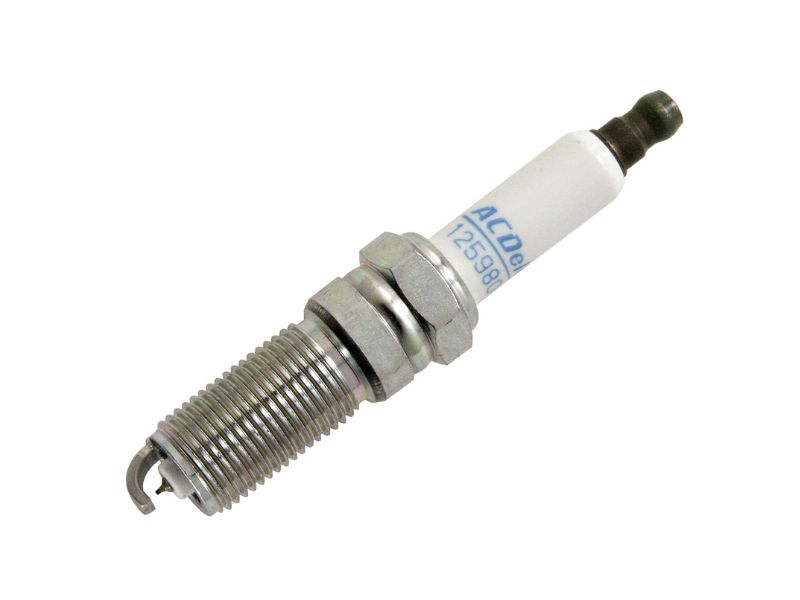
My primary recommendation is the ACDelco GM Original Equipment 41-103 Iridium Spark Plug for a compatible stock Cobalt application. It offers an OE-oriented design, durable iridium firing surface, and construction suited to owners who want to preserve factory-like ignition behavior.
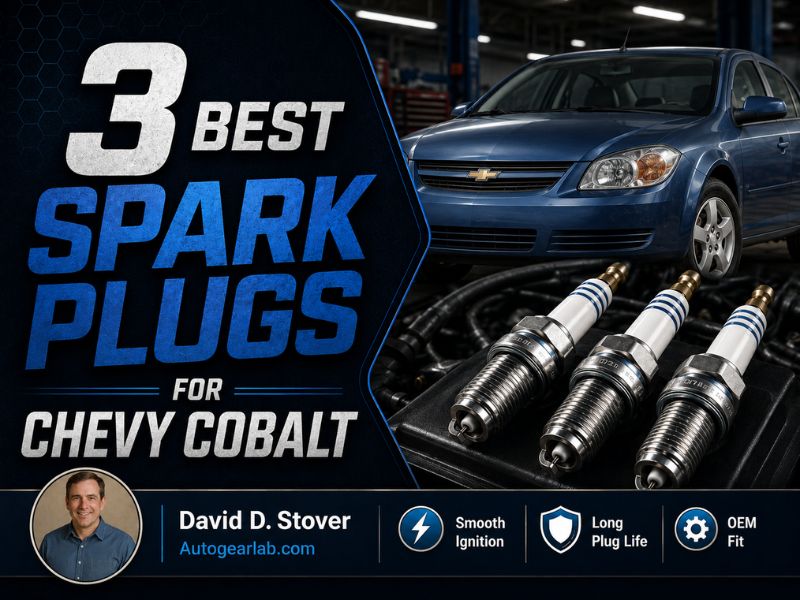
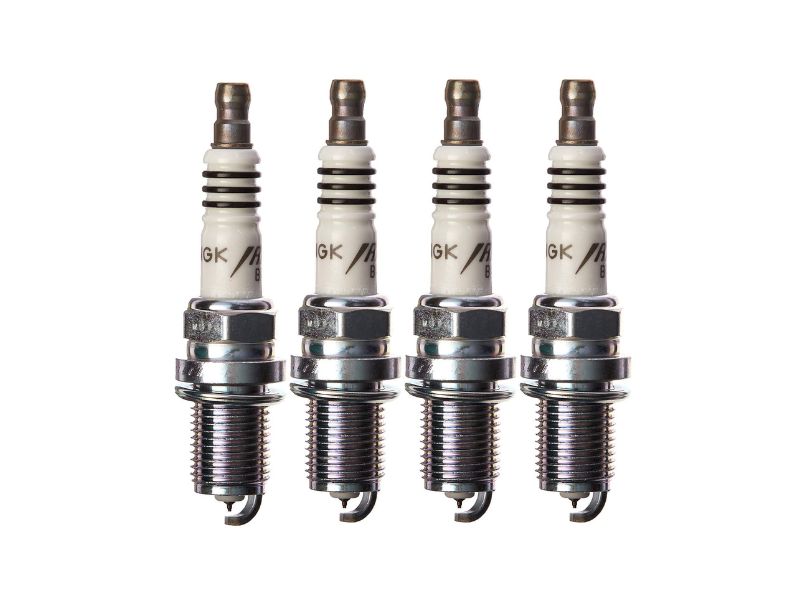
I would consider the NGK 4344 LTR5IX-11 Iridium IX Spark Plugs, 4-Pack for buyers who prefer a complete four-plug set and have confirmed the correct application and gap. It covers a broad range of Cobalt use cases, but a 2.0-liter turbo application may require a different gap from a naturally aspirated 2.2-liter or 2.4-liter engine.
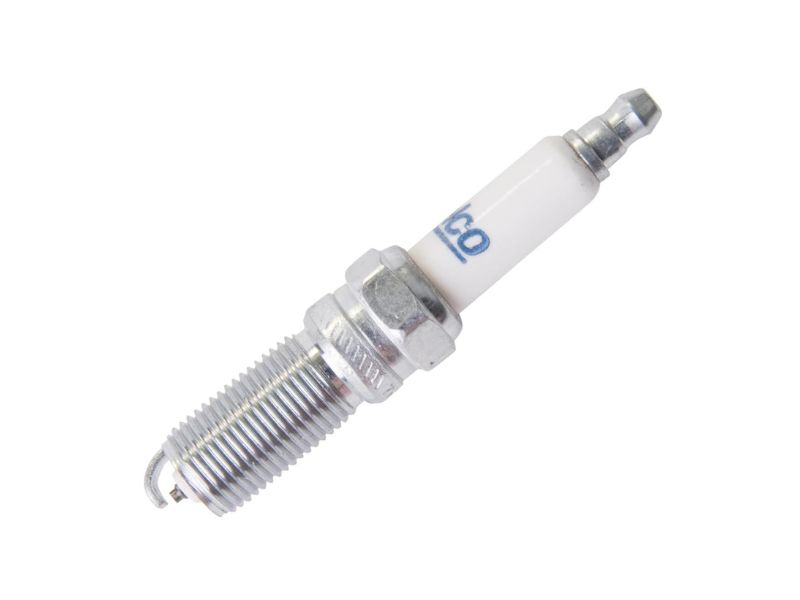
The ACDelco Gold 17 RapidFire Spark Plug is another option for compatible naturally aspirated applications, including specific 2.4-liter Cobalt configurations. Its platinum-based design can be useful for a conventional maintenance service, although it is sold individually and should not be treated as a universal plug for every Cobalt SS.
The ACDelco 41-103 remains my primary recommendation because it provides the strongest overall balance for a stock, application-confirmed Cobalt. The NGK four-pack offers greater ordering convenience, while the RapidFire 17 serves buyers whose exact engine catalog calls for that platinum plug.
Best Spark Plugs for Chevy Cobalt Reviewed
| Image | Product Name | Check Price |
|---|---|---|
Best Choice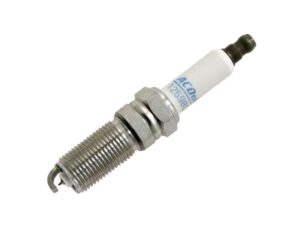 | ACDelco GM Original Equipment 41-103 Iridium Spark Plug | Check Price |
Second Best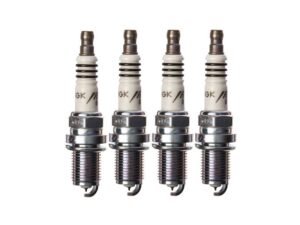 | NGK 4344 LTR5IX-11 Iridium IX Spark Plugs, 4-Pack | Check Price |
Third Choice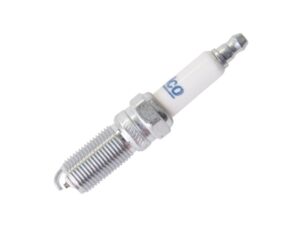 | ACDelco Gold 17 RapidFire Spark Plug | Check Price |
1. ACDelco GM Original Equipment 41-103 Iridium Spark Plug
Key Features
- GM original-equipment-oriented replacement design
- Fine-wire iridium center electrode
- Copper-core construction
- Tapered seat
- Resistor-type spark plug
- Extended-reach configuration
- Approximately 0.040-inch nominal gap in common applications
- Sold individually
- Appropriate only when confirmed for the specific Cobalt engine
The ACDelco 41-103 is my primary recommendation for owners seeking a factory-oriented spark plug for a compatible Chevrolet Cobalt. Rather than emphasizing an aggressive performance claim, its main advantage is that it was designed around the electrical, dimensional, and thermal needs of compatible GM engines.
This matters because a spark plug is more than a threaded device that produces a spark. Its thread diameter, reach, seat style, heat range, electrode projection, resistance, and required gap all influence how it operates inside the cylinder head. Two plugs can appear similar while having important internal or dimensional differences.
The 41-103 uses a fine-wire iridium center electrode. Iridium withstands high combustion temperatures and resists electrode erosion, allowing the firing tip to remain considerably smaller than the center electrode of a conventional nickel plug.
A smaller firing tip concentrates the electrical field at the electrode. This can reduce the voltage needed to initiate a spark compared with a thick, worn electrode. In practical terms, the design supports consistent starting, stable idling, and predictable combustion when the rest of the ignition and fuel systems are operating properly.
The plug also uses an internal copper core. Copper transfers heat effectively from the firing end toward the shell and cylinder head. It is important to distinguish this construction from a basic “copper plug.” The exposed iridium firing surface provides wear resistance, while the internal copper helps manage heat.
Its tapered seat seals against the cylinder head without a removable crush washer. A tapered-seat plug requires the correct torque procedure because the sealing area and thread loading differ from those of a gasket-seat plug. The plug should never be tightened according to a generic instruction copied from an unrelated vehicle.
The extended reach positions the firing end correctly within an application-approved Ecotec cylinder head. Incorrect reach can leave the spark recessed, expose unused threads to combustion deposits, or allow the firing end to extend too far into the chamber. This is one reason a plug should not be selected solely because its thread diameter matches.
A nominal gap of approximately 0.040 inch is associated with many uses of this plug, but the vehicle’s exact requirement remains controlling. The Cobalt’s engine family, production year, aspiration system, and calibration must be considered. A value used in one naturally aspirated application should not be transferred automatically to a supercharged or turbocharged engine.
ACDelco advises that its OE iridium plugs are manufactured pre-gapped and that an incorrectly gapped iridium plug should be replaced rather than aggressively adjusted. The gap should still be visually inspected for shipping damage. A bent ground electrode, cracked insulator, or distorted terminal is a reason not to install the plug.
Because the linked product is sold individually, a complete Cobalt service requires four plugs. Buyers should verify the package quantity before ordering. This is less convenient than purchasing a dedicated four-pack, although individual packaging can be helpful when replacing one damaged plug or keeping a spare.
The 41-103 is especially suitable for an unmodified daily-driven Cobalt whose current application information calls for this part. It is a logical choice for an owner attempting to restore smooth stock operation without experimenting with a colder heat range or unconventional gap.
Replacing worn plugs can help correct hesitation, hard starting, rough idle, and misfires caused by excessive electrode wear. However, new plugs cannot repair a failing ignition coil, deteriorated coil boot, damaged ignition-control module, leaking injector, vacuum leak, low compression, or incorrect fuel pressure.
This distinction is particularly important on the Cobalt because the ignition system places the coils and boots directly above the plugs. Oil or moisture inside a plug well can lead to tracking and misfires even when the plug itself remains usable. The wells and boots should therefore be inspected during every plug service.
A modified or high-boost Cobalt SS requires additional consideration. Engine modifications can change cylinder pressure, combustion temperature, fuel mixture, and the voltage required to fire the gap. A stock replacement plug should not automatically be assumed correct for a tuned engine simply because it fits the cylinder head.
For a factory-configured and application-confirmed Cobalt, however, the ACDelco 41-103 provides the most convincing overall combination of OE-oriented compatibility, durable electrode material, stable ignition characteristics, and practical service life.
Its primary limitation is application ambiguity across the Cobalt range. The owner still needs to identify whether the car has the 2.2L, 2.4L, supercharged 2.0L, or turbocharged 2.0L engine. It is also less convenient to order than a complete four-pack.
For the broadest group of owners who prioritize factory-like operation, I would choose the ACDelco 41-103 after confirming it against the VIN and engine code. It is the strongest overall product here, but its ranking does not override engine-specific fitment.
2. NGK 4344 LTR5IX-11 Iridium IX Spark Plugs, 4-Pack
Key Features
- Four plugs for a complete Cobalt four-cylinder service
- Fine-wire iridium center electrodes
- Tapered-cut ground electrodes
- Copper-core construction
- Tapered seat
- Resistor design
- 14-millimeter thread diameter
- Approximately 0.984-inch reach
- NGK heat range 5
- Gap must be matched to the specific engine
The NGK 4344 LTR5IX-11 is my first alternative because it combines a recognized iridium design with the convenience of a complete four-plug package. Application catalogs list it across several Cobalt engine configurations, but that broad coverage requires careful interpretation.
For example, naturally aspirated 2.2-liter and 2.4-liter applications can be associated with a gap near 0.044 inch, while certain 2008–2010 2.0-liter turbo applications are listed with a narrower gap near 0.036 inch. That difference is large enough to affect ignition behavior and should not be ignored.
A turbocharged engine compresses more air into the cylinder, creating greater cylinder pressure under boost. Higher pressure makes the spark gap harder to ionize. A gap that works well in a naturally aspirated engine can place more demand on the ignition system when used under boost, potentially contributing to spark blowout or misfires during acceleration.
That does not mean every turbocharged Cobalt should be arbitrarily given a narrow gap. The appropriate value depends on the approved plug, stock or modified boost level, ignition condition, calibration, and official service specification. The cataloged value for the exact application should come first.
The LTR5IX-11 uses a fine-wire iridium center electrode intended to produce a concentrated electrical field. NGK pairs that center electrode with a tapered-cut ground electrode. Reducing unnecessary material around the spark area can help expose the initial flame kernel to the air-fuel mixture.
Its internal copper core assists heat transfer. The plug is also a resistor type, helping suppress electrical interference that might otherwise affect vehicle electronics or radio reception.
NGK uses its own heat-range numbering system, and the number cannot be directly compared with ACDelco or Denso heat-range numbers. A lower or higher numerical value from another brand does not necessarily describe a hotter or colder equivalent. Only an approved cross-reference should be used.
The 14-millimeter threads, approximately 0.984-inch reach, tapered seat, and 5/8-inch or 16-millimeter hex are consistent with the physical requirements of compatible Ecotec applications. Nevertheless, matching dimensions do not prove that the heat range and firing characteristics are correct.
The four-pack is a meaningful practical advantage. A Chevrolet Cobalt four-cylinder engine requires four spark plugs, so one package covers a complete scheduled replacement. Buyers should inspect the package to verify that all four plugs have the same stock number and that none has been damaged.
Although the plug name includes “IX,” this is not automatically the same type of long-interval construction as every original-equipment laser-iridium plug. An aftermarket single-iridium design and an OE double precious-metal design can have different ground-electrode materials and wear priorities.
For that reason, maintenance expectations should be based on the actual plug family, vehicle schedule, and operating condition—not merely the word “iridium.” A tuned turbocharged engine may require more frequent inspection than a stock naturally aspirated daily driver.
This product is an especially practical choice for a 2.2-liter or 2.4-liter Cobalt owner who wants a complete iridium set and has confirmed the appropriate gap. It may also be applicable to specific turbocharged Cobalt SS models, provided the narrower application-specific gap and correct stock number have been verified.
I would not use the broad model-year coverage as permission to install the same untouched gap in every engine. The 2.0L turbocharged LNF, earlier supercharged LSJ, 2.2L naturally aspirated engine, and 2.4L LE5 engine operate under different conditions.
Modified Cobalt SS owners should be particularly careful with recommendations for one-step-colder plugs. A colder heat range can be appropriate for certain high-boost or track-oriented combinations, but it is not automatically beneficial on a stock engine. A plug that runs too cold during daily driving may accumulate deposits and foul.
Likewise, narrowing the gap excessively can make the spark easier to initiate under boost but reduce the size of the initial spark channel. Gap changes should be based on diagnostic evidence and the tuner’s requirements rather than guesswork.
During installation, these fine-wire plugs should be handled carefully. A wedge gauge should not be forced against the iridium electrode. If adjustment is required and permitted, only the ground electrode should be moved, using a tool that does not contact the center firing tip.
The NGK 4344 is the most convenient complete set in this comparison. It also provides broader verified Cobalt application coverage than many obscure alternatives. Its limitation is that broad coverage can encourage buyers to overlook engine-specific gap differences.
I would select the NGK four-pack for an owner who has positively identified the engine and wants a matched replacement set. The ACDelco 41-103 remains my primary choice for an OE-oriented stock application, while the NGK becomes especially attractive when four-pack convenience and a confirmed NGK cross-reference are priorities.
3. ACDelco Gold 17 RapidFire Spark Plug
Key Features
- Platinum-based firing surface
- Copper-core construction
- Ribbed suppressor insulator
- Solid-state suppressor
- Tapered seat
- 14-millimeter threads
- Intended for specific compatible Cobalt applications
- Appropriate for certain 2.4-liter configurations
- Sold individually
- Not intended as a universal Cobalt SS plug
The ACDelco Gold 17 RapidFire is the third-ranked product because it provides a practical platinum alternative for compatible Cobalt applications. Its fitment is narrower than the broad search phrase suggests, and it should be ordered only after the engine catalog specifically calls for it.
The RapidFire family uses a platinum firing surface designed to resist electrode wear more effectively than a basic conventional nickel plug. Platinum has a high melting point and helps the plug maintain a functional gap over a longer period than many basic service plugs.
This particular design uses a copper core for heat transfer. The insulator includes ribs intended to increase the surface distance that voltage would need to travel if it attempted to track down the outside of the ceramic. That construction can help resist flashover when the plug and boot are clean and in good condition.
Its suppressor construction also helps control radio-frequency interference. This is relevant in a modern vehicle containing electronic engine controls, audio equipment, sensors, and data networks.
For compatible 2.4-liter Cobalt applications, the RapidFire 17 can provide a straightforward maintenance option without requiring an iridium electrode. The 2.4-liter LE5 engine appeared in performance-oriented naturally aspirated Cobalt configurations, but it should not be confused with the 2.0-liter supercharged or turbocharged engines.
The words “Cobalt SS” do not identify one engine. Depending on the model year, the SS badge could be associated with different powertrains. This makes trim-level shopping unreliable unless the engine displacement, induction type, and VIN code are also known.
A platinum RapidFire plug should not be dismissed merely because iridium is a newer or harder material. If the RapidFire 17 is the correct cataloged plug for the engine, it can provide appropriate thermal behavior and ignition performance. Correct application is more important than selecting the most expensive electrode material.
At the same time, it should not be viewed as the longest-life option automatically. Plug life depends on the complete electrode design, engine condition, fuel mixture, oil consumption, heat range, gap growth, and driving cycle.
The linked product is sold individually, so four plugs are required for a full Cobalt service. Before installation, compare the part numbers and inspect the ceramic, terminal, threads, seat, and electrodes.
A platinum plug can still be damaged by improper handling. Dropping it onto a hard floor may crack the insulator internally or bend the ground electrode. A plug with uncertain damage should be replaced rather than installed.
The RapidFire 17 is best suited to an owner whose application catalog explicitly specifies it and who prefers an ACDelco platinum design. It can also be useful when restoring an older Cobalt that does not require a specialized turbocharged heat range.
I would avoid it when the vehicle has a modified turbo or supercharged engine unless the tuner and current application data approve the exact plug. Forced-induction engines can be less tolerant of an incorrect gap or heat range because cylinder pressure rises substantially under load.
Its main advantages are recognizable construction, platinum wear resistance, and suitability for specific naturally aspirated configurations. Its principal limitations are individual packaging and narrower relevance across the full Cobalt engine lineup.
The ACDelco Gold 17 RapidFire is a valid third option rather than a universal substitute for the first two products. I would choose it when the vehicle’s engine catalog specifically identifies it and a conventional platinum replacement is preferred.
Chevy Cobalt Spark Plug Comparison
| Product | Primary use case | Electrode design | Package quantity | Common gap reference | Seat | Main advantage | Important limitation |
| ACDelco 41-103 | Compatible stock Cobalt engines | Fine-wire iridium center | One | Approximately 0.040 inch in applicable configurations | Tapered | OE-oriented design | Exact engine fitment must be confirmed |
| NGK 4344 LTR5IX-11 | Compatible 2.2L, 2.4L and certain 2.0L applications | Iridium center | Four | Application-dependent; approximately 0.044 or 0.036 inch | Tapered | Complete four-plug set | Different engines may require different gaps |
| ACDelco Gold 17 RapidFire | Specific compatible naturally aspirated applications | Platinum firing surface | One | Engine-specific | Tapered | Practical platinum alternative | Not a universal Cobalt SS plug |
The ACDelco 41-103 offers the strongest factory-oriented balance for compatible stock engines. The NGK 4344 provides the most convenient package and broad application potential, but the installer must pay attention to different naturally aspirated and turbocharged gap references.
The RapidFire 17 is a more specialized platinum alternative. It is most relevant when the exact engine application calls for that part rather than when a buyer simply wants the least expensive compatible-looking plug.
How to Choose Spark Plugs for a Chevy Cobalt
Identify the Engine, Not Just the Trim
The Chevrolet Cobalt was available with several Ecotec engines. Common examples include:
- Naturally aspirated 2.2L Ecotec
- Naturally aspirated 2.4L Ecotec
- Supercharged 2.0L LSJ
- Turbocharged 2.0L LNF
Model year, trim badge, and displacement should all be checked. A Cobalt SS badge alone is insufficient because Chevrolet used that designation with more than one engine configuration.
The eighth VIN character, emissions label, and engine identification information can help confirm the powertrain. When the information conflicts, use a VIN-specific parts catalog or qualified parts professional before ordering.
Buy Four Matching Plugs
The Chevrolet Cobalt uses a four-cylinder engine and requires four spark plugs for a complete replacement.
All four plugs should normally have the same correct part number, gap specification, and construction. Mixing different heat ranges or electrode designs can produce inconsistent cylinder-to-cylinder ignition behavior.
Understand Naturally Aspirated and Forced-Induction Requirements
A naturally aspirated engine draws air into the cylinder at approximately atmospheric pressure. A turbocharger or supercharger forces additional air into the engine, increasing cylinder pressure and potential power.
Higher cylinder pressure generally requires more ignition voltage to bridge the spark plug gap. This is why forced-induction engines can be more sensitive to worn plugs, excessive gaps, weak coils, and poor electrical connections.
Do not assume that every Cobalt uses the naturally aspirated gap. Likewise, do not install an extremely narrow turbo-style gap in a standard 2.2-liter engine without application support.
Select the Correct Heat Range
A spark plug’s heat range describes its ability to transfer heat away from the firing end. It does not measure spark intensity.
A plug that operates too hot can contribute to pre-ignition or electrode overheating. A plug that operates too cold can accumulate deposits, particularly during short trips and extended idling.
Heat-range numbers are manufacturer-specific. NGK’s heat range 5 cannot be compared numerically with an ACDelco number as if both companies use the same scale.
Stock engines should generally use the cataloged factory heat range. Modified engines require guidance based on boost, fuel, timing, power level, driving conditions, and plug-reading results.
Check the Plug Gap Carefully
The gap affects the voltage required to produce a spark. A wider gap may expose a larger spark area but demands more from the coils. A narrower gap is easier to fire under high cylinder pressure but should not be reduced without a valid reason.
Application listings for the Cobalt can show different specifications, including approximately:
- 0.040 or 0.044 inch for certain naturally aspirated applications
- Approximately 0.036 inch for certain turbocharged applications
These are comparison references, not universal instructions. Confirm the value for the VIN, engine, plug number, and calibration.
Consider Electrode Construction
A fine-wire iridium center electrode provides excellent temperature resistance and concentrates the electrical field. Platinum also resists wear and can be appropriate for long-term factory-style service.
However, the presence of iridium does not automatically make a plug compatible. The correct platinum plug is safer than an iridium plug with the wrong heat range, reach, or gap.
Verify Thread Reach and Seat
The Cobalt applications covered here commonly use long-reach, tapered-seat plugs. The precise dimensions must match the cylinder head.
A plug with insufficient reach can leave the firing end recessed and expose cylinder-head threads to deposits. Excessive reach can place the electrode too far into the combustion chamber. The wrong seat may fail to seal or damage the cylinder head.
Be Cautious with Modified Cobalt SS Engines
Modified supercharged and turbocharged Cobalts may use increased boost, different fuel, revised ignition timing, larger injectors, or altered engine-management software. These changes can affect the appropriate heat range and gap.
A common enthusiast recommendation such as “one step colder” is not universally correct. The vehicle’s tuner should specify:
- Exact plug model
- Required heat range
- Installation gap
- Inspection interval
- Replacement interval
Using a cold racing plug in a lightly driven street car can cause deposit accumulation. Using an excessively hot plug under high boost can be considerably more dangerous.
Spark Plug Installation Guidance
Let the Engine Cool
The Cobalt’s aluminum cylinder head should be cool before the plugs are removed. Working on a hot head increases burn risk and may increase the chance of thread damage.
Remove the Ignition Assembly Carefully
Depending on the engine configuration, the ignition system may use a coil cassette, individual coils, an ignition-control module, or an integrated assembly over the plugs.
Disconnect electrical connectors by releasing their locks rather than pulling on the wires. Remove fasteners evenly and lift the ignition assembly carefully so the boots are not torn.
Inspect the Plug Wells
Check each well for:
- Engine oil
- Water or moisture
- Rust
- Loose dirt
- Carbon tracking
- Damaged boots
- Broken boot springs
Oil in a plug well can indicate a sealing problem. Installing new plugs without correcting a significant leak may allow the new boots and plugs to become contaminated.
Remove Loose Debris
Clean the area before removing a plug. If compressed air is used, wear eye protection and prevent dirt from being directed into connectors or open intake components.
Keep Old Plugs Organized
Arrange the removed plugs by cylinder. Comparing them can help identify a cylinder-specific injector, ignition, oil-control, or compression problem.
One unusually wet or dark plug is more diagnostically significant than four plugs with similar normal wear.
Start Each New Plug by Hand
Place the spark plug into a suitable socket and thread it by hand. It should turn smoothly for several rotations.
If resistance appears immediately, remove the plug and inspect the threads. Never use an impact wrench to force a plug into an aluminum head.
Follow the Correct Torque Specification
Torque controls sealing pressure, heat transfer, and thread loading. A loose plug can leak combustion gas and transfer heat poorly. An overtightened plug can damage the threads or distort the shell.
Use the exact service specification for the engine and plug seat. Do not substitute a universal number from an unrelated vehicle.
Avoid Unapproved Anti-Seize
Many modern spark plugs have plated shells designed for dry installation. Anti-seize changes friction and can cause excessive tightening when a dry torque specification is used.
Apply it only when explicitly required by the current plug or engine instructions.
Apply Dielectric Grease Correctly
A small amount of dielectric grease may be placed inside the upper area of a clean coil boot. It helps resist moisture and can make later boot removal easier.
Do not coat the spark plug electrodes or fill the electrical terminal with grease.
Reinstall the Ignition Components Evenly
Seat all boots fully over the plugs. Reinstall the coil or cassette assembly without forcing it sideways. Tighten the mounting bolts according to the service procedure and reconnect every electrical connector.
After starting the engine, listen for a stable idle and scan for pending misfire codes if diagnostic equipment is available.
Common Spark Plug Problems in a Chevy Cobalt
Rough Idle
Worn plugs can contribute to an uneven idle, but so can a dirty throttle body, vacuum leak, injector imbalance, weak coil, compression problem, or contaminated mass-airflow reading.
Misfire Under Acceleration
A misfire that appears under heavy throttle may result from excessive gap, worn electrodes, weak coils, damaged boots, or an incorrect forced-induction plug specification.
Oil in the Plug Wells
Oil around the outside of the plug can deteriorate the rubber boots and cause electrical tracking. The leak source should be repaired rather than simply wiping away the oil.
Fuel-Fouled Plug
A wet fuel smell or visibly fuel-soaked electrode can indicate a cylinder that is not firing. Possible causes include ignition failure, excessive fueling, injector problems, or low compression.
White or Blistered Electrode
An overheated firing end can be associated with an incorrect heat range, lean mixture, cooling problem, detonation, excessive ignition timing, or unsuitable engine modifications.
Cracked Insulator
A cracked ceramic insulator can result from impact, incorrect installation, side-loading the socket, or dropping the plug. The plug must be replaced.
Common Mistakes to Avoid
- Ordering plugs using only the Cobalt name
- Assuming every Cobalt SS has the same 2.0L engine
- Copying a naturally aspirated gap to a turbocharged engine
- Installing a colder plug without tuning justification
- Assuming all iridium plugs have identical durability
- Failing to inspect the ignition boots
- Installing plugs into a hot aluminum cylinder head
- Using excessive anti-seize
- Tightening plugs with an impact wrench
- Forcing a plug that does not thread smoothly
- Changing only one worn plug during scheduled maintenance
- Expecting spark plugs to create substantial horsepower
- Ignoring oil or water inside the plug wells
- Installing a plug that was dropped or has cracked porcelain
- Reusing a damaged coil boot
Frequently Asked Questions
What are the best spark plugs for a Chevy Cobalt?
The correct engine-specific plug is more important than any universal product ranking. The ACDelco 41-103 is my primary OE-oriented recommendation for compatible stock applications. The NGK 4344 provides a convenient four-plug alternative, while the ACDelco RapidFire 17 suits specific catalog-confirmed naturally aspirated applications. Verify the engine and VIN before ordering.
How many spark plugs does a Chevy Cobalt have?
Every gasoline Chevrolet Cobalt requires four spark plugs. The Cobalt uses an inline four-cylinder engine, with one spark plug assigned to each cylinder. Some products are sold individually, while others are supplied in four-packs. Confirm the package quantity so that a complete maintenance service does not arrive with only one plug.
Do all Chevy Cobalt engines use the same plugs?
No, plug requirements vary among naturally aspirated, supercharged, and turbocharged engines. The engines can require different heat ranges, gaps, and application-specific plug numbers. The SS badge is not enough to identify the engine because it was used with multiple powertrains. Check displacement, induction type, VIN information, and the current parts catalog.
What is the Chevy Cobalt spark plug gap?
The correct gap depends on the engine, model year, and approved plug. Naturally aspirated applications may use a gap around 0.040 or 0.044 inch, while certain turbocharged applications can use approximately 0.036 inch. These are reference values, not universal instructions. Confirm the emissions label and exact service specification.
Are iridium plugs better for a Chevy Cobalt?
Iridium is useful when the complete plug specification matches the engine. A fine-wire iridium electrode resists heat and concentrates the electrical field, but material alone does not establish compatibility. The wrong iridium heat range or reach is less suitable than a correctly specified platinum plug.
Can I use NGK 4344 plugs in every Cobalt?
No, exact application and gap confirmation are still required. Catalogs list the NGK 4344 for several Cobalt engines, but they may specify different installation gaps. A turbocharged 2.0L engine should not automatically receive the same untouched gap as a naturally aspirated 2.2L or 2.4L engine.
Should I replace all four plugs together?
Yes, scheduled maintenance should normally replace all four plugs together. A matched set provides consistent electrode condition and gap across the engine. Replacing only one plug is reasonable when a single unit was accidentally damaged, provided the remaining plugs are still within their service interval and the cause of the damage is understood.
How often should Cobalt spark plugs be changed?
Use the interval specified for the engine and installed plug design. Driving conditions, electrode construction, oil consumption, engine modifications, and ignition health can alter practical service life. A modified turbocharged engine may require more frequent inspection. Diagnose early misfires instead of waiting for a mileage number.
Can new spark plugs increase horsepower?
New plugs generally restore lost performance rather than add substantial horsepower. If worn electrodes were causing weak ignition or misfires, replacement can improve acceleration and smoothness. A properly running stock engine will not usually gain meaningful power from switching between compatible premium plug materials.
Why does my Cobalt misfire after changing the plugs?
Incorrect gap, damaged boots, loose connectors, or cracked plugs are common causes. Confirm that all ignition components are fully seated and that each plug has the correct part number. If installation is correct, inspect the coils, ignition module, injectors, compression, fuel pressure, and intake system.
Should I use colder plugs in a Cobalt SS?
Only use colder plugs when the engine setup and tuner specifically require them. Increased boost and cylinder pressure can justify a different heat range in some modified engines. A colder plug used without need may accumulate deposits during ordinary driving. Stock engines should generally retain the cataloged heat range.
Should spark plugs be installed with anti-seize?
Do not use anti-seize unless the current instructions specifically require it. Lubricant alters thread friction and can produce excessive clamping force when a dry torque value is applied. Many plated spark plug shells are designed for dry installation.
Can I adjust the gap on an iridium plug?
Adjustment may be possible, but the fine-wire center electrode must never be contacted. Inspect the manufacturer’s instructions first. If adjustment is approved, move only the ground electrode with an appropriate tool. Replace a severely mis-gapped or shipping-damaged OE iridium plug instead of forcing it into specification.
What causes oil on Cobalt spark plugs?
Oil can enter through external sealing leaks or internal engine wear. Oil around the porcelain in the plug well suggests an external sealing issue, while oily deposits on the firing end may indicate oil entering the combustion chamber. The source should be diagnosed before assuming new plugs will provide a permanent repair.
Can I replace Cobalt spark plugs myself?
Yes, careful DIY owners can replace them using correct tools and service information. Work on a cold engine, clean the plug wells, start each plug by hand, and use the specified torque. Seek professional assistance if the plugs are seized, threads are damaged, or the ignition assembly is unfamiliar.
Conclusion
Selecting the best spark plugs for Chevy Cobalt starts with accurately identifying the engine. The naturally aspirated 2.2L and 2.4L engines, supercharged 2.0L LSJ, and turbocharged 2.0L LNF should not be treated as one interchangeable application.
The ACDelco GM Original Equipment 41-103 Iridium Spark Plug remains my primary recommendation for a compatible stock Cobalt. Its OE-oriented design, fine-wire iridium center electrode, and suitable thermal construction provide the strongest overall balance for owners who want factory-like ignition operation.
The NGK 4344 LTR5IX-11 is the more convenient alternative because its four-pack supplies a complete set. It can cover multiple Cobalt applications, but buyers must observe engine-specific gap differences, especially when comparing naturally aspirated and turbocharged engines.
The ACDelco Gold 17 RapidFire is a reasonable platinum alternative for specific catalog-confirmed applications, including relevant 2.4L configurations. It should not be selected merely because the vehicle carries a Cobalt or SS badge.
Before ordering, verify the VIN, engine displacement, aspiration system, plug number, heat range, and required gap. During installation, work on a cold engine, inspect the plug wells and boots, start every plug by hand, and use the correct torque procedure.
For a stock, compatible engine, I would begin with the ACDelco 41-103. I would choose either alternative only when its exact application and required gap have been confirmed.