The best spark plugs for Chevy Impala depend heavily on the car’s generation and engine. Chevrolet used several different powertrains under the Impala name, including 3.4L and 3.8L V6 engines, later 3.5L and 3.9L V6 engines, the 5.3L V8 found in certain SS models, and the newer 3.6L direct-injected V6.
These engines should not be treated as one spark plug application. A plug intended for a 2004 Impala with the 3.8L V6 may have a different reach, heat range, and factory gap from a plug designed for a 2018 Impala with the 3.6L engine.
My primary recommendation is the ACDelco GM Original Equipment 41-100 Iridium Spark Plug for compatible 2006–2011 Impala V6 applications. It offers an OE-oriented design and broad relevance to the common 3.5L and 3.9L engines from that generation.
I would choose the ACDelco GM Original Equipment 41-109 Iridium Spark Plug for a compatible 2012–2020 Impala with the 3.6L V6. Its longer reach and double precious-metal firing surfaces make it a distinctly different plug rather than a newer substitute for the 41-100.
The ACDelco GM Original Equipment 41-101 Iridium Spark Plug is more appropriate for compatible 2000–2005 Impala applications. It uses a shorter reach and an approximately 0.060-inch pre-gap, illustrating why owners should never copy specifications from a different Impala generation.
The products are ranked according to overall search relevance, application coverage, OE orientation, durability, and buyer suitability. Product number one remains the primary recommendation, but the correct generation-specific plug always takes priority over the ranking.
Best Spark Plugs for Chevy Impala Reviewed
| Image | Product Name | Check Price |
|---|---|---|
Best Choice | ACDelco GM Original Equipment 41-100 Iridium Spark Plug | Check Price |
Second Best | ACDelco GM Original Equipment 41-109 Iridium Spark Plug | Check Price |
Third Choice | ACDelco GM Original Equipment 41-101 Iridium Spark Plug | Check Price |
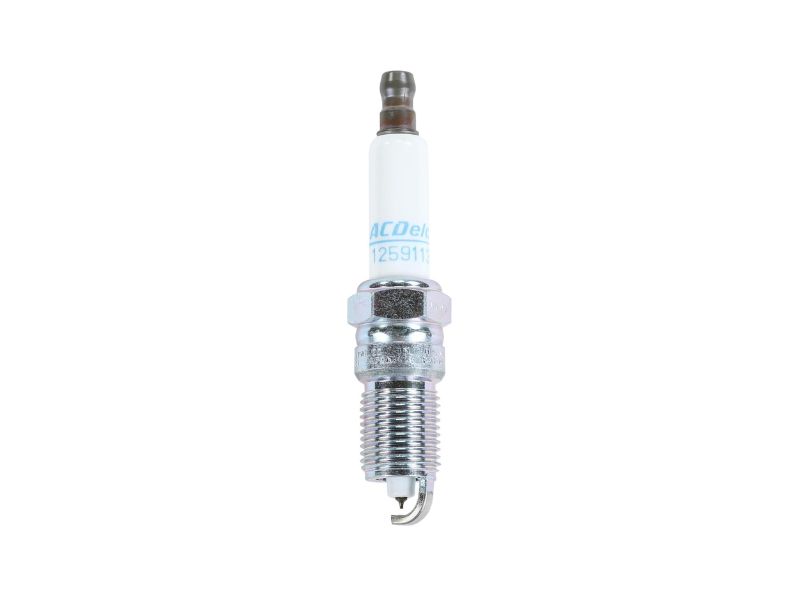
1. ACDelco GM Original Equipment 41-100 Iridium Spark Plug
Key Features
- Intended for compatible 2006–2011 Impala applications
- Particularly relevant to common 3.5L and 3.9L V6 engines
- Fine-wire iridium center electrode
- Copper-core construction
- Resistor design
- Pre-gapped during manufacturing
- Tapered seat
- Sold individually
- Six plugs required for an applicable V6
The ACDelco 41-100 is my primary recommendation because it addresses a large portion of the Impala models owners commonly maintain today. Application information covers compatible 2006–2011 cars, including multiple 3.5L and 3.9L V6 configurations.
Its fine-wire iridium center electrode provides good resistance to heat and electrode erosion. The smaller firing tip concentrates the electrical field, supporting consistent ignition without requiring the thick electrode used by a conventional nickel plug.
An internal copper core transfers heat away from the firing end, while the resistor construction helps limit radio-frequency interference. The tapered seat seals directly against the cylinder head and does not use a removable crush washer.
These plugs are pre-gapped during manufacturing. They should be inspected for shipping damage, but the delicate iridium electrode should not be aggressively adjusted. If a new plug has a badly incorrect gap, bent ground electrode, cracked insulator, or damaged threads, replacing it is safer than attempting a major correction.
The 41-100 is sold individually, so a compatible V6 requires six plugs. Verify the ordered quantity carefully.
Most importantly, this is not a universal 2006–2011 Impala plug. The 2006–2009 Impala SS could be equipped with a 5.3L V8 that uses a different application. The V8 also requires eight plugs rather than six. Checking the VIN and engine displacement prevents an expensive ordering mistake.
For a stock 3.5L or 3.9L Impala whose current catalog specifies the 41-100, this is the strongest overall option. It provides factory-oriented dimensions and ignition characteristics without promising unrealistic horsepower improvements.
Its main limitation is the similarity of different ACDelco part numbers. A 41-100, 41-101, 41-109, and 41-110 are not interchangeable simply because their names are close. I recommend the 41-100 only after the exact V6 application has been confirmed.
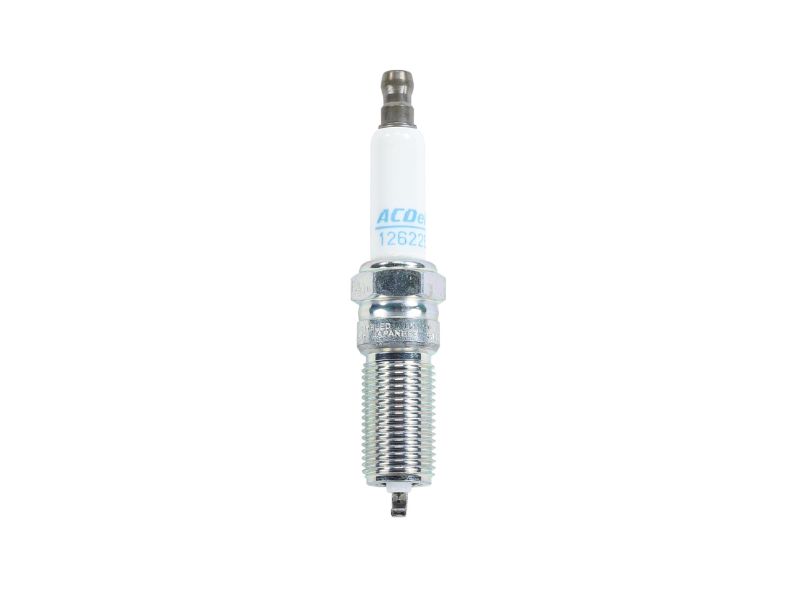
2. ACDelco GM Original Equipment 41-109 Iridium Spark Plug
Key Features
- Intended for compatible later 3.6L V6 Impala applications
- Fine-wire iridium center electrode
- Platinum ground-electrode tip
- Approximately 0.043-inch factory pre-gap
- Approximately 1.228-inch reach
- 14-millimeter threads
- 16-millimeter hex
- Tapered seat
- Resistor construction
- Sold individually
The ACDelco 41-109 is my preferred alternative for compatible later Impala models using the 3.6L V6. It differs significantly from the earlier products in this comparison, particularly in thread reach and firing-end design.
Its iridium center electrode is paired with a platinum ground-electrode tip. Protecting both sides of the spark gap helps control wear and supports stable gap dimensions during extended use.
The plug has an approximately 0.043-inch factory gap and a reach of roughly 1.228 inches. That longer reach is a critical fitment detail. Installing a short-reach plug in an engine designed for the 41-109 could place the firing end in the wrong position and allow deposits to collect on exposed cylinder-head threads.
The plug should be used only when the current catalog approves it for the exact 3.6L engine and model year. The Impala name was used on overlapping body generations, and model year alone can occasionally be confusing. The VIN and engine code provide a more reliable identification.
A complete 3.6L V6 service requires six plugs. Access to the rear cylinder bank may require removal or repositioning of intake components according to the applicable service procedure, making installation more involved than simply replacing the front three plugs.
The 41-109 is the better option for compatible 2012–2020 3.6L cars, but it does not replace the 41-100 as the main recommendation for earlier 3.5L and 3.9L applications. Its principal limitation is therefore narrow generation and engine specificity.
I would choose this plug when maintaining a stock 3.6L Impala and the VIN-specific catalog confirms the 41-109. Its double precious-metal firing surfaces, OE-oriented construction, and correct long-reach design make it preferable to a physically similar but unapproved alternative.
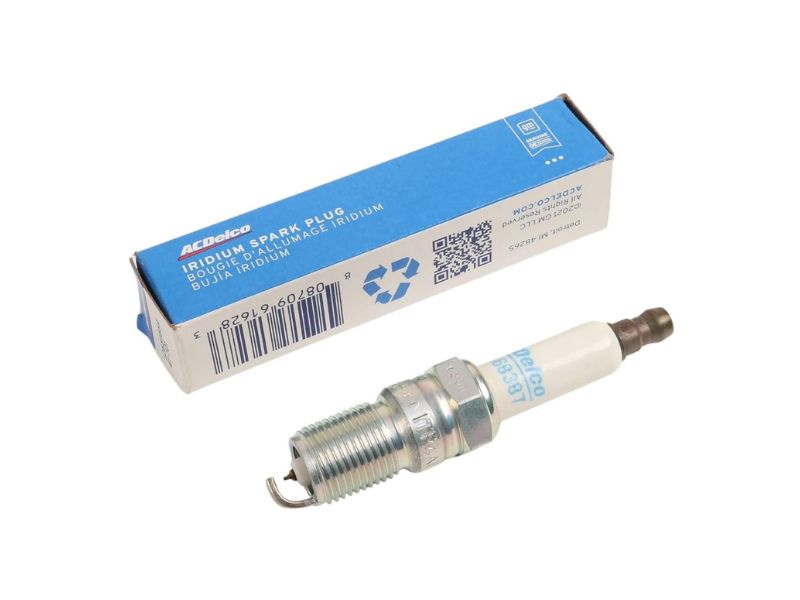
3. ACDelco GM Original Equipment 41-101 Iridium Spark Plug
Key Features
- Intended for compatible 2000–2005 Impala applications
- Relevant to specific 3.4L and 3.8L V6 configurations
- Fine-wire iridium center electrode
- Copper-core construction
- Approximately 0.060-inch pre-gap
- Approximately 0.680-inch reach
- 14-millimeter threads
- Tapered seat
- Resistor design
- Sold individually
The ACDelco 41-101 is included for owners of compatible 2000–2005 Impalas. Its approximately 0.060-inch gap and shorter 0.680-inch reach distinguish it from the plugs intended for newer Impala engines.
That difference demonstrates why visual comparison is unreliable. Although the 41-101 and 41-109 both use iridium and 14-millimeter threads, their reach differs considerably. They belong to different cylinder-head and ignition applications.
The iridium center electrode provides resistance to firing-tip wear, while the copper core supports heat transfer. Its resistor helps suppress electrical interference, and the tapered seat seals without a separate gasket.
A compatible early Impala V6 needs six plugs. These engines commonly use plug wires rather than placing an individual ignition coil directly on each plug. The wires, terminals, and boots should be inspected while the plugs are accessible. Old wires can develop excessive resistance, cracked insulation, or heat damage.
Rear-bank access can be restrictive, and pulling on the wire instead of the boot can separate the internal conductor. A suitable boot-removal tool and careful twisting motion reduce the likelihood of damage.
The 41-101 is a sensible OE-oriented choice for a confirmed early application, but it should not be purchased for a later Impala based on the product name alone. I would select it for a compatible 2000–2005 car whose service information calls for this specification.
Chevy Impala Spark Plug Comparison
| Product | Primary application | Electrode design | Pre-gap | Reach | Plugs needed | Main strength | Main limitation |
| ACDelco 41-100 | Compatible 2006–2011 3.5L/3.9L V6 | Iridium center | Factory pre-gapped | Application-specific | 6 | Broad relevance to common mid-generation V6 models | Does not automatically fit the 5.3L SS |
| ACDelco 41-109 | Compatible 2012–2020 3.6L V6 | Iridium center and platinum ground tip | About 0.043 in | About 1.228 in | 6 | Correct long-reach OE-oriented later-engine design | Rear-bank access can complicate installation |
| ACDelco 41-101 | Compatible 2000–2005 3.4L/3.8L V6 | Iridium center | About 0.060 in | About 0.680 in | 6 | Relevant to earlier Impala engines | Short reach makes it unsuitable for newer heads |
The most important comparison factors are the engine application and thread reach. The 41-101’s 0.680-inch reach and the 41-109’s 1.228-inch reach are different enough that the plugs must never be interchanged.
The gap also varies. A 0.060-inch specification associated with an early engine should not be copied to a later 3.6L plug with an approximately 0.043-inch factory gap.
All three products are sold individually in the linked configurations. A V6 needs six plugs, while a 5.3L V8 Impala SS needs eight of its separately specified plug.
How to Choose Spark Plugs for a Chevy Impala
Identify the Model Year and Engine
The Impala name covers multiple generations and powertrains. Relevant modern-era engines include:
- 3.4L V6
- 3.8L V6
- Supercharged 3.8L V6 in specific older performance applications
- 3.5L V6
- 3.9L V6
- 5.3L V8
- 2.4L four-cylinder in specific later configurations
- 3.6L V6
Knowing only the year may still be insufficient if multiple engines were offered. Check the VIN, emissions label, engine-cover markings, and current parts catalog.
The VIN’s engine identifier can distinguish two cars that share the same model year and trim family. This is especially important for flex-fuel engines and the V8-powered SS.
Confirm Whether the Car Has Six or Eight Plugs
Most Impalas covered by the three recommendations use a V6 and therefore need six spark plugs.
The 2006–2009 Impala SS with the 5.3L V8 requires eight plugs. Ordering six because most Impalas use a V6 will leave the service incomplete, while ordering a V6 plug for the V8 can create a fitment problem.
Some later Impala models used a four-cylinder engine, requiring four plugs and a separate application lookup. Count should be determined by the engine, not by the vehicle name.
Prioritize the Exact Part Number
Closely related part numbers are easy to confuse:
- 41-100
- 41-101
- 41-109
- 41-110
The numerical sequence does not indicate that one is a direct upgrade from another. Each can have different dimensions, gaps, heat ranges, and application coverage.
A seller’s general claim that a plug “fits Chevrolet” is not enough. The complete part number must match the engine-specific catalog.
Understand Thread Reach
Thread reach is the length of the threaded section that enters the cylinder head. It controls the firing end’s position inside the combustion chamber.
A plug that is too short can leave cylinder-head threads exposed to combustion deposits and position the spark away from its intended location. A plug that is too long can protrude excessively and potentially create mechanical or thermal problems.
The 41-101 and 41-109 provide a useful example. Both are iridium plugs with a tapered seat, yet their reaches differ substantially. They must not be interchanged.
Compare Iridium and Platinum Correctly
Iridium and platinum resist electrode erosion better than conventional nickel surfaces. Iridium’s strength allows a particularly fine center electrode, concentrating the electrical field.
The 41-109 also uses a platinum pad on the ground electrode. This protects both sides of the gap and supports long-term wear control.
Electrode material is only one buying factor. A correct platinum plug is safer than an incorrect iridium plug. Fitment, heat range, resistance, reach, seat type, and gap all matter.
Use the Correct Heat Range
A spark plug’s heat range describes how quickly it transfers heat from the firing end to the cylinder head.
A plug that runs too cold may accumulate deposits and foul. A plug that runs too hot may overheat, increasing the risk of pre-ignition or electrode damage.
Heat-range scales differ by manufacturer. A numerical value from one brand should not be compared directly with a number from another brand.
Stock Impala engines should generally use the cataloged heat range. Engine modifications, forced induction, nitrous oxide, or unusual tuning require specialist guidance.
Verify the Factory Gap
The spark plug gap is the distance between the center and ground electrodes. It affects the voltage required to initiate the spark.
Early Impala applications can use a gap around 0.060 inch, while later engines may use approximately 0.040–0.043 inch. These figures are not interchangeable.
Check the vehicle’s emissions label and current service information. A replacement plug’s factory pre-gap should match the approved application, but the firing end should still be visually inspected for shipping damage.
Do not press a wedge-style gauge against a fine iridium center electrode. If the manufacturer states that the plug should not be regapped, replace a damaged or incorrectly set unit.
Consider the Ignition-System Design
Older Impala engines commonly use ignition coils connected to the plugs by high-voltage wires. Later engines may use individual coils positioned over the plugs.
With a plug-wire system, inspect:
- Wire insulation
- Boot condition
- Terminal corrosion
- Heat damage
- Electrical resistance
- Evidence of arcing
With a coil-on-plug system, inspect:
- Rubber boots
- Internal springs
- Coil connectors
- Oil or water inside the plug wells
- Carbon tracking
- Cracks in the coil housing
New spark plugs cannot compensate for a failed wire or ignition coil.
Evaluate Engine Condition
Replacing worn plugs can restore performance lost through excessive gap or fouling, but it cannot repair an underlying mechanical problem.
Oil-fouled plugs may indicate worn rings, valve-seal problems, or another source of oil entering the chamber. Coolant deposits can indicate an internal leak. A fuel-wet plug may point to ignition failure, excessive fueling, or poor compression.
Keep the removed plugs organized by cylinder. Differences between cylinders provide useful diagnostic information.
Be Careful with Flex-Fuel Applications
Some Impala engines were designed to operate on gasoline or E85. Flex-fuel capability does not automatically mean that a different plug should be installed, but the complete engine code must still match the application catalog.
Ethanol content, fuel trims, injector condition, and cold-start behavior can influence how an existing engine problem appears. Do not assume that spark plugs are responsible for every change in starting or fuel economy.
Chevy Impala Spark Plug Installation
Work on a Cold Engine
Allow the engine and aluminum cylinder heads to cool before removing the plugs. This reduces burn risk and helps protect the head threads.
Disconnect Components Carefully
Remove the engine cover and any intake components required for access according to the service procedure. Label vacuum hoses and electrical connectors if their locations could be confused.
On later 3.6L engines, accessing the rear bank may require more disassembly than reaching the front bank. Do not pull or stretch wiring harnesses to avoid removing a necessary component.
Clean Around the Plugs
Remove dirt before loosening each plug. Debris entering the cylinder can damage internal surfaces.
Use compressed air carefully and wear eye protection. If oil or coolant is present in a well, remove the contamination and investigate its source.
Remove Boots Without Pulling the Wire
On plug-wire engines, twist the boot gently to release its seal and pull from the boot rather than the cable. A boot-removal tool can help in confined areas.
For coil-on-plug engines, lift the coil and boot straight when possible. Inspect for cracks, swelling, oil contamination, and carbon tracks.
Remove and Organize the Old Plugs
Arrange the plugs according to cylinder position. Compare their electrodes, deposits, and gaps.
Uniform wear across all cylinders may indicate ordinary service use. One abnormal plug can point toward a cylinder-specific coil, wire, injector, compression, or oil-control problem.
Start Every New Plug by Hand
Insert the plug squarely and turn it by hand for several rotations. A short piece of clean rubber hose can serve as a flexible installation aid because it tends to slip before enough force is applied to cross-thread the plug.
Never use an impact wrench to start or tighten spark plugs.
Use the Correct Torque
Proper torque allows the tapered seat to seal and helps the plug transfer heat into the head.
Insufficient tightening can allow combustion leakage and poor thermal contact. Excessive tightening can damage the aluminum threads, distort the shell, or make later removal difficult.
Use the torque procedure for the exact engine and plug. A universal torque number should not be applied across every Impala generation.
Avoid Unapproved Anti-Seize
Many plated spark plug shells are designed for dry installation. Anti-seize changes thread friction, potentially causing excessive clamping force when a dry torque value is used.
Apply it only when the plug manufacturer or engine service procedure explicitly instructs it.
Use Dielectric Grease Sparingly
A small amount of dielectric grease can be placed inside the upper opening of a clean boot. It helps repel moisture and facilitates later removal.
Do not coat the electrodes, plug threads, or metal contact surfaces with a large quantity of grease.
Reassemble and Check Operation
Reconnect coils, plug wires, vacuum lines, intake components, and electrical connectors. Ensure each boot is fully seated.
Start the engine and listen for a stable idle. If a malfunction indicator appears or the engine shakes, shut it off and check the installation before continued driving.
Signs That an Impala May Need Spark Plug Service
Difficult Starting
Worn electrodes increase the voltage needed to fire the gap. Cold starting may become less reliable, although batteries, fuel pressure, sensors, and injectors can produce similar symptoms.
Rough Idle
A weak or intermittent spark can cause an uneven idle. Vacuum leaks, dirty throttle components, injector imbalance, motor mounts, and low compression should also be considered.
Misfire Under Load
High cylinder pressure during acceleration makes a worn or excessive gap harder to fire. Weak coils and deteriorated plug wires often become more noticeable under load.
Reduced Fuel Economy
Misfires and incomplete combustion can increase fuel consumption. However, tire pressure, driving conditions, oxygen sensors, thermostat operation, fuel composition, and transmission problems also affect economy.
Check-Engine Light
Diagnostic trouble codes such as P0300 or cylinder-specific P0301–P0308 codes indicate misfire detection. The code identifies the affected cylinder or pattern but does not prove that the plug is the failed component.
Visible Electrode Wear
Rounded electrode edges, increased gap, cracked porcelain, heavy deposits, or a damaged ground strap justify replacement and may require further diagnosis.
Common Buying and Installation Mistakes
- Ordering by model year without checking the engine
- Assuming every Impala uses six plugs
- Using a V6 plug in the 5.3L V8 Impala SS
- Confusing ACDelco 41-100 with 41-101
- Installing a short-reach plug in a long-reach application
- Copying a 0.060-inch gap to a newer 3.6L engine
- Aggressively regapping a fine-wire iridium plug
- Pulling an ignition wire by its cable
- Ignoring damaged coil boots
- Installing plugs into a hot aluminum head
- Cross-threading a plug with a ratchet
- Using an impact wrench
- Applying excessive anti-seize
- Failing to torque the plugs correctly
- Replacing plugs without diagnosing oil or coolant deposits
- Expecting premium plugs to produce substantial horsepower
- Leaving rear-bank plugs unchanged because access is difficult
Frequently Asked Questions
What are the best spark plugs for a Chevy Impala?
The best plug is the OE-specified part for the exact engine and year. I recommend the ACDelco 41-100 for compatible 2006–2011 V6 applications. The 41-109 suits compatible later 3.6L engines, while the 41-101 covers relevant 2000–2005 cars. Verify the VIN before ordering.
How many spark plugs does a Chevy Impala have?
Most V6 Impalas need six plugs, while the 5.3L V8 needs eight. Certain later four-cylinder configurations require four. Determine the engine before ordering because vehicle name and model year do not always establish the required quantity.
Do all Chevy Impalas use the same spark plugs?
No, different Impala engines require different plug specifications. Reach, gap, heat range, electrode construction, and resistance can vary significantly. The 41-101 and 41-109, for example, have very different reaches despite both being ACDelco iridium plugs.
What spark plugs fit a 2006–2011 Chevy Impala?
The ACDelco 41-100 fits many compatible 3.5L and 3.9L V6 applications. The 5.3L Impala SS is a separate application and should not automatically use that plug. Check the VIN and engine code before purchasing.
What spark plugs fit a 2012–2020 Impala?
Compatible 3.6L V6 models commonly use the ACDelco 41-109 specification. The model range also includes configurations that may use other engines, so the VIN-specific catalog remains necessary. Do not rely on the body style alone.
What spark plugs fit a 2000–2005 Impala?
The ACDelco 41-101 covers compatible early Impala V6 applications. It has an approximately 0.060-inch pre-gap and shorter reach than later plugs. Confirm whether the car has the 3.4L, 3.8L, or another configuration.
What is the correct Chevy Impala spark plug gap?
The correct gap varies by engine and plug number. Early applications may use approximately 0.060 inch, while later plugs can be around 0.040–0.043 inch. Use the emissions label and current service specification rather than a universal gap chart.
Can I use 41-101 instead of 41-100?
No substitution should be made without an approved application cross-reference. Their similar part numbers do not prove interchangeability. They can have different gaps, reaches, heat ranges, and intended engines.
Should new iridium plugs be regapped?
Inspect them, but follow the manufacturer’s instructions before making any adjustment. Many OE iridium plugs are factory pre-gapped and should not be altered. Replace a badly damaged or incorrectly gapped plug rather than risking damage to its fine-wire electrode.
How often should Impala spark plugs be replaced?
Follow the maintenance schedule for the exact engine and installed plug type. Operating conditions, oil consumption, ignition health, electrode construction, and engine problems can shorten useful life. Misfires or abnormal deposits require diagnosis regardless of mileage.
Will new spark plugs improve fuel economy?
They may restore lost economy when worn plugs are causing poor combustion. New plugs cannot improve an already healthy engine beyond its normal operating condition. Tire pressure, sensors, fuel quality, driving style, and mechanical condition also influence consumption.
Can spark plugs add horsepower to an Impala?
Correct plugs generally restore performance rather than create substantial extra power. Worn plugs can cause hesitation and misfires. Replacing them may make the engine feel stronger because normal combustion has returned.
Should ignition wires be replaced with the plugs?
Replace wires when they show damage, excessive resistance, or deteriorated boots. Automatic replacement is not always necessary, but older 3.4L and 3.8L systems should be inspected carefully. Never pull a wire by its cable.
Why is my Impala misfiring after a plug change?
An incorrect plug, loose boot, damaged coil, or installation error may be responsible. Check the part numbers, connectors, firing order, gaps, and torque. If installation is correct, diagnose injectors, compression, vacuum leaks, and fuel pressure.
Should I use anti-seize on Impala spark plugs?
Do not use it unless the current service instructions specifically require it. Anti-seize changes thread friction and can result in overtightening. Many plated modern plugs are intended for dry installation.
Can I change Impala spark plugs myself?
Yes, but rear-bank access and aluminum threads require patience and proper tools. Work on a cold engine, clean the plug areas, start every plug by hand, and follow the exact torque procedure. Professional service may be preferable when intake components require removal.
Conclusion
Choosing the best spark plugs for Chevy Impala requires matching the product to the engine rather than selecting one plug for every generation. The Impala’s 3.4L, 3.8L, 3.5L, 3.9L, 5.3L, and 3.6L engines can have substantially different requirements.
The ACDelco GM Original Equipment 41-100 remains my primary recommendation for compatible 2006–2011 Impalas with the common 3.5L or 3.9L V6. It provides the strongest overall balance of application relevance, OE-oriented construction, iridium durability, and predictable stock-engine operation.
For a compatible later Impala with the 3.6L V6, the ACDelco 41-109 is the more appropriate alternative. Its longer reach and iridium-plus-platinum firing design must not be confused with specifications for earlier engines. Owners of compatible 2000–2005 cars should consider the ACDelco 41-101, whose shorter reach and wider factory gap suit a different generation.
Before ordering, identify the engine through the VIN and confirm the required quantity. Remember that the 5.3L Impala SS requires eight separately specified plugs rather than the six used by a V6.
During installation, work on a cold engine, inspect the ignition wires or coil boots, start every plug by hand, and use the correct torque procedure. For a compatible mid-generation V6, I would choose the ACDelco 41-100; otherwise, select the generation-specific alternative confirmed for the exact engine.