
There’s no standard weight limit for a tonneau cover: some models have a published load rating, while others aren’t made to carry cargo at all. If your cover’s manual or label doesn’t give a weight rating, treat the cover as unable to support a load.
Are you hoping to set a cooler or a couple of storage bins on the cover to free up bed space? Or are you worried that a load you’ve already put there might bend the panels or pop a latch?
I once put a bulky item on a cover without checking where its weight would land. The panel flexed more than I expected, and I had to unload it before I made a small mistake into a costly one. That’s a common oversight, not a dumb one.
I wrote this to help you find the right limit for your specific cover and judge when a load belongs somewhere else. It’s for truck owners who want more usable space without guessing at what their cover can take.
Get the answer right and you can protect your cover, keep cargo secure, and avoid a surprise repair. Skip the rating check and you could end up with cracked panels, damaged seals, or cargo on the road.
This takes about 9 minutes to read. You’ll come away knowing how to:
- Find the weight limit that applies to your exact cover.
- Tell a static load rating from a safe driving load.
- Choose a safer way to carry heavy cargo over the bed.
- Spot signs of stress before a small problem gets worse.
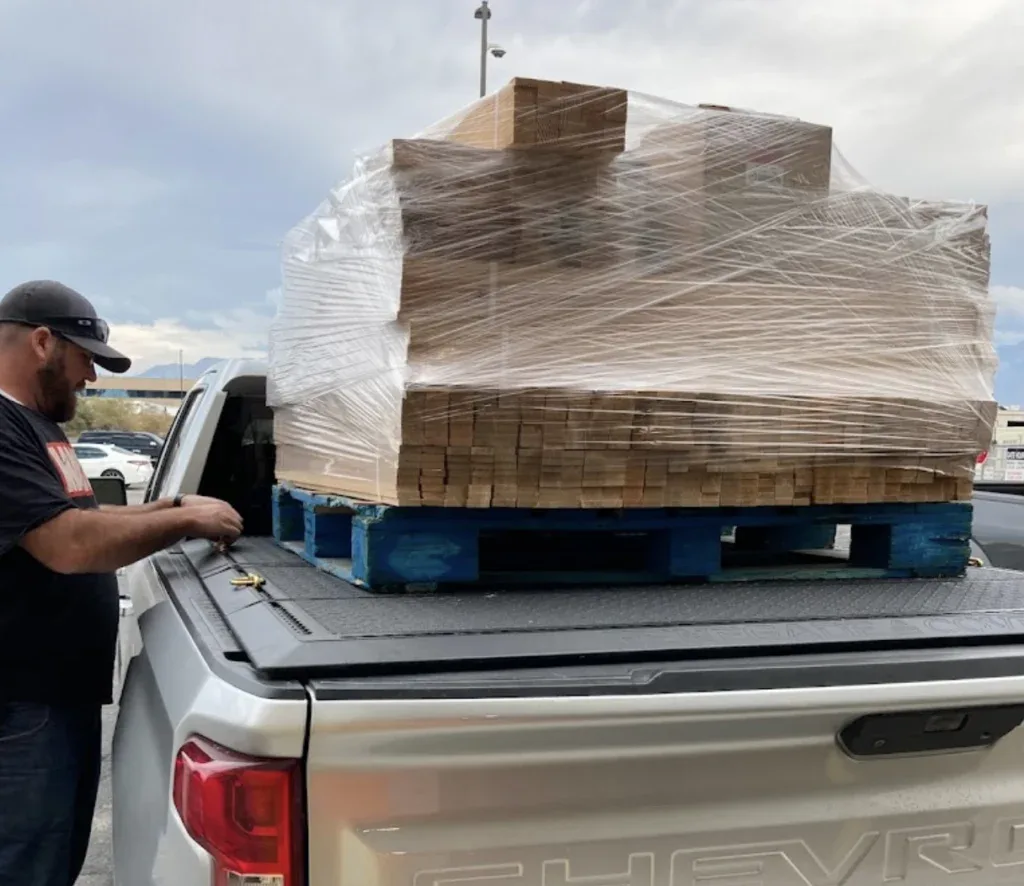
How Much Weight Can A Tonneau Cover Hold?
A tonneau cover can hold only the weight its manufacturer rates it for, and some covers have no load rating at all. Check the manual or product label for the exact model; if it doesn’t list a supported load, don’t put cargo on the cover.
A load rating is the maker’s stated limit for a specific cover or setup. It may apply only when the weight is spread across a certain area, the cover is installed as directed, or an approved rack is used.
Don’t confuse the cover’s limit with the truck’s payload rating. Payload covers the load carried by the truck, including passengers and cargo, but it doesn’t tell you whether the cover panels can hold that load.
| Cover or setup | What to expect | What to check |
|---|---|---|
| Soft roll-up or snap-on cover | Usually a weather barrier, not a cargo platform | Whether the maker allows any load on top |
| Folding hard cover | Panel strength and support differ by model | The exact cover’s load limit and loading conditions |
| One-piece hard cover | A rigid surface still doesn’t prove it can carry weight | The manual’s stated rating |
| Cover with a rack system | Cargo may be carried by the rack, not the cover panels | Ratings and installation rules for every part of the setup |
Those descriptions are general, not ratings. A hard cover can look sturdy and still have a low limit, or none at all. The material, panel shape, hinges, clamps, rails, and support points all affect what a particular model can handle.
Pro Tip: Search the cover’s brand and model number, then look for the owner’s manual or installation guide. If you can’t confirm a rating, ask the manufacturer or a qualified installer rather than testing the cover with a heavy load.
Check the Rating and Load It Safely
The safe way to load a tonneau cover is to confirm the rating, check the required setup, and keep the load within the stated limit. A rating that applies to a stationary, evenly spread load may not apply when the truck is moving.
Start with the cover itself. Find its model number on a label, invoice, order record, or installation paperwork, then check the manual for a maximum load and any conditions attached to it.
- Confirm the exact model. Covers from the same brand can have different panels, hardware, and limits.
- Read how the rating is defined. Look for whether the load must be stationary, evenly distributed, or supported by specific rails or a rack.
- Check the setup. Make sure the cover, clamps, rails, and any rack parts match the instructions and are correctly installed.
- Compare your cargo with the rating. Add the weight of the cargo and its container, then account for how much area it covers.
- Stop if a key detail is missing. If the manual doesn’t say whether the rating applies while driving, don’t assume that it does.
A static load is weight resting on a vehicle that isn’t moving. A dynamic load is weight being carried while the truck moves, where bumps, turns, and braking can add force and shift cargo. A limit listed for a parked truck shouldn’t be treated as permission to drive with the same load on the cover.
How should you judge a load that fits the number but sits in one small spot? Check the maker’s loading instructions, because an allowed total weight can still damage a panel if it’s concentrated over a weak area.
That distinction matters with a small, heavy object. A dense toolbox can put much more pressure on one spot than a lighter, wider item, even when their footprints look similar. If the manual calls for a spread-out load, follow that condition rather than focusing only on the total pounds.
I once had to reposition cargo after noticing that its weight was pressing near a panel edge instead of resting across the supported area. The load looked manageable, but the contact point was wrong; spreading the weight would have been the first move.
Important Tip: Don’t climb, kneel, or stand on a tonneau cover to test it. A person’s weight can be concentrated on a small area, and a panel failure can cause a hard fall or damage the truck.
What Changes The Weight Limit?
The weight a tonneau cover can support depends on its construction and how the load reaches the truck. Two covers that look similar from the side can have different hinges, frame rails, and support points.
- Panel construction: Soft fabric, aluminum, fiberglass, and other materials behave differently under pressure.
- Support and mounting: A panel’s capacity depends on what holds it up and how securely the cover is attached.
- Load placement: Weight near a supported edge may affect the cover differently from weight in the center of an unsupported span.
- Condition: Damaged hinges, loose clamps, cracked panels, or worn seals can make a cover less reliable.
- Setup changes: A rack or added accessory can change how cargo weight transfers to the truck.
A rating can also be tied to a particular accessory or configuration. If the manual allows a rack, that doesn’t automatically mean the cover panels are intended to carry the rack’s cargo; the rack may transfer weight to the truck’s bed rails instead.
Choose A Better Setup For Heavy Cargo
If you regularly need to carry cargo above the bed, choose equipment rated for that job rather than asking the cover to do double duty. Before buying, compare how to choose a tonneau cover with your truck fit, storage needs, and the type of load you carry.
A bed rack or crossbar system may provide a proper cargo platform, but its capacity depends on the rack, attachment points, truck, and installation. Check the ratings for each part and follow the lowest applicable limit; one strong component doesn’t make an unrated setup safe.
If a rack mounts to the cover, confirm the cover maker approves that exact arrangement. If it mounts to the bed rails, check that the rails and truck can carry the rack’s stated load. The setup needs to work as a system, not just look sturdy in the driveway.
What if the cover has no published load limit? Leave cargo off the panels and put it inside the bed, on a properly rated rack, or in another rated cargo carrier. It’s less convenient than gaining an extra flat surface, but it beats replacing a damaged cover or chasing loose cargo.
Watch For Damage And Movement
A tonneau cover that’s been overloaded may show stress before it fails, but visible signs don’t prove that the remaining capacity is safe. Remove the load if a panel bows, a hinge shifts, a clamp loosens, or the cover no longer closes and latches as it should.
After an unexpected heavy load, inspect the cover when it’s unloaded. Look for cracks, bent rails, pulled fasteners, loose hardware, and gaps where the cover meets the bed. If anything seems damaged or the cover won’t latch securely, stop using it and have the affected parts checked.
A cover that’s open, folded, or partly unlatched may catch wind or move differently than it does when fully closed. If you need to travel with it open, check the cover maker’s instructions and driving with a tonneau cover open before setting off.
Don’t try to quiet a loose cover by piling cargo on top or adding makeshift straps over the panels. Secure cargo to approved tie-down points, and use only attachment methods the cover and truck makers allow.
- A tonneau cover’s limit is specific to its model and setup.
- No published rating means no assumed cargo capacity.
- A parked load rating doesn’t automatically apply while driving.
- A rack can carry cargo only when its full setup is properly rated.
FAQs About How Much Weight Can A Tonneau Cover Hold
Can I put a suitcase or cooler on my tonneau cover?
Only if the cover’s manual allows that load and the weight stays within its stated limit and loading conditions. A suitcase or cooler can slide, concentrate weight on one spot, or shift when the truck moves, so a flat-looking panel isn’t proof that the load is safe.
Can I sit or stand on a tonneau cover?
No, unless the manufacturer specifically rates the cover for that use and gives clear instructions. A person’s weight can press on a small area, and a cover that supports a spread-out load may not support a person’s weight concentrated under their feet or knees.
Does a hard tonneau cover hold more weight than a soft cover?
Not as a reliable rule. Hard covers often have more rigid panels, but their load capacity still depends on the exact model, support structure, and manufacturer’s rating. A soft cover and a hard cover both need a published limit before you use either one as a cargo surface.
Can I drive with cargo sitting on a tonneau cover?
Only when the manufacturer rates the cover and setup for a moving load, and you follow its loading and tie-down directions. A stationary load rating alone doesn’t cover forces from braking, turns, or bumps, which can shift cargo or put extra stress on the panels.
What should I do if my tonneau cover has no weight rating?
Treat the cover as unable to support cargo. Contact the manufacturer with the model number if you want confirmation, and keep heavy items in the bed or on a separate cargo system with a published rating. Don’t test the cover by gradually adding weight.
Use the Rating, Not the Appearance
A tonneau cover’s shape or solid feel can’t tell you how much weight it can safely hold. The only dependable limit is the one that applies to your exact cover and setup, including how the load must be placed and whether the truck can be moving.
In my view, it’s not worth risking a panel or a loose load for a little extra storage space. If you can’t find a clear rating, keep cargo off the cover and use the bed or a properly rated rack instead.
Your next step is simple: find the cover’s model number and check its manual before loading anything on top. If the rating isn’t there, ask the manufacturer and treat the answer as no until you have clear instructions.