
Yes, you can drive with a tonneau cover open only if the cover is designed to travel in that position, is secured as its maker directs, and doesn’t block your view or leave cargo loose. If you can’t confirm those conditions, close the cover or remove it before driving.
Are you trying to haul something that won’t fit under the cover, or did a panel start flapping as soon as you picked up speed? Those are different problems, and the safe answer depends on your cover style and how it’s fastened.
I once rushed a load into a pickup and started down the road before checking the folded cover’s storage straps. A loose section began bouncing in the wind, and I had to pull over and secure it properly; it’s a common mistake, not a dumb one.
I wrote this to help you make a quick, sensible call before you leave the driveway, whether your cover rolls up, folds back, or lifts off. You’ll get a plain answer, practical checks, and a better sense of when an open cover is a bad bet.
Get the setup right and you can avoid a damaged cover, a lost load, or a stressful stop on the shoulder. Skip the checks and wind can turn a small oversight into a hazard for you and the drivers behind you.
This takes about 8 minutes to read. By the end, you’ll know how to:
- Tell whether your cover can travel open.
- Secure a folded or rolled cover before driving.
- Check cargo, visibility, weather, and local rules.
- Decide when closing or removing the cover is safer.
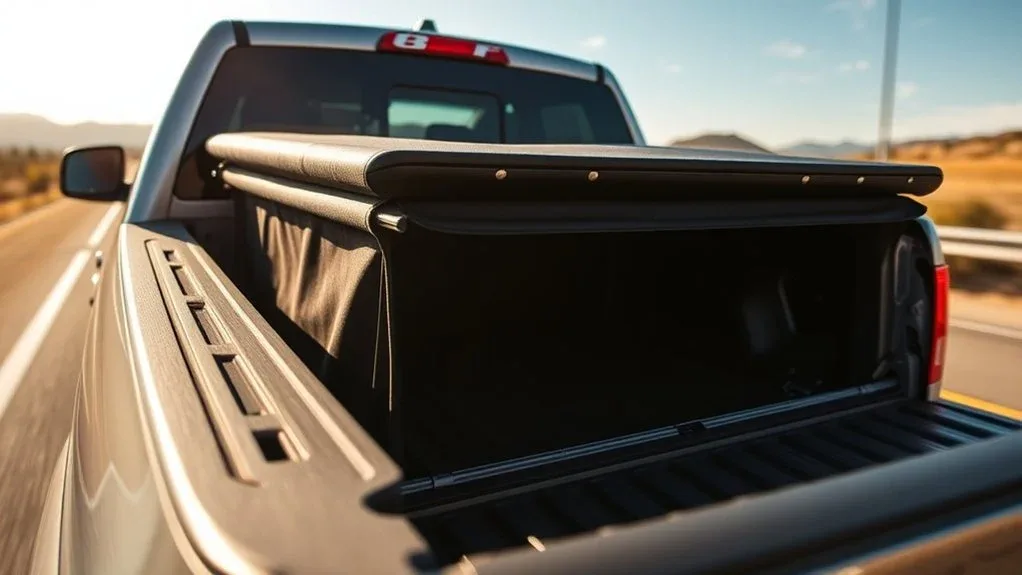
Can You Drive with A Tonneau Cover Open Safely?
You can drive with a tonneau cover open when the cover is made to stay open while moving, every panel or section is locked or strapped in its travel position, and the open setup doesn’t create a visibility or cargo hazard. A cover that’s merely flipped back or left loose isn’t ready for the road.
“Open” can mean several things: a soft cover rolled toward the cab, a folding cover stacked at the front of the bed, or a hard cover partly lifted. Those positions don’t all have the same hardware, so check your cover’s instructions before driving. If the maker doesn’t describe a safe open-road position, don’t assume one is approved.
Run through these checks before pulling out:
- Find the travel position. Confirm that the cover is meant to be driven while rolled, folded, or lifted.
- Fasten every section. Use the built-in straps, clamps, latches, or supports exactly as directed.
- Check the cab window and mirrors. The cover, cargo, and anything hanging over the bed must not block your view.
- Secure the load separately. A tonneau cover isn’t a cargo tie-down, and an open cover can’t hold items in place.
- Check for movement. Push gently on the secured panels. If they shift, flap, or rattle, stop and fix the setup.
| Cover position | What to check | Safer choice if unsure |
|---|---|---|
| Soft cover rolled up | Roll is secured with its straps and no loose fabric catches wind | Close it or remove it |
| Folding cover stacked open | All panels lock or strap in the maker’s travel position | Close it before driving |
| Retractable cover open | Cover locks in the approved position and rails are clear | Close it if it can slide |
| Lift-up or one-piece cover raised | A rated support holds it as directed | Don’t drive with it raised unless the manual allows it |
A travel position is a position the cover maker allows while the truck is moving. That’s different from a position used to load the bed while parked.
Pro Tip: Keep the cover’s instructions in your glove box or save a photo of the relevant page. If a latch or strap is confusing, you won’t have to guess in a windy parking lot.
What Can Go Wrong with an Open Tonneau Cover?
An unsecured cover can catch wind, shift, or break, while exposed cargo can move or leave the truck bed. The risk depends on the cover design, speed, wind, load, and how well everything is fastened.
Wind pressure can tug at fabric and panels, especially when a cover is partly raised or a folded section isn’t locked down. A loose panel may strike the cab, damage hinges, or come free. Even if nothing breaks, flapping fabric can get loud fast and make it harder to focus.
An open cover also leaves cargo exposed to weather and road spray. More importantly, an open bed can make it easier for lightweight items to blow out. Tie down boxes, lumber, tools, and anything else that can slide or lift; don’t count on the cover to hold them.
I once watched a folded cover start to chatter because one panel hadn’t seated in its latch. The noise was a useful warning, but I stopped right away rather than trying to judge whether the panel would stay put.
Could an open cover block your rear view? It can, depending on the cover and cargo, so check through the rear window and both mirrors from the driver’s seat before moving. If you can’t see clearly, rearrange the load or close the cover.
A few warning signs mean the truck should stay parked until you fix the setup:
- A panel lifts, bounces, slides, or rattles when you tug it.
- A strap is missing, torn, or too loose to hold the cover.
- The cover touches the cab or sits unevenly in its rails.
- Cargo moves when you press or pull on it.
- The load blocks the rear window or mirrors.
How Different Tonneau Covers Handle Open Driving
A tonneau cover’s open-road rules depend on its design, not just whether it’s made of soft or hard material. Check the manual for the specific position and fasteners approved for travel.
A soft roll-up cover usually rolls toward the cab and uses straps to hold the rolled bundle. Make sure the fabric is tight and the straps are secured; loose material can flap, stretch, or catch wind.
A folding cover may have two, three, or more panels that stack near the cab. Look for the intended latch or strap arrangement, and don’t assume the panel stack will stay put just because it feels heavy.
A retractable cover slides into a canister at the front of the bed. It may lock at certain positions, but a cover that’s open enough for cargo can still need a specific lock or latch before travel.
A one-piece hard cover often lifts for bed access. Don’t drive with it raised unless the maker specifically allows that position and provides the required support hardware. A gas strut or prop that holds the lid open while parked doesn’t automatically make it safe at road speed.
If you’re hauling tall items, open-cover travel is only one part of the decision. A dirt bike needs secure wheel and frame tie-downs, and the cover can’t take the place of those restraints; compare that setup with guidance on hauling dirt bikes. Before buying a replacement, consider how often you need open-bed access and use truck-fit and cover types to narrow down the design.
How to Prepare the Truck Before Driving
A short inspection before every trip catches the loose strap or shifting load that can turn an ordinary drive into a roadside hassle. Keep the process simple and repeat it whenever you change the cover position or cargo.
- Park on level ground and check the cover’s instructions for its approved travel position.
- Move the cover into that position and fasten all latches, clamps, straps, and supports.
- Secure the cargo to the truck’s tie-down points with suitable straps or other proper restraints.
- Check that no load or cover part blocks the rear window, mirrors, lights, or license plate.
- Tug the cover and cargo by hand, then listen for movement as you roll slowly in a safe place.
- Stop if anything shifts, flaps, or makes a new noise. Recheck the hardware before joining faster traffic.
Is a strap a little frayed, or does a latch take extra effort to close? Don’t treat that as a small quirk; replace damaged hardware or contact the cover maker before driving with the cover open. A strap that looks fine in the driveway may not stay secure under wind and vibration.
A tonneau cover has a load rating only when its maker specifies one, and that rating applies to the conditions stated in the instructions. Don’t stand, sit, or stack cargo on a cover based on how sturdy it feels; use the maker’s rating and limits, as explained in tonneau cover weight ratings.
If you need a fifth-wheel hitch, check bed access and hitch clearance before choosing or opening a cover. Some setups need the cover removed or a different design, so start with fifth-wheel hitch clearance rather than assuming a folded cover will stay out of the way.
Weather, Car Washes, and Other Situations to Check
Wind, rain, and road spray can change how useful an open bed is, but they don’t change the cover maker’s rules for driving. Close the cover when weather threatens cargo, and don’t travel with a panel raised just because the load is already wet.
A sudden gust can tug at a loose cover, while rain can soak items that aren’t waterproof. If the load sticks above the bed rails, secure it independently and check that it can’t slide or lift. For long or bulky items, follow the truck’s load and tie-down guidance, and make sure the cover isn’t rubbing against the cargo.
An open-cover setup also isn’t the same as going through a car wash with the cover closed. Wash systems have different instructions, and a loose, partly open cover may snag or take on water; check the wash operator’s rules and guidance on washing with a tonneau cover fitted.
A truck tent is another separate use. Many tent setups require the cover to come off or be configured in a specific way, so check tent and cover compatibility before setting up; this guide to using a truck tent with a cover can help you plan the bed arrangement.
Legal and Practical Checks Before You Leave
There isn’t one nationwide rule that makes every open tonneau cover legal or illegal. State and local rules can cover unsecured loads, blocked lights, and visibility, so check the rules where you’re driving when your load extends beyond the bed or affects what other drivers can see.
The practical standard is straightforward: the cover stays secured, cargo stays tied down, and you can see and control the truck normally. If an item hangs beyond the bed, use the required warning markers for your area and make sure the load doesn’t cover lights or the plate.
I’d choose a fully closed cover when it fits the load, because it cuts down on wind exposure and keeps cargo out of the weather. If you need the bed open, I’d rather remove a cover that lacks a proper travel position than gamble on a loose panel.
Important Tip: If the cover starts moving while you’re driving, don’t reach for it or try to hold it down. Slow down safely, pull over somewhere out of traffic, and secure or remove it before continuing.
- Drive with a cover open only in a maker-approved, secured travel position.
- Tie cargo down separately and check that your view stays clear.
- If a cover shifts, flaps, or has damaged hardware, stop and fix it before driving.
FAQs About Can You Drive with A Tonneau Cover Open
Can I drive with a tonneau cover folded back?
Yes, if the cover maker allows folded-open travel and every panel is secured with the specified latches or straps. A folded cover that’s resting near the cab without its travel fasteners can lift or bounce in wind. Check the manual for your exact cover rather than relying on weight alone.
Can I drive with a soft tonneau cover rolled up?
Yes, if the soft cover is designed to travel rolled up and its retaining straps are tight and intact. Loose fabric can flap, stretch, or pull at the mounting rails. If the cover doesn’t have a secure rolled position, close it or remove it before driving.
Is it safe to drive with a tonneau cover partly open?
It’s safe only when the cover is designed to lock in that position and the open panel can’t move into the cab, cargo, or traffic. Many covers aren’t meant to travel partly open. If the manual doesn’t approve the position, don’t drive with the cover there.
Can I drive with cargo sticking above the bed?
Yes, when the cargo is properly secured, doesn’t block your view or lights, and follows the load rules for your area. The tonneau cover won’t restrain cargo that rises above the bed rails. Use the truck’s tie-down points and any required warning markers for an overhanging load.
Should I remove a tonneau cover before hauling a tall load?
Remove the cover when it can’t sit in a maker-approved travel position without touching or trapping the load. A tall item shouldn’t push against a panel or prevent the cover from latching. Store removed panels safely so they can’t slide around in the cab or bed.
Make the Safe Call Before Pulling Out
You can drive with a tonneau cover open, but only when the cover is built to travel that way and its hardware is doing its job. The label “open” isn’t the deciding factor; secure panels, tied-down cargo, clear visibility, and the cover maker’s instructions are.
My preference is to close the cover whenever the load allows it. When it doesn’t, I’d rather take a minute to secure or remove the cover than spend the drive listening for a panel that may be coming loose.
Before you leave, check the instructions, fasten the cover in its approved travel position, tug the cargo, and look through the rear window and mirrors. If anything moves or blocks your view, fix it first. A calm start beats a roadside repair.