
The right tonneau cover matches your truck’s make, model, year, bed length, and bed setup. Measure the bed to narrow your options, then confirm the exact fit with the cover maker’s vehicle-fit guide before you order.
Have you ever found a cover that looks right, then realized your truck has a different bed length or rail setup? Are you trying to avoid a return trip, awkward gaps, or a cover that won’t latch?
I once relied on a bed’s advertised length when checking a cover, rather than confirming the truck’s exact configuration. The fit looked close on paper, but a small mismatch at the tailgate meant the cover didn’t sit right, and I had to redo the check. It’s a common mistake, not a dumb one.
I wrote this for anyone who wants a clear way to identify the right size without getting tangled in model names and measurements. You’ll learn what to measure, which details matter, and how to check a cover’s fit before spending money.
Get the fit right, and you can avoid a loose seal, wasted time, and a frustrating return. Skip one detail, and a cover can be too long, too short, or incompatible with the rails already on your truck.
This should take about nine minutes to read. By the end, you’ll know how to:
- Identify your truck’s bed length and configuration.
- Measure the bed in a way that helps narrow your options.
- Check fitment details that measurements alone can miss.
- Spot common reasons a cover won’t sit or latch correctly.
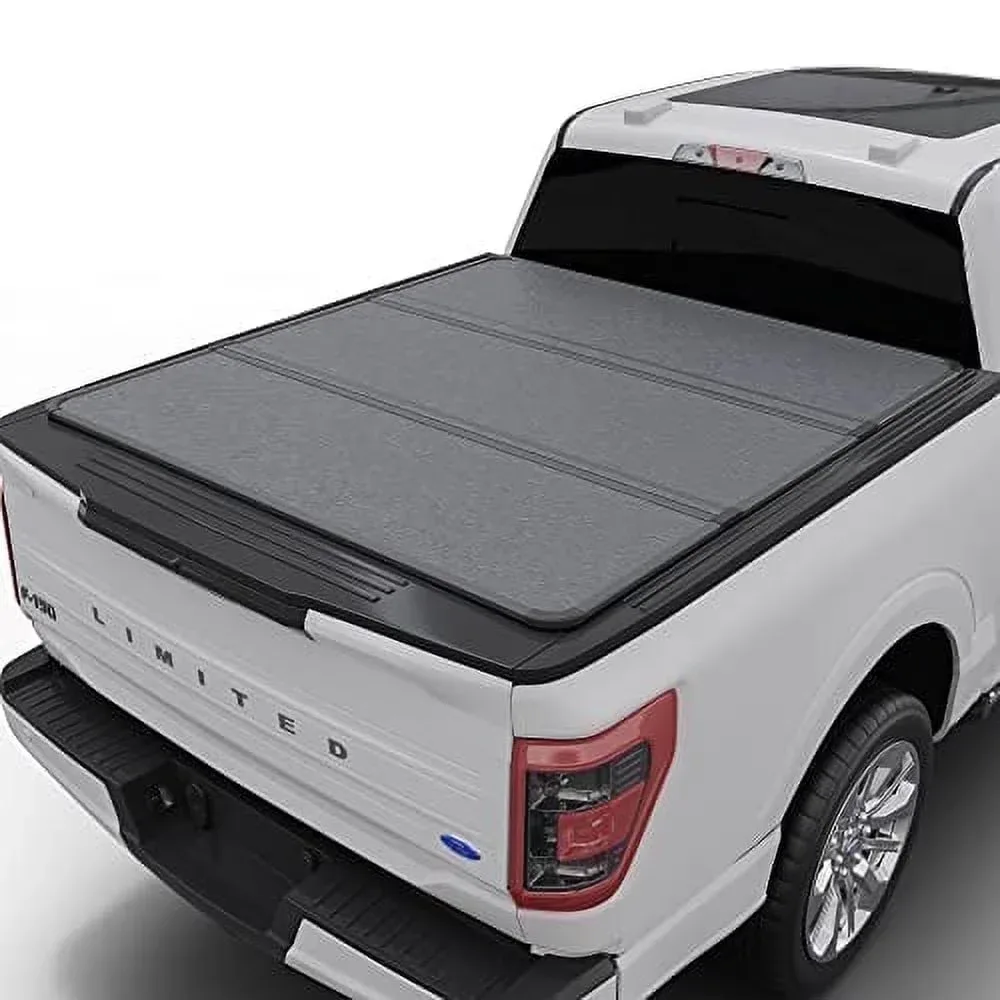
What Size Tonneau Cover Fits My Truck
A tonneau cover fits when its maker lists your exact truck year, make, model, bed length, and relevant bed features as compatible. Bed measurements help you narrow the search, but they don’t replace a fitment check; two trucks with similar-looking beds may have different rails, tailgates, or accessories.
Start with your truck’s bed length, the length of the cargo box rather than the overall truck. Common bed categories include short beds around 5.5 feet, midsize beds around 6.5 feet, and long beds around 8 feet, but the exact options vary by truck and model year. A listing may use terms such as “short box” or “6-foot bed,” so match the listing to your truck’s configuration rather than relying on a rounded measurement alone.
The most reliable check uses your year, make, model, cab style, and bed option together. A 2022 truck with a 5.5-foot bed may need a different cover from a 2022 truck of the same model with a 6.5-foot bed. If your truck has a special trim, factory bed rails, a utility track, or an aftermarket bedliner, check whether the cover listing accounts for it.
| What to check | Where to get the detail | Why it matters |
|---|---|---|
| Model year, make, and model | Owner’s manual, registration, or truck information | Fitment can change between model years |
| Bed length or box option | Original build information or a careful measurement | Short, standard, and long beds take different covers |
| Cab style and trim | Truck’s build details | Some listings use these to distinguish bed configurations |
| Rail or track setup | Look along both upper bed edges | Mounts may need a particular rail or accessory setup |
| Bedliner type | Check whether it covers the rail tops or reaches the bed walls | Liner shape and thickness can affect mounting |
| Tailgate and bed accessories | Check the truck and cover instructions | Some add-ons can interfere with the cover or its seal |
If you don’t know the bed length, measure it as a first check, then look up the truck’s configuration. A measurement near a familiar category doesn’t prove the truck uses that exact advertised size, because listing conventions and the points used for measuring can differ.
Once you’ve identified the truck and bed, match those details to the maker’s fit guide. If you’re comparing fold-up, roll-up, retractable, and one-piece designs, a guide on choosing a tonneau cover can help you weigh the cover style alongside fit.
- Use the truck’s exact year, make, model, and bed option to confirm fit.
- Treat your measurement as a cross-check, not the final compatibility test.
- Check rails, liners, tailgate features, and accessories before ordering.
How to Measure Your Truck Bed and Confirm Fit
Measure the bed from the inside front wall to the inside edge of the closed tailgate, then compare that result with the truck’s listed bed option. This gives you a useful screening measurement, but the cover maker’s instructions decide which measurement points apply to that product.
Take a useful bed measurement
- Park on level ground and open the tailgate.
- Find the inside surface of the front bed wall, also called the bulkhead.
- Stretch a tape measure along the bed floor to the inside edge of the tailgate.
- Keep the tape straight and note the result in inches.
- Measure again to catch a crooked tape or a missed reference point.
- Check the truck’s build details and compare them with the cover’s fit guide.
A tape measure works for this check. If you’re measuring alone, keep the tape snug and straight, and ask someone to hold one end if it keeps slipping off the bulkhead.
I once checked a truck bed with the tailgate open and treated the visible floor length as the cover’s fit length. That gave me a number that was easy to read but not the right reference for the product I was checking, so I went back and followed the maker’s measuring points. A quick second check beats guessing and finding out after the box arrives.
The maker may define the measurement differently, particularly for a specific cover design. If the instructions say to measure from a different point, follow those instructions rather than forcing your result into a familiar bed-length label. A step-by-step guide to measuring a truck bed can help if you’re unsure where to place the tape.
Check more than the bed length
The bed’s length is only one part of the fit. Check whether the product listing names your exact truck configuration and whether it calls out restrictions for any of these features:
- Bed rails: Some trucks have factory tracks or rail caps that affect mounting space.
- Bedliner: A liner that covers the upper rail can change the room available for clamps.
- Utility track: Track systems may need specific brackets or a compatible cover.
- Tailgate shape: A cover’s rear seal must meet the tailgate as intended.
- Bed accessories: Toolboxes, racks, and cargo-management systems can occupy space the cover needs.
- Special body or bed setup: A variation in the bed or tailgate may narrow the list of compatible covers.
What if your tape measurement seems close, but the fit guide excludes your rail setup? Trust the fit guide and contact the cover maker before ordering, because a near-match in length won’t fix a mounting conflict.
If your truck has a factory bed track, read the fine print on mounting hardware. Some covers may require different brackets or a specific installation arrangement, while others may not fit that track at all. Don’t assume that a clamp can simply move around an obstacle; the cover needs the mounting points and clearance its maker specifies.
Pro Tip: Keep a note in your phone with the truck’s year, model, bed option, rail setup, and bedliner type. It saves you from measuring again every time you compare a different cover.
Common Fit Problems and How to Avoid Them
Most fit problems come from choosing by bed length alone, overlooking the truck’s hardware, or buying a cover that isn’t listed for the exact configuration. Check those details before ordering, and you’re much less likely to deal with a cover that shifts, leaves a gap, or won’t close.
Don’t treat advertised bed length as an exact measurement
Truck makers and cover makers may describe bed sizes with rounded labels, while an actual measurement gives you a number in inches. The label is useful for searching, but it isn’t a universal measurement standard that guarantees two products will match.
A truck listed with a 5.5-foot bed may be described differently across product pages. Use the truck’s model year and bed option to identify its configuration, then follow the cover maker’s own compatibility notes and measurement directions.
Watch for rails, liners, and add-ons
A cover can have the right length and still fail to mount properly if the bed rails are blocked or the brackets don’t match. Bed rails are the upper edges running along both sides of the box; their shape and accessories can affect where cover clamps attach.
An over-the-rail bedliner extends across the top edges of the bed. That may affect cover clearance or mounting, so check whether the cover maker allows it, requires a trim change, or specifies different hardware. Don’t cut a liner or modify truck parts unless the cover instructions specifically call for it and you’re comfortable doing the work.
Tailgate seals also deserve a close look. The cover needs to meet the tailgate without preventing it from closing or leaving an obvious gap. If the truck has an aftermarket tailgate or bed accessory, ask the maker whether that combination is supported.
Match the cover style to how you use the truck
A soft roll-up cover rolls toward the cab, while a folding cover opens in panels. A retractable cover slides into a canister, and a one-piece cover lifts as a single panel. Each style needs its own clearance, mounting space, and room to open, so a correct bed length doesn’t mean every style will suit your truck.
What matters more to you, quick access or keeping the whole bed open? A roll-up design can provide broad access when rolled back, while a folding design can be handy when you need to open part of the bed; check the maker’s instructions for any limits on driving with the cover open.
Some truck-specific fit guides can help you compare options after you know your exact configuration. Owners checking a Gladiator can review tonneau covers for Jeep Gladiator, while Ridgeline and Frontier owners can compare the relevant Honda Ridgeline cover options and Nissan Frontier cover options.
Read the instructions before installation
Before you unpack or install a cover, check the maker’s fit notes, included hardware, and return policy. Make sure the package lists the correct model and bed option, and compare the parts with the instructions before you clamp anything in place.
During installation, don’t force a rail or clamp to sit where the instructions don’t show it. Keep the cover aligned, confirm that the tailgate closes freely, and check that latches engage as directed. If a part doesn’t line up, stop and recheck the fitment rather than tightening it harder.
Important Tip: Test the cover’s fit before removing packaging or altering a liner. A careful dry fit can reveal a mismatch before you’ve made a change that complicates a return.
If the cover is too long, the front or rear edge may sit out of place. If it’s too short, the tailgate seal may miss its target or leave an open gap. A cover that seems to fit but won’t latch can point to misalignment, an incompatible rail setup, or the wrong bed configuration, so check those before assuming the cover itself is defective.
FAQs About What Size Tonneau Cover Fits My Truck
A tonneau cover’s fit depends on the truck’s specific bed and hardware, not just a tape-measure number. These quick answers address common questions that come up while shopping.
How do I know what size tonneau cover I need?
Match the cover’s fit guide to your truck’s model year, make, model, and bed option. Measure the bed using the cover maker’s stated reference points to cross-check the listing. If the truck has a bed track, a liner over the rails, or an add-on, confirm those details with the maker before ordering.
Are tonneau covers universal in size?
No, tonneau covers aren’t universally interchangeable across trucks. A cover may be made for a particular bed length, model range, or rail setup, and a similar measurement alone doesn’t prove that it will mount or seal correctly. Use the product’s vehicle-fit information, not a general size label, as your final check.
Can I use a 5.5-foot cover on a 6-foot truck bed?
No, not unless the cover maker specifically lists that combination as compatible. Those bed labels refer to different configurations, and a cover that’s too short or too long may not latch or seal properly. Check the exact model and bed option in the fit guide before choosing a cover.
Should I measure with the tailgate open or closed?
Start by measuring from the inside front wall to the inside edge of the closed tailgate, but follow the cover maker’s instructions if they specify different points. A measurement with the tailgate open may include length the cover isn’t designed to cover, so don’t use that number without checking the product directions.
Will a bedliner stop a tonneau cover from fitting?
Sometimes, but a bedliner doesn’t automatically rule out a cover. The key detail is how the liner sits, especially if it covers the top of the bed rails, and whether the cover’s clamps have room to attach. Check the maker’s notes for your liner style before installation.
Make the Fit Check Before You Buy
The best way to get the right tonneau cover size is to match the exact truck configuration first, measure the bed as a cross-check, and confirm the mounting details in the maker’s fit guide. That takes a few minutes, but it can spare you a return, an awkward installation, and the annoyance of a cover that never seals quite right.
In my view, exact fitment beats a tempting deal on a cover that’s merely close. Start with your truck’s year, make, model, and bed option, then check the rails, liner, and tailgate before choosing a style. If one detail remains unclear, ask the cover maker to confirm compatibility before you order.