
A hard tonneau cover is usually better for security and a solid, finished look, while a soft tonneau cover is usually better for lower cost, easy handling, and quick bed access. The right choice depends on what you carry, how often you use the truck bed, and how much protection you need.
Are you tired of cargo getting wet, or do you just want to keep tools out of casual view? And when you need the whole bed open, will a heavy panel slow you down?
I once chose a soft cover because I wanted quick access, then found myself wrestling with a loose edge after a windy drive. The fix was simple, but I’d skipped checking how the cover attached to the bed; that’s a common mistake, not a dumb one.
I wrote this to help you compare the real trade-offs without getting lost in product jargon. If you use your truck for work, family errands, camping, or a bit of everything, you’ll find the choice that fits your routine.
Get the match right, and you can carry groceries or gear with less worry, reach the bed without a wrestling match, and avoid paying for features you don’t use. Get it wrong, and you may wind up with a cover that blocks your usual cargo or frustrates you every time you load up.
This should take about nine minutes. By the end, you’ll be able to:
- Compare soft and hard covers by security, weather protection, and cost.
- Match a cover style to how you load and unload your truck.
- Spot fit and use details worth checking before you buy.
- Choose a practical next step if you’re still torn.
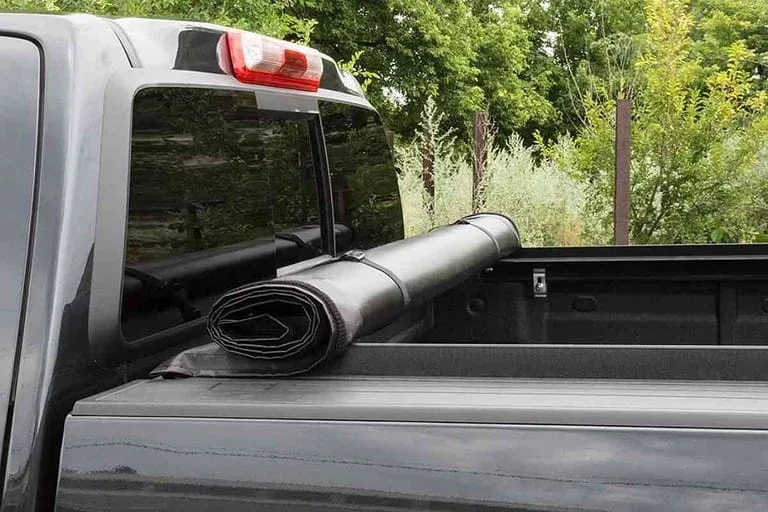
Is Soft or Hard Tonneau Cover Better for Your Truck?
A soft tonneau cover is usually the better fit for a tighter budget and frequent bed access, while a hard tonneau cover is usually the better fit for stronger cargo security and a more rigid barrier. If you regularly leave tools in the bed, lean hard; if you mostly want to cover everyday cargo and keep it easy to reach, lean soft.
The trade-off is that no style wins every category. A hard cover often costs more and can be bulkier to remove, while a soft cover is easier to handle but gives less resistance to someone determined to get inside.
| What matters most | Soft cover | Hard cover |
|---|---|---|
| Upfront cost | Usually lower | Usually higher |
| Access to the bed | Often quick, especially with a roll-up style | Depends on the design; panels may fold, lift, or retract |
| Cargo security | Hides cargo, but material can be cut | Rigid panels generally provide a stronger barrier |
| Weather protection | Varies by fit, seams, and cover design | Varies by seals, fit, and panel design |
| Handling | Usually light and simple to move | Often heavier, with more parts or larger panels |
| Appearance | Flexible top with a low-profile look | More rigid, sometimes closer to a finished lid |
These are broad patterns, not guarantees. A well-fitted soft cover can work better in rain than a poorly fitted hard cover, and a hard cover’s security depends on its locks, fit, and how the truck’s tailgate closes.
What do you need to leave in the bed overnight? If it’s a jacket or a few grocery bags, hiding the contents may be enough; if it’s valuable equipment, a soft cover alone probably won’t give you the peace of mind you want.
A tonneau cover can also protect cargo from sun and weather, but “covered” doesn’t mean perfectly dry. Seals, drainage paths, the bed’s condition, and the way the tailgate meets the cover all affect how much water gets in.
- Choose soft for lower cost, light handling, and easy access.
- Choose hard for a more rigid barrier and stronger everyday security.
- Compare the actual cover’s fit and construction, not just its category.
How Security and Weather Protection Compare
Hard covers generally provide more resistance to casual tampering, while water protection depends on the full setup and its fit. Neither type makes a truck bed theft-proof or guarantees a dry load in every storm.
A soft cover can keep belongings out of sight, which may help discourage casual snooping, but the fabric or vinyl can be cut. A hard cover’s panels are tougher to breach, though the cover still relies on its lock, mounting hardware, and the truck’s tailgate for protection.
Weather protection is a separate question from security. Weather seals are strips around edges and joints that help limit water and dust; their quality and placement can matter as much as whether the cover is soft or hard.
I’ve had a cover look snug from the side while a small gap near the tailgate let in a fine spray. It taught me to check the tailgate seam and corners after installation, rather than judging the whole setup by how neat it looks from across the driveway.
For buyers focused on keeping cargo dry, a water-resistant cover option deserves a closer look, but check the product’s stated limits and installation requirements. A cover marketed as waterproof still depends on correct fit, intact seals, and the truck bed’s design.
If you carry sensitive gear, use a waterproof storage bin inside the bed instead of relying on the cover alone. That extra layer is especially useful when water getting in would mean ruined clothes, soggy cardboard, or damaged work supplies.
Pro Tip: After installing a cover, test it with a gentle hose spray and check the bed corners and tailgate seam. Don’t aim a pressure washer at the seals, since high-pressure water can force its way past gaps that ordinary rain wouldn’t reach.
Dust is easy to overlook. If you drive gravel roads, check the seams and bed after a trip; fine dust can sneak through small openings even when rain stays out.
Choose A Cover Style That Fits Your Routine
The cover’s opening style can matter more than the soft-versus-hard label once you start using the truck every day. Roll-up, folding, hinged, and retractable covers each give you a different balance of bed access, storage space, and handling effort.
A soft roll-up cover typically gives you broad access to the bed when rolled toward the cab. A folding hard cover opens in sections, but folded panels can occupy space near the cab or limit how you arrange tall cargo, depending on the model.
A retractable cover slides toward a canister near the front of the bed, which keeps the cover attached but uses some bed space. Hinged hard covers lift as one piece, so check whether the raised lid fits your garage clearance and whether you can reach the bed comfortably.
If you’re deciding between roll-up and tri-fold designs, the useful comparison is how much open bed you need and how much space you can spare near the cab; roll-up and tri-fold differences can help frame that choice. A roll-up style often suits long or bulky loads better, while folding panels can be handy when you only need to open part of the bed.
The right cover should work with your normal cargo, not just look good in a product photo. Do you load tall items often? If so, check the cover’s open position and clearance before buying, because a panel that blocks the cab window or eats up bed space can turn a quick errand into a hassle.
For less guesswork, start with choosing a tonneau cover by fit and features, then compare the designs that suit your truck. The bed’s length, rail setup, and accessories can narrow your options fast.
A few routine questions can make the choice clearer:
- Do you need access to the full bed several times a week?
- Will you carry tall items with the cover installed?
- Are you comfortable lifting or removing a heavier panel?
- Do you need to use a bed rack, toolbox, or other accessory?
If your answer to several of these points is yes, check compatibility before settling on a cover type. A cover that conflicts with a rack or toolbox can cost you more than the price difference between soft and hard.
Check Fit, Installation, and Total Cost
A tonneau cover must match your truck’s exact bed and setup; “fits this truck model” may not be enough if bed length, cab style, or accessories differ. Check the vehicle year, bed length, rail configuration, and any toolbox or rack before ordering.
Most covers attach to the bed rails with clamps or model-specific hardware, but installation details vary. Read the instructions before tightening anything, confirm that the cover sits evenly, and don’t force a clamp or bracket that doesn’t line up.
A soft cover often weighs less and can be easier to handle alone. A hard cover can be awkward to lift or remove, so get help if the manual recommends more than one person or if the panel feels unstable.
Important Tip: Keep hands clear of folding joints and moving rails while opening or closing a cover. If a panel binds, stop and check for an obstruction instead of pushing harder.
The purchase price is only part of the cost. Also consider whether you’ll need extra mounting parts, help with installation, or a storage plan for a cover you remove to haul bulky cargo.
| Cost or ownership detail | Soft cover | Hard cover |
|---|---|---|
| Purchase price | Often the less expensive option | Often the more expensive option |
| Handling and removal | Usually easier to lift or roll aside | Can be heavier or need more space |
| Wear points | Fabric, stitching, tension, and seals | Hinges, locks, panels, rails, and seals |
| Long-term fit | May need occasional tension or seal checks | May need checks at moving parts and locks |
Prices vary widely by truck fit, construction, and features, so compare current quotes for the exact bed size rather than relying on a general price range. I’d pay attention to warranty terms and replacement parts, too; a lower upfront price isn’t much of a bargain if a damaged latch or cover section is hard to replace.
Common Buying Mistakes to Avoid
The most common mistake is choosing by material alone instead of matching the cover to cargo, fit, and access. A soft cover with a secure attachment may suit your daily needs better than a hard cover that’s difficult to lift, while a rigid cover may be worth the extra cost if tools ride in the bed.
Check these details before you buy:
- Confirm the exact bed length and truck configuration.
- Check whether the cover works with your bed liner and rail caps.
- Look for notes about tailgate position and compatible accessories.
- Find out how much bed space an open or folded cover uses.
- Read the installation and warranty terms for your exact model.
Don’t assume every cover works with every bed liner. A liner that overlaps the rails can affect how clamps attach, so check the fit notes before ordering rather than trying to improvise once the box arrives.
A cover can also change how quickly you can load something large. If you often carry furniture, yard waste, or tall boxes, practice the opening steps in your head before buying: will you roll it back, fold panels forward, or remove the whole cover?
For a simple decision, write down your top two needs and let them break the tie. If security and rigidity rank first, choose a hard cover; if budget and easy full-bed access matter more, a soft cover is likely the sensible pick.
FAQs About Is Soft or Hard Tonneau Cover Better
Is a hard tonneau cover more secure than a soft one?
Yes, a hard tonneau cover usually offers more resistance to casual theft because rigid panels are harder to cut than fabric or vinyl. Security still depends on the cover’s lock, mounting system, and tailgate, so don’t treat either cover type as a substitute for storing high-value items somewhere secure.
Does a soft tonneau cover keep rain out?
A soft tonneau cover can keep much of the rain off cargo when it fits correctly and its seals are in good shape. Water may still enter at seams, corners, or the tailgate, so protect sensitive items in a sealed container if a damp load would cause trouble.
Do hard tonneau covers cost more?
Hard tonneau covers usually cost more than soft covers, though the price depends on truck fit, materials, and design. Compare the total cost for your exact bed, including installation needs and compatible accessories, instead of assuming every hard cover is expensive or every soft cover is cheap.
Can I drive with a tonneau cover open?
Some cover designs allow driving with the cover partly or fully open, while others require a specific latch or support position. Check the manufacturer’s instructions for your exact model, secure every loose section, and don’t drive with a panel or strap flapping in the wind.
Which tonneau cover is easier to remove?
Soft tonneau covers are generally lighter and easier to roll or remove, while hard covers can require more lifting and storage space. The exact effort depends on the design and hardware, so check the installation guide and ask for help if a panel feels awkward to handle alone.
Make the Choice That Fits Your Truck
For most owners, the choice comes down to what causes more daily friction: limited security or less convenient access. A hard cover is my pick when valuable tools or equipment regularly ride in the bed; a soft cover makes more sense when you want a lighter, lower-cost lid that’s easy to open.
Either choice can be frustrating if the fit is wrong, the seals don’t meet the bed, or a toolbox blocks the opening. Start by checking your truck’s exact bed setup, then decide whether security, access, or cost matters most. That one quick check will narrow the field and save you from buying a cover that looks right but doesn’t work with your truck.